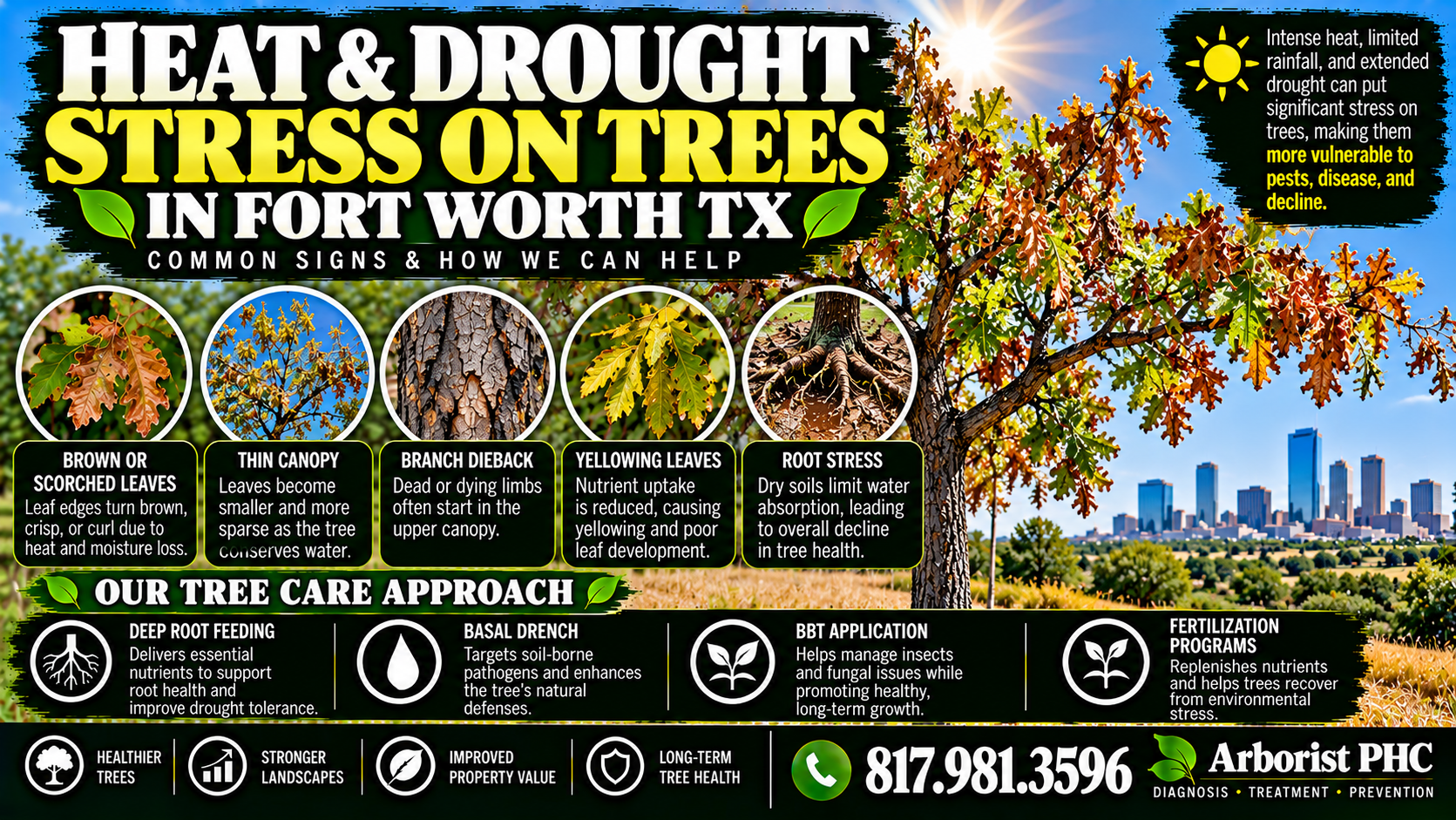
Heat & Drought Stress on Trees in Fort Worth TX | Causes, Symptoms & Treatment | Arborist PHC
Heat & Drought Stress on Trees in Fort Worth TX
Why Are Trees in Fort Worth Struggling During the Summer?
North Texas summers are becoming increasingly hotter and drier, placing tremendous stress on both mature and newly planted trees. Weeks of triple-digit temperatures, limited rainfall, drying winds, and compacted soils can quickly overwhelm even healthy trees.
At Arborist PHC, we specialize exclusively in Plant Health Care (PHC) and help homeowners throughout Fort Worth identify, diagnose, and treat trees affected by heat and drought stress before permanent damage occurs.
Heat and drought stress often weaken a tree’s natural defense system, making it much more susceptible to fungal diseases, insect infestations, nutrient deficiencies, and long-term decline.
What Causes Heat & Drought Stress?
Trees require a consistent balance of moisture, nutrients, and oxygen within the root zone to remain healthy.
During prolonged periods of high temperatures and limited rainfall, trees begin conserving energy to survive. As soil moisture declines, roots struggle to absorb enough water to support the canopy.
Several factors contribute to drought stress in Fort Worth, including:
☀️ Extended periods of extreme heat
🌧 Lack of consistent rainfall
💨 Hot, drying winds
🪨 Compacted soils
🚧 Construction-related root damage
🌱 Poor soil quality
🌳 Competition from turfgrass and surrounding trees
💧 Inconsistent irrigation
Over time, these conditions reduce a tree’s ability to defend itself against insects and disease.
Common Symptoms of Heat & Drought Stress
Many drought-stressed trees begin showing symptoms long before they die.
Common warning signs include:
🍂 Leaves turning yellow or brown
🍂 Scorched leaf margins
🍂 Premature leaf drop
🍂 Wilting foliage
🍂 Thin or sparse canopy
🍂 Small leaves
🍂 Branch tip dieback
🍂 Slow annual growth
🍂 Cracked bark
🍂 Increased deadwood throughout the canopy
If left untreated, severe drought stress can eventually lead to significant canopy loss and tree mortality.
Trees Commonly Affected in Fort Worth
Although any tree can experience drought stress, some species are particularly susceptible during prolonged periods of extreme heat.
We commonly evaluate:
🌳 Red Oaks
🌳 Savannah Post Oaks
🌳 Bradford Pears
🌳 Desert Willows
🌳 Italian Cypress
🌳 Leyland Cypress
🌳 Newly Planted Trees
Young trees are especially vulnerable because their root systems have not fully established.
Heat & Drought Stress Can Lead to Secondary Problems
Heat stress rarely occurs alone.
Once a tree becomes weakened, it becomes much more susceptible to additional problems, including:
🍄 Fungal Diseases
Stressed trees are more vulnerable to:
🐛 Insect Pressure
We frequently observe increased activity from:
Scale Insects
Carpenter Ants
Many insects attack trees that are already under stress rather than healthy trees.
🌱 Nutrient Deficiencies
Reduced root function often limits nutrient uptake, leading to:
Poor growth
Yellow foliage
Reduced vigor
How Arborist PHC Treats Heat & Drought Stress
Our goal is to improve the tree’s overall health so it can better recover from environmental stress.
Every treatment plan is customized based on tree species, soil conditions, and severity of decline.
🌱 Deep Root Inoculation
Our Deep Root Inoculation program delivers beneficial nutrients directly into the root zone to:
✔️ Stimulate root development
✔️ Improve nutrient uptake
✔️ Increase drought tolerance
✔️ Encourage healthy new growth
✔️ Improve overall tree vigor
🌳 BBT (Broad Brush Treatment) Program
Our signature BBT (Broad Brush Treatment) combines multiple Plant Health Care techniques into one comprehensive treatment.
The program includes:
✔️ Deep Root Inoculation
✔️ Basal Drench Applications
✔️ Nutrient & Micronutrient Management
✔️ Environmental Stress Reduction
✔️ Disease Prevention Support
✔️ Insect Management Support
This integrated treatment helps strengthen trees from the roots upward while improving resilience during future drought conditions.
💧 Basal Drench Applications
Basal Drench treatments are applied around the root flare to improve systemic uptake and reduce stress throughout the tree.
Watering Tips During Extreme Heat
Proper watering is one of the most important parts of helping trees recover.
We recommend:
💧 Water deeply rather than frequently.
💧 Water around the drip line—not directly against the trunk.
💧 Water early in the morning whenever possible.
💧 Apply mulch to help conserve soil moisture.
💧 Avoid excessive fertilizer applications during extreme heat unless recommended by an arborist.
Every property is different, so watering recommendations should be based on tree species, soil type, and weather conditions.
Why Early Treatment Matters
Heat and drought stress often begin months before visible symptoms appear.
By the time homeowners notice canopy thinning or significant leaf drop, the tree has often been struggling internally for an extended period.
Early diagnosis allows treatment to begin before permanent structural decline occurs.
Schedule a Tree Health Assessment in Fort Worth TX
If your trees are showing signs of drought stress, heat damage, premature leaf drop, canopy thinning, or declining health, don’t wait until the damage becomes irreversible.
📞 Call or Text Arborist PHC
📸 Send Photos for a Preliminary Evaluation
Our Certified Arborists will identify the underlying cause of decline and develop a customized Plant Health Care program designed to strengthen your trees and improve their long-term health.
Frequently Asked Questions
-
Yes. Many trees can recover if drought stress is identified early and appropriate treatment and watering practices are implemented.
-
Common symptoms include yellow or brown leaves, premature leaf drop, canopy thinning, branch dieback, and slow growth. A professional evaluation can determine the extent of the damage.
-
Yes. Trees weakened by drought are much more attractive to secondary pests such as beetle borers, spider mites, aphids, and scale insects.
-
No. We specialize exclusively in Plant Health Care, including tree diagnosis, treatment, and preventive care.
-
Yes. We provide professional evaluations and customized treatment recommendations for homeowners throughout Fort Worth and surrounding communities.