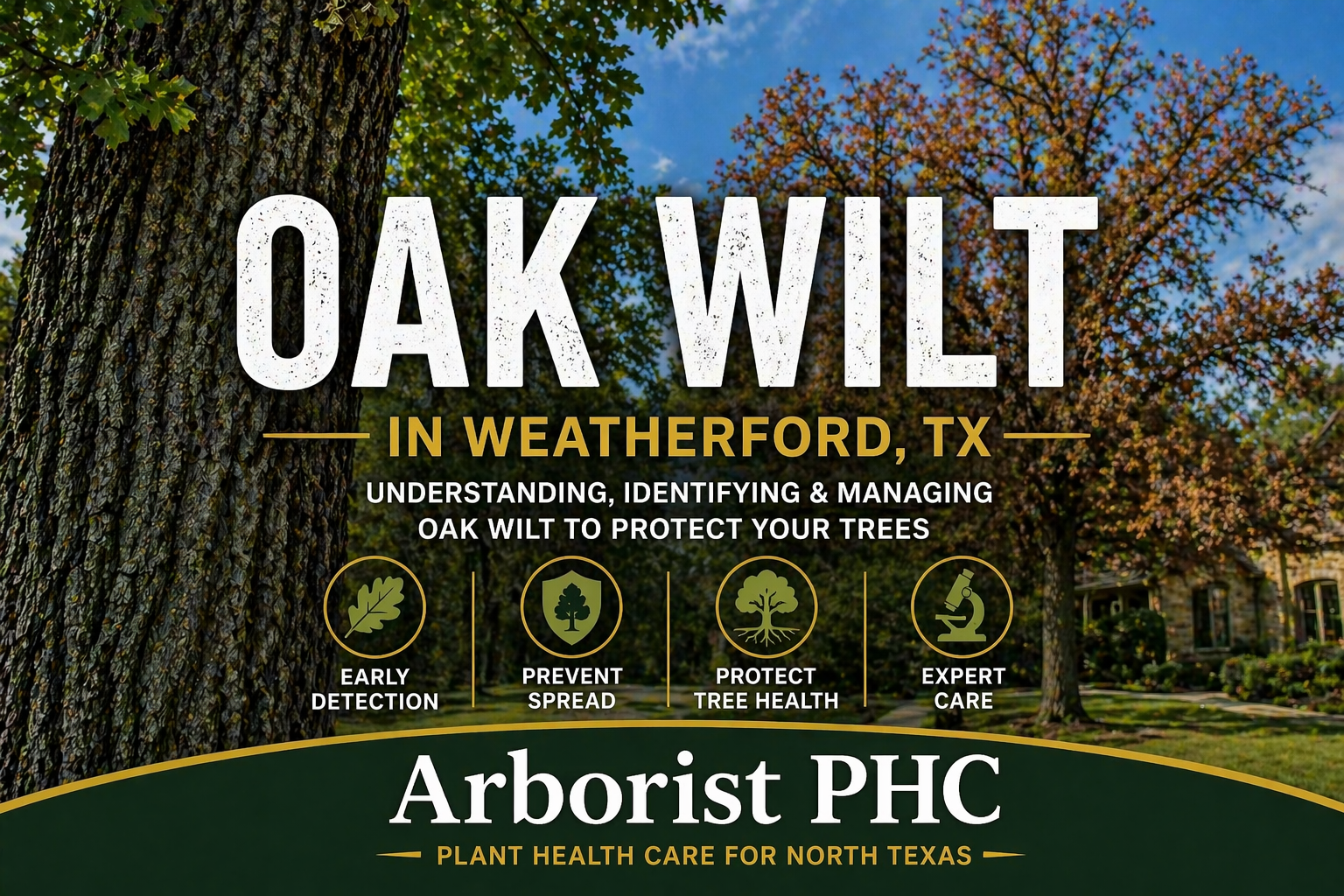
Oak Wilt Weatherford TX | Oak Tree Disease Treatment
Oak Wilt is a serious tree disease in Weatherford TX. Learn how to identify, prevent, and treat Oak Wilt with professional arborist care.
Oak Wilt in Weatherford TX – Identification, Prevention & Treatment
Oak Wilt is one of the most destructive diseases affecting oak trees throughout Weatherford, Texas and across North Texas. This vascular disease interferes with a tree’s ability to transport water, often leading to rapid decline and mortality, especially in Red Oaks.
Understanding how Oak Wilt spreads and how to properly manage it is critical to protecting valuable Live Oaks, Red Oaks, and Post Oaks in residential and commercial landscapes.
What is Oak Wilt?
Oak Wilt is a fungal disease that attacks a tree’s vascular system (xylem), restricting the flow of water and nutrients.
Once infected, trees may experience:
• rapid leaf wilting
• discoloration (bronzing or browning)
• canopy thinning
• branch dieback
• eventual tree death
Red Oaks are especially vulnerable and can decline within weeks, while Live Oaks may decline more gradually.
How Oak Wilt Spreads in Weatherford TX
Oak Wilt spreads in two primary ways:
1. Nitidulid Beetle Transmission
Sap-feeding beetles carry fungal spores from infected trees to fresh wounds on healthy trees.
2. Root Graft Transmission
Live Oaks commonly share interconnected root systems, allowing the disease to spread underground from tree to tree.
This is why Oak Wilt can quickly move through entire clusters of oak trees.
Signs of Oak Wilt in Oak Trees
Early detection is critical. Common symptoms include:
• leaf discoloration starting at margins
• rapid wilting of leaves
• premature leaf drop
• vascular streaking under bark
• sudden canopy thinning
• branch dieback from top down (Red Oaks)
In Live Oaks, symptoms may appear more gradually and spread across the canopy.
High-Risk Conditions in Weatherford
Oak Wilt risk increases under certain conditions:
• pruning during spring months
• storm damage creating fresh wounds
• nearby infected trees
• dense oak populations
• untreated cuts or exposed sapwood
• stress from drought or soil compaction
Weatherford properties with multiple oak trees are especially vulnerable.
Oak Wilt Prevention Strategies
Prevention is the most effective approach when managing Oak Wilt.
Proper Pruning Timing
Avoid pruning during peak beetle activity (spring).
Wound Sealing
Immediately seal any fresh cuts to prevent beetle attraction.
Root Graft Disruption
In high-risk areas, trenching may be recommended to prevent underground spread.
Tree Health Maintenance
Healthy trees are more resilient to disease pressure.
Oak Wilt Treatment Options
When Oak Wilt risk or infection is present, treatment may include:
Macro Infusion (Tree IV)
Direct injections into the vascular system using fungicides such as propiconazole to slow or prevent disease progression.
Root Zone Treatments
Supporting tree health through nutrient and systemic applications.
Basal Drench Applications
Helping manage secondary pests and stress-related conditions.
Monitoring & Follow-Up
Routine evaluations to track progression and adjust treatment strategies.
Oak Trees Most at Risk
In Weatherford TX, the following species are most affected:
• Red Oaks (highly susceptible, rapid decline)
• Live Oaks (spread through root systems)
• Post Oaks under stress conditions
Early protection is critical for preserving these trees.
Importance of Early Detection
Early detection allows for:
• improved treatment success
• reduced disease spread
• protection of surrounding trees
• preservation of canopy health
• reduced long-term costs
Delays can result in irreversible damage.
Oak Wilt Management in Weatherford TX
Arborist PHC provides professional Oak Wilt prevention and treatment programs designed specifically for North Texas conditions.
Our approach focuses on:
• early diagnosis
• targeted treatment applications
• protecting surrounding trees
• improving overall tree health
• long-term disease management