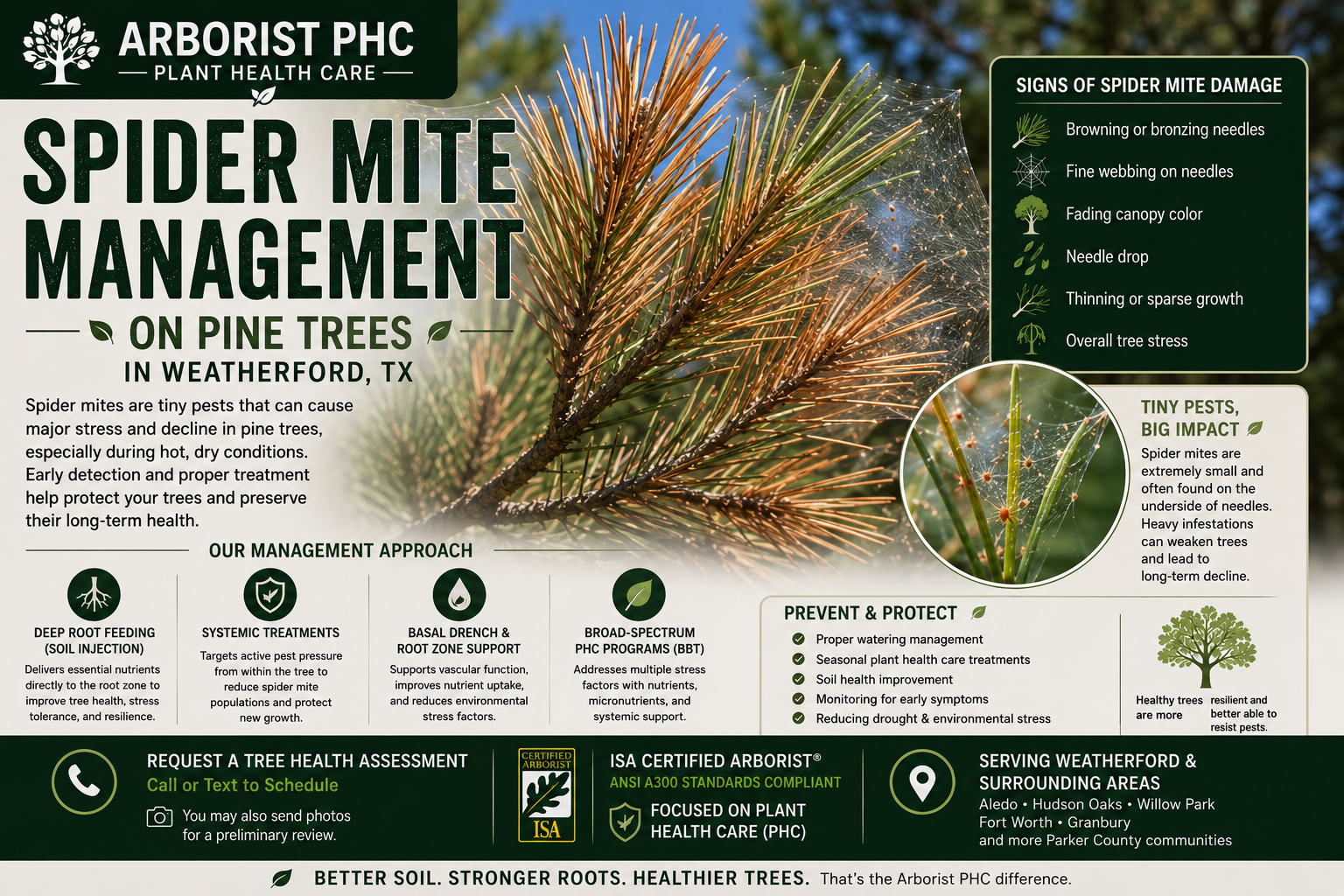
Spider Mite Management on Pine Trees in Weatherford, TX | Pine Tree Pest Control | Arborist PHC
ISA Certified Arborist® | ANSI A300 Compliant | Serving Weatherford & North Texas
Spider Mite Management on Pine Trees in Weatherford, TX
Why Pine Trees Develop Spider Mite Problems in North Texas
Spider mites are one of the most common pest-related issues affecting pine trees throughout Weatherford and surrounding North Texas communities.
At Arborist PHC, we specialize in identifying environmental stress factors and implementing plant health care treatment programs designed to reduce spider mite activity and improve overall tree health.
Our approach follows ISA arboriculture principles and ANSI A300 standards, focusing on long-term health—not temporary surface-level fixes.
What Are Spider Mites?
Spider mites are extremely small sap-feeding pests that attack needles and foliage by extracting moisture and nutrients from plant tissue.
Although difficult to see with the naked eye, heavy infestations can rapidly weaken pine trees—especially during periods of drought and heat stress.
Spider mites thrive in:
Hot, dry weather
Dusty conditions
Environmentally stressed trees
Signs of Spider Mite Damage on Pine Trees
Common symptoms include:
Browning or bronzing needles
Fading canopy color
Needle drop
Sparse or thinning growth
Fine webbing on branches and needles
Overall decline in tree vigor
Damage often begins gradually and worsens during summer heat.
Why Pine Trees in Weatherford Are Vulnerable
Pine trees in Weatherford face several environmental challenges that increase spider mite pressure:
Extreme heat and drought cycles
Dry winds and low humidity
Soil compaction and nutrient stress
Improper watering practices
When pine trees become stressed, they lose their natural ability to defend against pest activity.
The Connection Between Stress & Spider Mites
Spider mites are commonly considered a secondary stress pest, meaning they often attack trees that are already weakened.
Common contributing stress factors include:
Drought stress
Poor root function
Nutrient deficiencies
Freeze damage
Previous fungal or insect pressure
Improving overall tree health is one of the most important steps in long-term spider mite management.
Our Spider Mite Management Approach (Watch Our Process)
At Arborist PHC, our goal is not just to suppress mites—but to improve the tree’s ability to resist future infestations.
Deep Root Feeding (Soil Injection)
Improves nutrient uptake and root function
Supports drought tolerance and stress recovery
Systemic Treatment Programs
Targets active pest pressure internally
Helps reduce long-term insect activity
Basal Drench & Root Zone Support
Supports vascular health and overall tree vigor
Helps reduce environmental stress factors
Broad-Spectrum Plant Health Care (BBT)
Addresses multiple stress factors simultaneously
Includes nutrients, micronutrients, and systemic support
Why Early Detection Matters
Spider mite populations can increase rapidly during hot weather.
Early treatment can help:
Reduce needle loss
Slow canopy decline
Improve tree recovery potential
Prevent severe long-term stress
Once large portions of the canopy are affected, recovery becomes more difficult.
Preventative Pine Tree Care
Preventative care is critical in reducing future infestations.
Recommended practices include:
Consistent watering management
Seasonal plant health care treatments
Soil health improvement
Reducing drought stress
Monitoring for early symptoms
Healthy pine trees are naturally more resistant to pest activity.
Our Diagnosis-First Approach
Not all browning pine needles are caused by spider mites.
We evaluate:
Needle discoloration patterns
Environmental conditions
Root and soil health
Presence of fungal or additional insect pressure
This allows us to determine the true cause of decline before recommending treatment.
Service Areas Near Weatherford
We proudly serve:
Hudson Oaks
Willow Park
Surrounding Parker County communities
Request a Pine Tree Health Assessment (Click Here To Submit A Form)
If your pine trees are showing signs of browning, thinning, or stress, early evaluation is critical.
📞 Call or Text to Schedule
📸 Send photos for a preliminary review
We’re here to help you identify the cause and implement science-based plant health care solutions for long-term pine tree health.
Frequently Asked Questions
-
Yes—many trees can recover if infestations are identified early and stress factors are reduced.
-
Spider mites are actually arachnids, closely related to spiders and ticks.
-
Hot, dry conditions create ideal environments for rapid mite population growth.
-
Proper watering helps reduce stress, but severe infestations often require professional management.
-
No—Arborist PHC focuses strictly on plant health care, diagnosis, and treatment programs.