Webworms on Pecan Trees in Fort Worth TX
Learn how webworms affect Pecan trees in Fort Worth TX. Certified Arborist explains symptoms, causes, and treatment solutions.
Webworms on Pecan Trees in Fort Worth Texas
What Fort Worth Property Owners Are Seeing
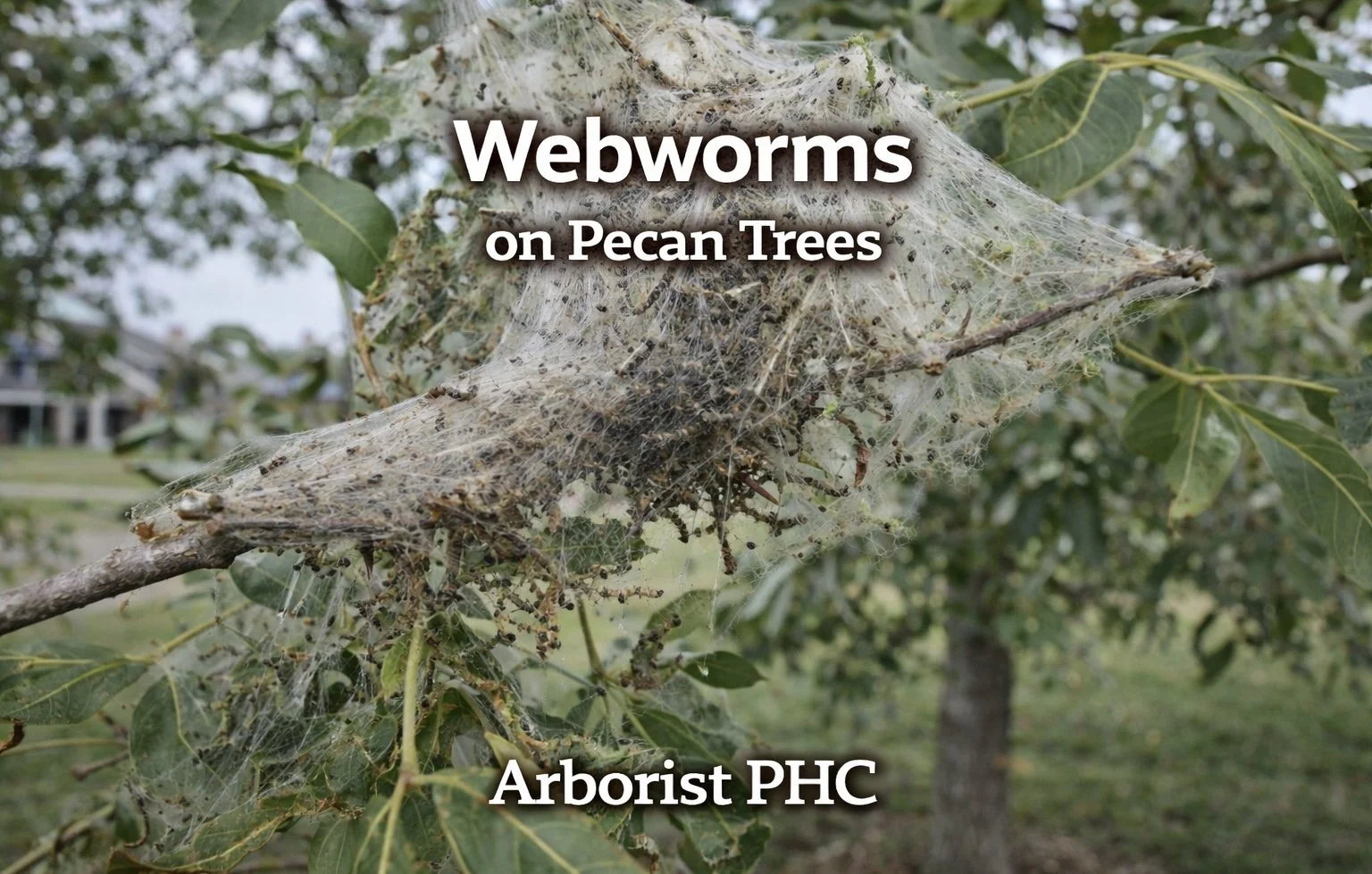
Across Fort Worth, TX, many Pecan trees are showing signs of Webworm infestations, a common seasonal pest that creates visible webbing around foliage at the ends of branches. These silk nests often appear suddenly and can expand quickly as larvae feed on surrounding leaves.
Homeowners frequently notice:
• large web-like nests at branch tips
• leaves skeletonized inside webbing
• clusters of small caterpillars within silk webs
• thinning foliage on outer canopy
• browning leaves inside nests
• reduced aesthetic appearance of tree canopy
• concern about tree health and productivity
While webworms often look alarming, early treatment can significantly reduce long-term stress on the tree.
What are Webworms?
Webworms are caterpillar larvae that live communally inside protective silk webs formed around leaves. The webbing provides protection from predators while larvae feed on foliage.
Common characteristics include:
• dense silk webbing at branch tips
• groups of caterpillars feeding together
• expansion of webbed area as feeding progresses
• visible leaf damage within nests
• multiple generations possible during growing season
Webworms are typically most active during warmer months in North Texas.
Cause → Effect → Risk → Solution
Cause
Webworms develop when adult moths lay eggs on leaves. Once eggs hatch, larvae begin feeding and producing protective silk webbing.
Contributing factors include:
• warm seasonal temperatures
• active insect reproductive cycles
• dense canopy growth
• favorable environmental conditions
• reduced natural predator populations
• previous seasonal infestations
Webworms commonly appear in late spring through summer.
Effect
Feeding activity causes:
• leaf tissue damage
• reduced photosynthesis capability
• thinning outer canopy foliage
• stress on young branch tips
• minor aesthetic decline
• visible silk webbing structures
Affected leaves often appear brown or skeletonized inside the webbing.
Damage is usually concentrated on outer canopy areas.
Risk
If left untreated, heavy infestations may contribute to:
• canopy thinning
• reduced energy production
• slowed tree growth
• increased environmental stress sensitivity
• repeated seasonal infestations
• reduced nut production potential
• weakened branch vitality
Healthy trees often tolerate minor infestations, but repeated stress may reduce vigor.
Why Webworms are Common in Fort Worth
North Texas climate conditions allow webworm populations to thrive:
• long warm seasons
• active insect breeding cycles
• favorable humidity levels
• dense foliage availability
• urban landscape environments
• limited natural insect predators
Pecan trees are particularly attractive hosts for webworm larvae.
Seasonal outbreaks are common throughout the DFW Metroplex.
Symptoms of Webworms on Pecan Trees
Typical indicators include:
• silk webbing around leaf clusters
• visible caterpillars inside webs
• brown or skeletonized leaves
• expanding webbed branch tips
• reduced foliage density in affected areas
• localized canopy thinning
Webbing often becomes more noticeable as larvae grow.
Early identification allows more effective control.
Tree Biological Response
Trees attempt to compensate for foliage loss by reallocating stored carbohydrates and producing new leaf tissue when possible.
Typical responses include:
• increased energy demand
• reduced growth efficiency
• localized stress signals
• decreased photosynthesis capacity
• temporary canopy thinning
Maintaining proper plant health supports recovery potential.
Plant Health Care Treatment Approach
Arborist PHC focuses on managing insect populations while supporting overall tree vitality.
Targeted Insect Control
Applications help reduce feeding activity and population growth.
Deep Root Inoculation
Improves nutrient uptake efficiency and root function.
Broad Spectrum Plant Health Support (BBT)
Programs may include:
• micronutrient supplementation
• plant vitality stimulants
• root zone optimization
• stress mitigation compounds
• soil conditioning support
Balanced Plant Health Care promotes improved canopy recovery.
What Property Owners Should Avoid
Improper management may increase stress:
• ignoring expanding webbing
• delaying treatment during active feeding period
• excessive pruning removing healthy foliage
• drought stress conditions
• compacted soil near root zone
• improper fertilization practices
Healthy trees respond better to minor pest pressures.
Routine monitoring helps prevent severe outbreaks.
When to Contact an ISA Certified Arborist
Professional evaluation may be recommended when:
• webbing becomes widespread
• multiple trees are affected
• canopy thinning becomes noticeable
• repeated infestations occur annually
• tree vigor appears reduced
• nut production declines
Early intervention helps preserve canopy structure.
Conclusion
Webworms are a common seasonal pest affecting Pecan trees throughout Fort Worth and surrounding North Texas areas. Although webbing can appear severe, proper Plant Health Care can help manage populations and support tree vitality. Maintaining strong tree health improves resistance to environmental stressors and recurring pest pressure. Healthy trees maintain fuller canopy density and improved long-term performance.