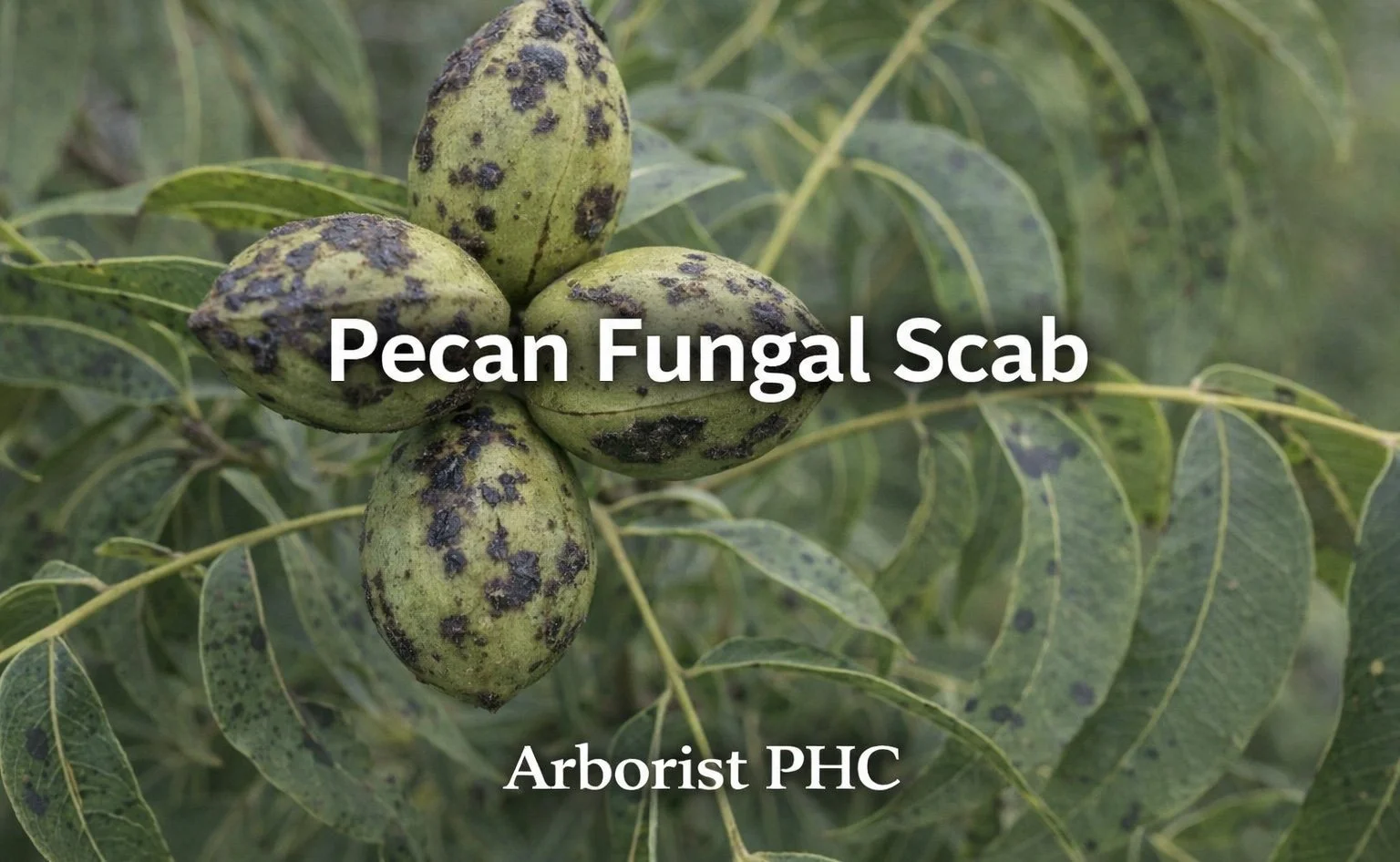
Pecan Fungal Scab Treatment in Azle TX
Learn how Pecan Fungal Scab affects Pecan trees in Azle TX. Certified Arborist explains symptoms, causes, and treatment options for healthier pecan production.
Pecan Fungal Scab on Pecan Trees in Azle, Texas
What Azle Property Owners Are Seeing
Across Azle, TX and surrounding Parker County areas, many Pecan trees are beginning to show symptoms associated with Pecan Fungal Scab, one of the most common and economically significant diseases affecting Pecan trees in North Texas.
Homeowners frequently notice:
• Dark spots forming on developing pecans
• Black or olive-colored lesions on leaves
• Premature nut drop
• Reduced pecan production
• Misshaped or undersized pecans
• Leaf spotting throughout the canopy
• Overall decline in tree vigor
Fungal scab can significantly reduce nut quality and overall tree productivity when environmental conditions favor fungal development.
What is Pecan Fungal Scab?
Pecan Fungal Scab is caused by the fungus Venturia effusa, which infects young leaves, shoots, and developing pecan nuts. The fungus thrives in humid conditions and spreads through airborne spores and rain splash.
The disease affects both ornamental and producing Pecan trees and is particularly active during periods of:
• high humidity
• frequent rainfall
• prolonged leaf wetness
• dense canopy conditions
Young tissue is especially vulnerable to infection.
As the fungus spreads, it disrupts normal nut development and reduces photosynthetic efficiency.
Cause → Effect → Risk → Solution
Cause
Fungal spores spread through:
• rainfall splash
• irrigation contact
• wind movement
• prolonged humidity
• dense canopy moisture retention
Wet foliage significantly increases infection likelihood.
Effect
Infected tissue develops:
• dark scab-like lesions on pecans
• leaf spotting and discoloration
• reduced photosynthesis
• inhibited nut development
• distorted pecan shape
• premature fruit drop
Risk
If untreated, fungal scab may result in:
• major reduction in pecan yield
• poor nut quality
• long-term stress on the tree
• reduced carbohydrate production
• increased susceptibility to secondary pests
• progressive canopy thinning
Repeated yearly infections can significantly reduce productivity.
Solution
Plant Health Care treatments help reduce fungal pressure while supporting proper tree nutrition and overall canopy health.
Why Pecan Scab is Common in Azle, Texas
North Texas environmental conditions frequently support fungal disease development:
• spring rainfall patterns
• warm seasonal temperatures
• humidity fluctuations
• irrigation overspray on foliage
• dense canopy moisture retention
• clay soils affecting drainage
• extended leaf wetness periods
Pecan trees in residential landscapes often experience irregular watering patterns, contributing to plant stress.
Stress reduces the tree’s ability to resist fungal infection.
Symptoms of Pecan Fungal Scab
Common indicators include:
• black lesions on pecan shucks
• olive-colored spots on leaves
• premature nut drop
• delayed nut maturity
• reduced kernel development
• irregular nut sizing
• leaf spotting throughout canopy
• increased disease severity during wet seasons
Symptoms often begin in lower canopy areas before spreading throughout the tree.
Tree Biological Response
When fungal infection disrupts normal leaf and nut tissue function, Pecan trees may experience reduced energy production due to impaired photosynthesis.
Biological stress responses may include:
• decreased carbohydrate reserves
• reduced nut production capacity
• slowed seasonal growth
• increased vulnerability to environmental stress
• reduced canopy density over time
Healthy root systems play an important role in recovery and resilience.
Plant Health Care Treatment Approach
At Arborist PHC, treatment programs focus on reducing fungal pressure while supporting strong tree vitality.
Deep Root Inoculation
Subsurface soil applications improve nutrient uptake efficiency and support canopy development.
Basal Drench Application
Systemic uptake supports improved internal plant defense response.
Broad Spectrum Plant Health Support (BBT)
Treatment programs may include:
• systemic fungicide support
• micronutrient supplementation
• soil conditioning materials
• carbohydrate root stimulants
• organic plant health compounds
• stress recovery solutions
Balanced Plant Health Care supports consistent nut development and improved canopy function.
What Homeowners Should Avoid
Improper cultural practices may increase disease severity:
• excessive overhead irrigation
• dense canopy conditions without airflow
• delayed treatment after symptoms appear
• inconsistent watering schedules
• ignoring early leaf spotting
• poor soil drainage conditions
Maintaining proper watering consistency helps reduce plant stress.
Monitoring foliage early in the season helps detect infection early.
When to Contact a Certified Arborist
Professional evaluation is recommended when:
• pecans develop dark spotting
• nut production declines
• leaves show olive or black lesions
• premature nut drop occurs
• multiple seasons show reduced harvest
• canopy vigor decreases
Early intervention improves likelihood of maintaining nut quality and tree health.
Conclusion
Pecan Fungal Scab is one of the most common diseases affecting Pecan trees in Azle and surrounding North Texas communities. While symptoms may initially appear cosmetic, untreated infections can significantly impact nut production and overall tree vitality. Plant Health Care programs help improve resistance to fungal pathogens while supporting consistent canopy development and long-term tree performance. Maintaining proper tree health helps preserve productivity, landscape value, and structural vitality.