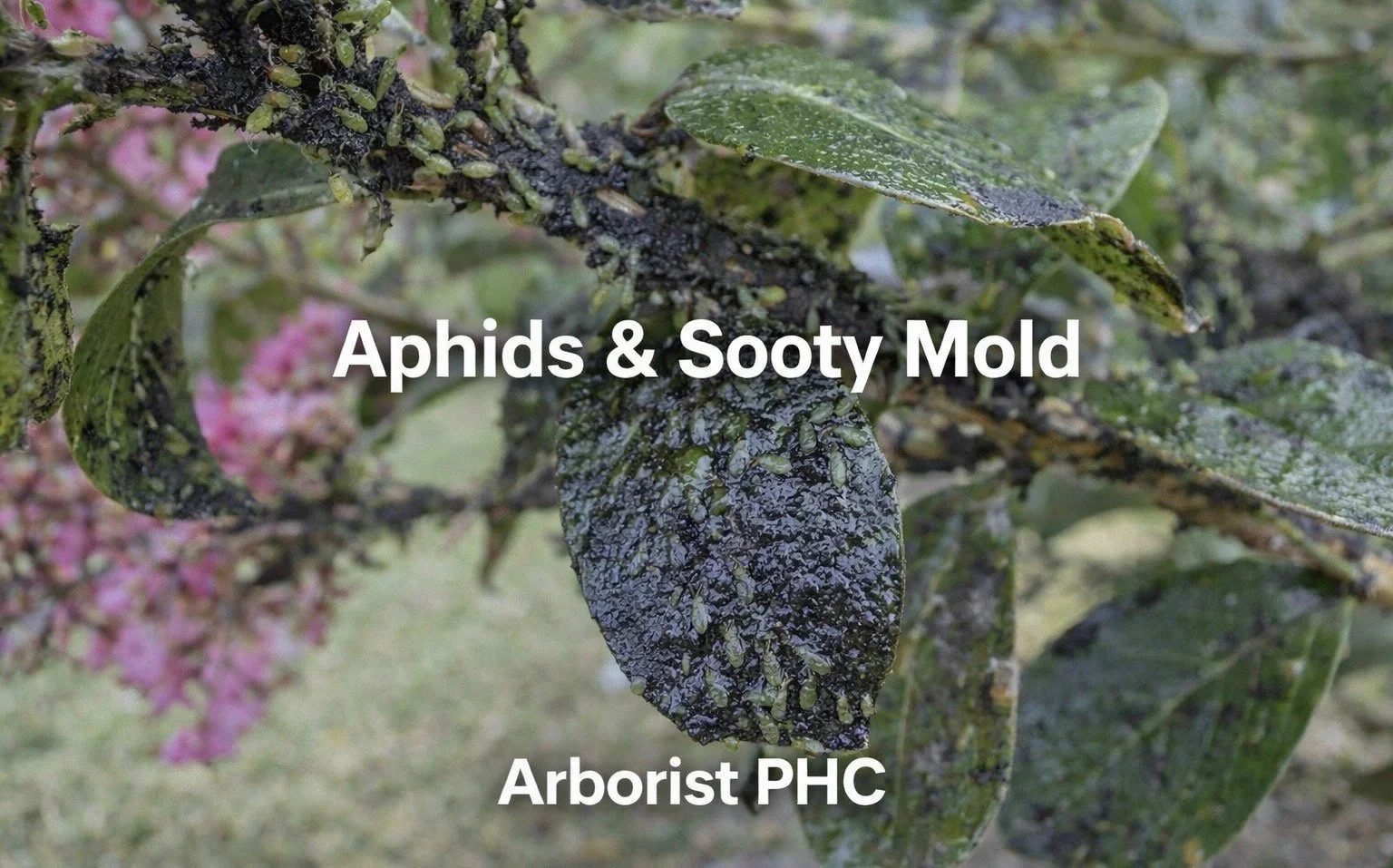
Aphids & Sooty Mold on Crape Myrtles in Burleson, Texas
Learn how aphids and sooty mold affect Crape Myrtles in Burleson TX. Plant Health Care treatments help protect tree health and appearance.
Understanding Pest Pressure & Fungal Growth on Ornamental Trees in North Texas
What Homeowners in Burleson Are Seeing 🌸🌳
Homeowners throughout Burleson, TX frequently notice a black, soot-like coating developing on the leaves and stems of Crape Myrtles. This condition is commonly associated with aphid infestations, which produce a sticky substance called honeydew.
As aphids feed on plant sap, they excrete honeydew onto leaf surfaces. This sugary residue creates the ideal environment for sooty mold fungus to develop.
Common symptoms include:
• black residue on leaves or bark
• sticky substance on foliage or surfaces below tree
• visible clusters of small insects on stems or leaf undersides
• reduced leaf appearance and aesthetics
• premature leaf drop in severe infestations
• attraction of ants feeding on honeydew
• reduced flowering performance
While sooty mold itself does not directly infect plant tissue, it can block sunlight from reaching leaf surfaces, reducing photosynthesis efficiency.
What Causes Aphid Infestations on Crape Myrtles
Aphids are small sap-feeding insects that feed on vascular fluids within leaves and stems.
They are commonly attracted to:
• new seasonal growth
• nutrient-rich foliage
• environmental stress conditions
• compacted soils
• excessive nitrogen fertilization
• drought stress followed by rapid growth flushes
Crape Myrtles are particularly susceptible to aphid activity during warm growing seasons throughout North Texas.
Relationship Between Aphids & Sooty Mold
Sooty mold develops as a secondary fungal growth on the sticky honeydew left behind by aphids.
The presence of sooty mold may:
• reduce photosynthesis efficiency
• cause leaves to appear unhealthy
• reduce ornamental value
• create premature leaf decline in heavy infestations
Managing the insect population helps prevent continued fungal buildup.
Plant Health Care Approach 🌱
Plant Health Care treatments focus on reducing pest populations while supporting overall tree vitality.
Deep Root Inoculation
Subsurface injections deliver nutrients and soil-support materials into the root zone, improving vigor and helping the tree better tolerate pest pressure.
Basal Drench Application
Systemic materials applied to the lower trunk allow absorption into vascular tissue, helping reduce insect feeding activity.
Canopy Health Monitoring
Evaluating seasonal growth patterns helps determine if environmental stress factors are contributing to susceptibility, Preventative Care Programs, & Routine Plant Health Care treatments can help maintain balanced growth and reduce recurring infestations.
Risk Factors if Left Untreated
Heavy aphid populations can contribute to:
• excessive honeydew buildup
• increased sooty mold development
• reduced photosynthesis
• premature leaf drop
• increased stress during summer heat
• reduced flowering performance
Preventative care helps maintain tree appearance and vitality.
What Property Owners Should Avoid
Practices that may increase aphid populations include:
• over-fertilizing with high nitrogen products
• inconsistent watering schedules
• ignoring early sticky residue on leaves
• allowing pest populations to multiply unchecked
Early treatment helps prevent widespread buildup of sooty mold.
Plant Health Care Services in Burleson, TX
Our Plant Health Care programs follow science-based arboriculture practices aligned with standards to support long-term ornamental tree health and vitality.
📞 Call or text today for a free consultation
817.981.3596 | 682.220.8191