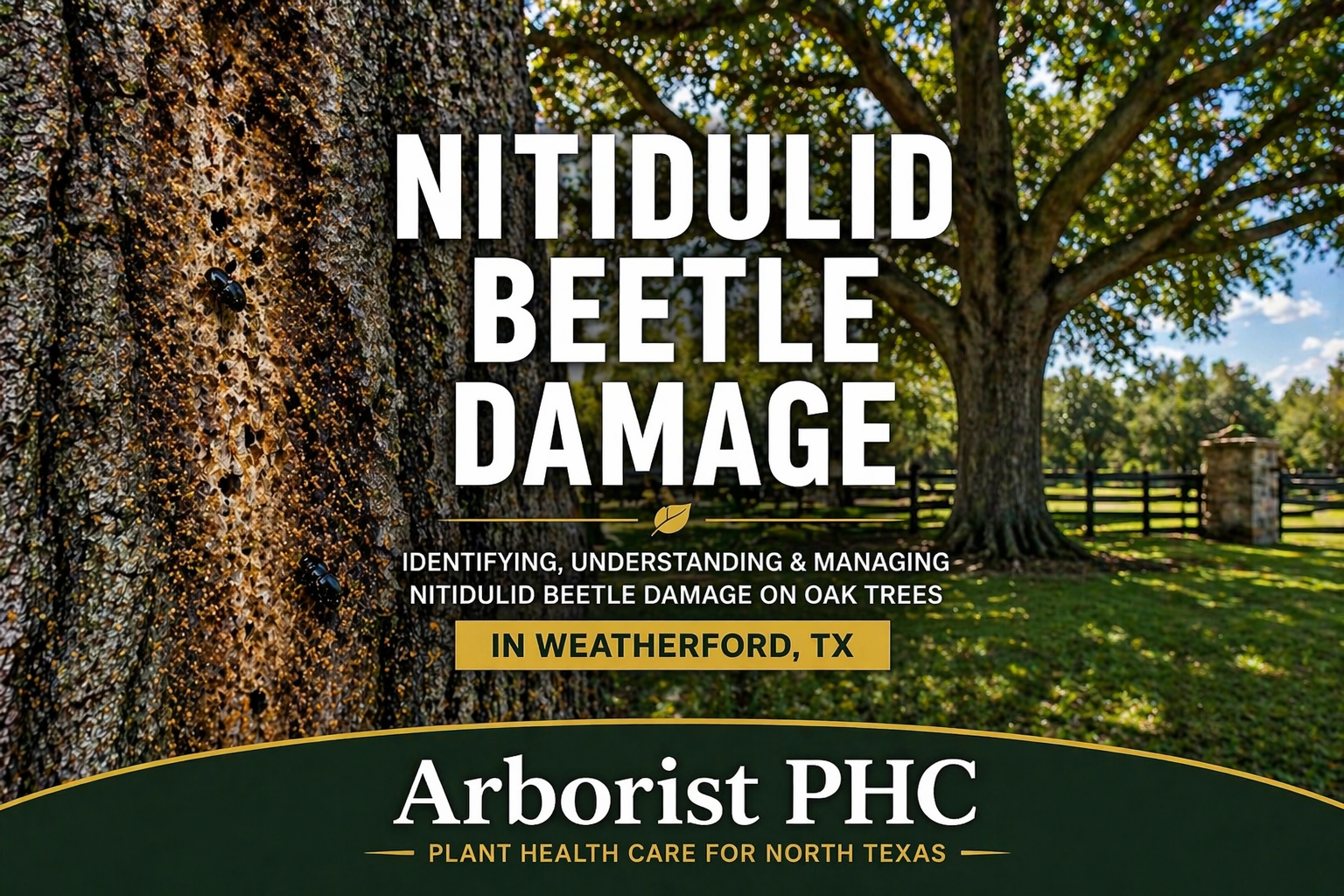
Nitidulid Beetle Damage on Oak Trees in Weatherford TX
Nitidulid beetles spread Oak Wilt in Weatherford TX. Learn how to protect oak trees with professional pest pressure and plant health care management.
Nitidulid Beetle Damage on Oak Trees in Weatherford TX – Understanding the Risk to Tree Health
Nitidulid beetles, commonly known as sap beetles, play a critical role in the spread of serious vascular diseases affecting oak trees throughout Weatherford, Texas and surrounding North Texas areas.
While the beetles themselves do not directly kill trees, they are strongly associated with the transmission of Oak Wilt, a destructive fungal disease that disrupts the tree’s vascular system and can lead to rapid decline.
Understanding Nitidulid beetle activity is essential for protecting valuable Live Oaks and Red Oaks in North Texas landscapes.
What Are Nitidulid Beetles?
Nitidulid beetles are small, dark-colored insects that are attracted to:
• fresh tree wounds
• pruning cuts
• storm damage
• exposed sap flow
• decaying organic material
These beetles feed on sap and are commonly active during warmer months, especially in spring and early summer when disease transmission risk is highest.
Why Nitidulid Beetles Are a Concern for Oak Trees
The primary concern with Nitidulid beetles is their role as vectors of Oak Wilt.
When beetles come into contact with fungal spores from an infected tree and then move to a freshly wounded healthy oak, they can introduce the pathogen into the tree’s vascular system.
Once inside, the fungus spreads through the xylem, disrupting water movement and leading to:
• rapid canopy decline
• leaf discoloration and wilting
• branch dieback
• eventual tree mortality (especially in Red Oaks)
Common Signs of Nitidulid Beetle Activity
While the beetles themselves are small, their activity can often be identified through indirect signs:
• beetles present around fresh pruning cuts
• sap flow or “bleeding” wounds
• increased insect activity on damaged bark
• presence of fungal mats (in infected trees)
• early signs of Oak Wilt infection in nearby trees
Monitoring fresh wounds is critical in preventing infestation and disease transmission.
High-Risk Situations in Weatherford TX
Certain conditions significantly increase the likelihood of Nitidulid beetle activity:
• pruning during spring and early summer
• storm damage creating fresh wounds
• construction injury to trunks or roots
• untreated cuts or exposed cambium
• nearby infected oak trees
Weatherford properties with dense oak populations are especially vulnerable.
Prevention of Nitidulid Beetle Damage
Preventative care is the most effective approach when managing Nitidulid beetle-related risks.
Proper Pruning Timing
Avoid pruning oak trees during peak beetle activity periods (typically spring).
Wound Sealing
Fresh pruning cuts should be sealed immediately to reduce beetle attraction.
Tree Health Maintenance
Healthy trees are less attractive to pests and more resistant to disease transmission.
Monitoring & Early Detection
Routine inspections help identify risk factors before significant damage occurs.
Treatment & Management Strategies
When risk is identified, Plant Health Care programs may include:
Systemic Treatments
Applications delivered through the root zone or vascular system help protect against disease spread.
Basal Applications
Targeted treatments at the trunk and root flare help reduce insect activity and improve absorption.
Nutrient Support
Fertilization programs improve overall tree vigor and stress tolerance.
Integrated Pest Management (IPM)
Combining multiple strategies helps reduce pest populations while supporting long-term tree health.
Oak Trees Most at Risk in Weatherford
Certain oak species are more susceptible to Nitidulid beetle-related issues:
• Red Oaks (highly vulnerable to Oak Wilt)
• Live Oaks (susceptible through root graft transmission)
• Post Oaks under stress conditions
Protecting these species is critical due to their long-term landscape and property value.
Importance of Early Detection
Early detection significantly improves the ability to:
• prevent Oak Wilt transmission
• reduce pest population levels
• protect surrounding trees
• preserve canopy health
• reduce long-term treatment costs
Delaying treatment can lead to rapid spread, especially in Red Oaks.
Nitidulid Beetle Management in Weatherford TX
Arborist PHC provides professional Pest Pressure and Disease Prevention programs designed specifically for North Texas oak species.
Our approach focuses on:
• protecting trees from insect vectors
• reducing disease transmission risk
• improving overall tree health
• supporting long-term structural stability