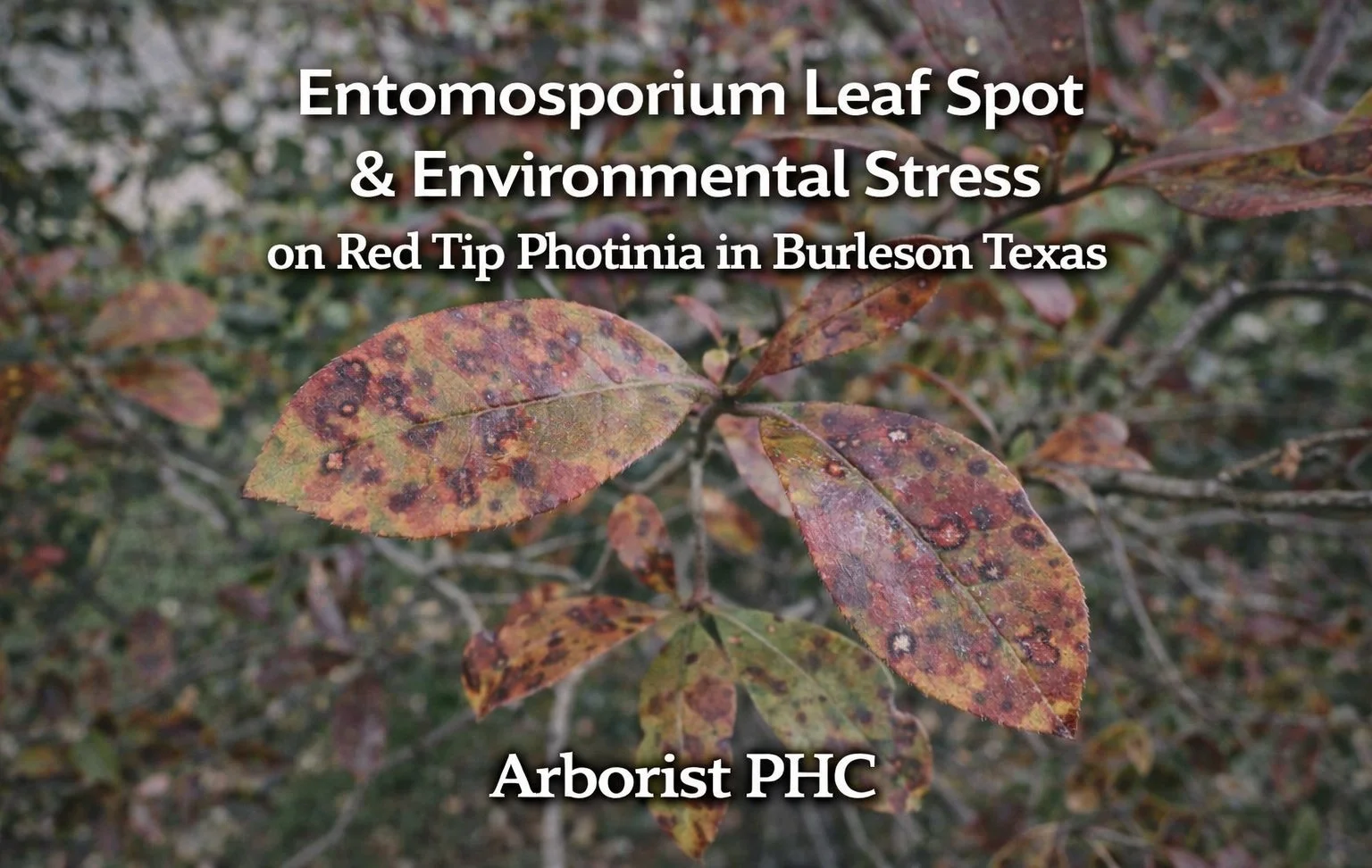
Entomosporium Leaf Spot & Environmental Stress on Red Tip Photinia in Burleson, TX
Learn how Entomosporium Leaf Spot affects Red Tip Photinia in Burleson TX. Certified Arborist explains symptoms, causes, and treatment options.
Entomosporium Leaf Spot & Environmental Stress on Red Tip Photinia in Burleson Texas
What Burleson Property Owners Are Seeing
Throughout Burleson, TX, many Red Tip Photinia shrubs are showing symptoms of Entomosporium Leaf Spot, often combined with environmental stress factors that increase disease severity. This fungal disease commonly affects Photinia species across North Texas landscapes, especially during periods of increased moisture and humidity.
Property owners often observe:
• red, purple, or dark brown spotting on leaves
• circular lesions expanding across foliage
• premature leaf drop
• thinning shrub canopy
• reduced density of red new growth
• overall decline in plant appearance
• increased stress during seasonal weather fluctuations
When fungal pressure combines with environmental stress, symptoms can develop rapidly.
What is Entomosporium Leaf Spot?
Entomosporium Leaf Spot is a fungal disease that affects Red Tip Photinia by infecting leaf tissue, creating visible spotting and weakening plant vigor. The fungus spreads through spores that travel via moisture, wind, and plant-to-plant contact.
Common characteristics include:
• small circular red or maroon spots on leaves
• spots enlarging into dark lesions
• yellowing tissue surrounding lesions
• leaf discoloration and distortion
• premature leaf drop
• reduced ornamental value
Young leaves are especially vulnerable during spring flush growth.
Cause → Effect → Risk → Solution
Cause
Entomosporium Leaf Spot develops when fungal spores infect leaf tissue under favorable environmental conditions.
Common contributing factors include:
• high humidity levels
• frequent rainfall or irrigation exposure
• limited air circulation
• dense shrub planting
• prolonged leaf moisture
• seasonal temperature fluctuations
• environmental stress weakening plant defenses
Burleson climate conditions often provide ideal fungal development environments.
Effect
Fungal infection affects plant physiology and canopy density.
Common effects include:
• spotting across leaf surfaces
• reduced photosynthesis efficiency
• premature leaf drop
• thinning canopy structure
• slowed growth production
• reduced visual appeal of landscape shrubs
Repeated infections may weaken plant vitality over time.
Risk
If untreated, Entomosporium Leaf Spot may contribute to:
• progressive leaf loss
• sparse canopy density
• weakened plant vigor
• increased susceptibility to secondary stress
• long-term aesthetic decline
• repeated seasonal infections
Environmental stress may accelerate disease progression.
Maintaining plant health improves resilience.
Environmental Stress Factors Affecting Red Tip Photinia
Environmental stress commonly contributes to increased disease severity.
Stress contributors may include:
• compacted soils
• poor drainage conditions
• drought stress periods
• inconsistent irrigation practices
• excessive heat exposure
• limited airflow within dense plantings
• transplant stress
• nutrient imbalances
When stress is present, plants have reduced ability to defend against fungal pathogens.
Balanced plant health improves natural resistance.
Symptoms of Entomosporium Leaf Spot
Typical symptoms include:
• dark spotting on leaf surfaces
• maroon or purple lesions
• yellow halos surrounding spots
• leaf discoloration
• premature leaf drop
• thinning canopy foliage
• reduced red new growth appearance
Symptoms often begin on lower interior foliage before spreading outward.
Plant Health Care Treatment Approach
Arborist PHC focuses on managing fungal pressure while improving plant vitality and environmental resilience.
Targeted Fungicide Applications
Helps suppress fungal development and reduce spread.
Deep Root Inoculation
Supports root function and nutrient absorption.
Broad Spectrum Plant Health Support (BBT)
Programs may include:
• micronutrient supplementation
• plant vitality stimulants
• soil conditioning materials
• stress mitigation compounds
• root zone optimization
Balanced Plant Health Care supports improved plant performance.
What Property Owners Should Avoid
Certain conditions may increase disease severity:
• overhead irrigation wetting foliage frequently
• overcrowded shrub spacing
• delayed treatment response
• excessive pruning removing protective canopy
• compacted soil conditions
• poor airflow between shrubs
Proper spacing and plant maintenance improve air circulation.
Routine monitoring helps reduce recurrence.
When to Contact an Certified Arborist
Professional evaluation is recommended when:
• spotting increases rapidly
• shrubs lose significant foliage
• canopy density decreases
• repeated infections occur seasonally
• plant vigor declines
• aesthetic quality is impacted
Early treatment helps maintain plant density and appearance.
Conclusion
Entomosporium Leaf Spot is a common fungal condition affecting Red Tip Photinia shrubs throughout Burleson and surrounding North Texas communities. When combined with environmental stress factors, disease severity may increase, making Plant Health Care an important component of long-term shrub vitality. Healthy plants demonstrate improved resilience to fungal pathogens and seasonal stress.