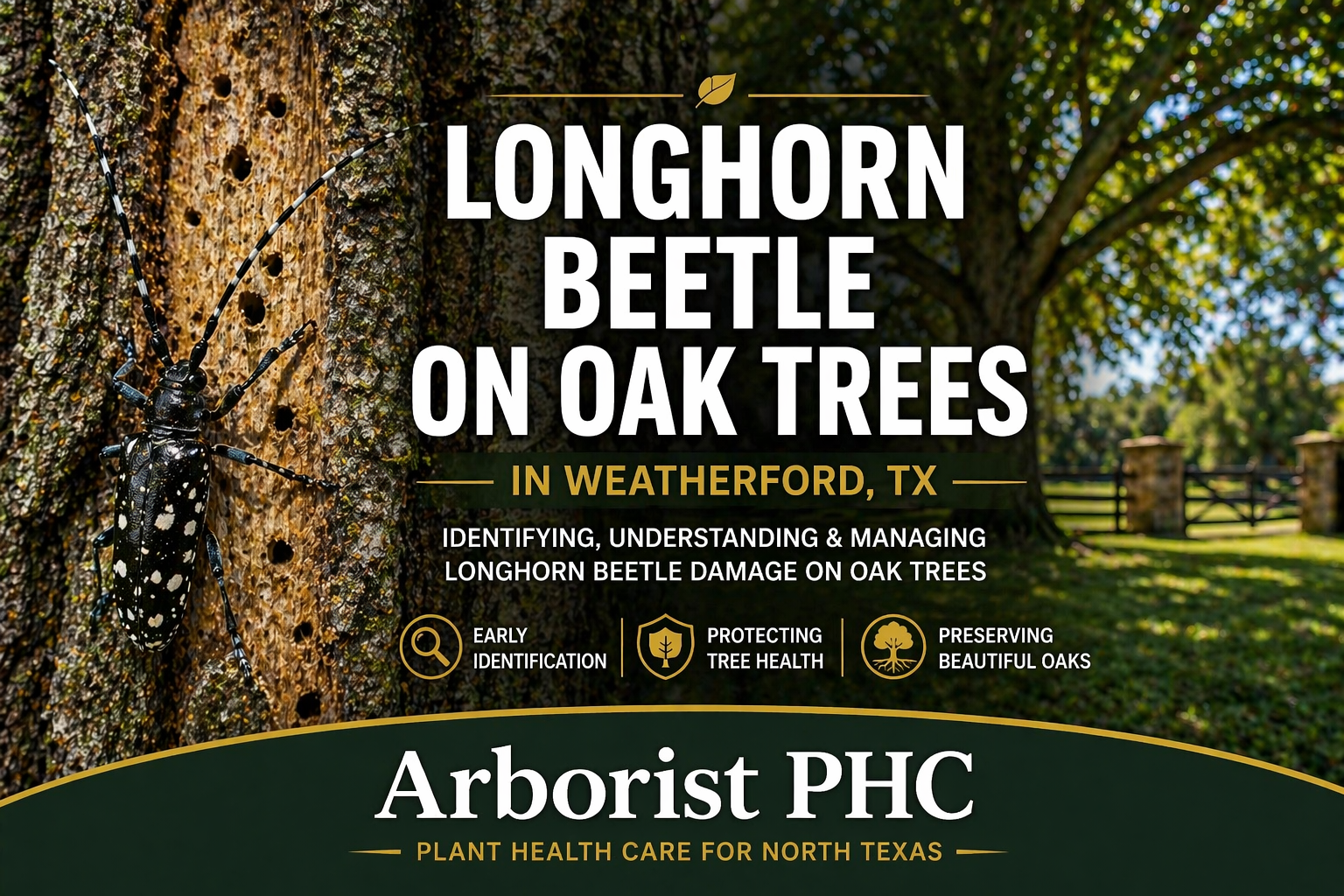
Longhorn Beetle Damage on Oak Trees in Weatherford TX
Longhorn beetles attack stressed oak trees in Weatherford TX. Learn how to identify damage and protect trees with professional pest management.
Longhorn Beetle Damage on Oak Trees in Weatherford TX – Identifying & Managing Borer Activity
Longhorn beetles (family Cerambycidae) are wood-boring insects that commonly target stressed or declining oak trees throughout Weatherford, Texas and surrounding North Texas areas.
While healthy trees can often tolerate minor activity, longhorn beetle infestations are a strong indicator of underlying stress and can contribute to structural decline if not properly managed.
Understanding the relationship between tree stress and borer activity is essential for protecting valuable oak trees.
What Are Longhorn Beetles?
Longhorn beetles are identifiable by their long antennae and are commonly associated with:
• hardwood trees such as oaks
• stressed or declining trees
• freshly damaged or wounded wood
The larvae are the primary concern, as they bore into the wood, feeding within the trunk and branches.
Why Longhorn Beetles Target Oak Trees
Longhorn beetles are typically secondary pests, meaning they are attracted to trees already under stress.
Common stress factors in Weatherford TX include:
• drought conditions
• soil compaction
• nutrient deficiencies
• root damage from construction
• environmental stress (heat/freeze cycles)
• fungal disease presence
• improper watering practices
When a tree’s defense system is weakened, it becomes more vulnerable to insect colonization.
Signs of Longhorn Beetle Damage
Identifying early signs of infestation is critical for preventing further decline.
Common symptoms include:
• small to medium round exit holes in bark
• sawdust-like material (frass) near the base of the tree
• bark splitting or cracking
• localized dieback in branches
• thinning canopy density
• increased woodpecker activity
• weakened structural integrity
These signs indicate active larval feeding within the tree.
Impact on Oak Tree Health
Longhorn beetle larvae tunnel through the tree’s vascular and structural tissue, which can:
• disrupt water and nutrient movement
• weaken branch structure
• increase risk of limb failure
• accelerate decline in already stressed trees
• contribute to long-term canopy thinning
While not always immediately fatal, infestations significantly reduce tree health over time.
High-Risk Conditions in Weatherford TX
Certain site conditions increase susceptibility to longhorn beetle infestations:
• compacted clay soils
• high soil pH limiting nutrient availability
• drought-stressed trees
• overwatered or poorly drained soil conditions
• trees recovering from storm or freeze damage
• unmanaged pest or fungal pressure
Oak trees in urban and residential landscapes are particularly vulnerable.
Treatment & Management Strategies
Effective management focuses on improving tree health while reducing pest pressure.
Root Zone Treatments
Systemic applications delivered through the soil allow uptake through the vascular system, helping protect against internal feeding activity.
Basal Bark Applications
Targeted treatments at the trunk improve absorption and help protect high-risk areas.
Nutrient Management
Fertilization programs help restore vigor and improve natural defense responses.
Stress Reduction
Addressing irrigation practices, soil conditions, and compaction helps reduce susceptibility.
Integrated Plant Health Care (IPM)
Combining multiple treatment methods provides long-term protection and improves overall tree performance.
Oak Species Commonly Affected
In Weatherford TX, longhorn beetles are most commonly observed in:
• Live Oaks
• Red Oaks
• Post Oaks
• Savannah Post Oaks
Trees already under stress are at significantly higher risk.
Importance of Early Detection
Early identification allows for:
• reduced internal damage
• improved treatment effectiveness
• preservation of structural integrity
• prevention of further decline
• protection of surrounding trees
Delaying treatment often leads to increased infestation severity.
Longhorn Beetle Management in Weatherford TX
Arborist PHC provides professional Pest Pressure Management and Plant Health Care programs designed specifically for North Texas oak species.
Our approach focuses on:
• identifying stress-related vulnerabilities
• reducing insect pressure
• improving root and canopy health
• supporting long-term tree stability
Proper management helps preserve both the health and value of your trees.