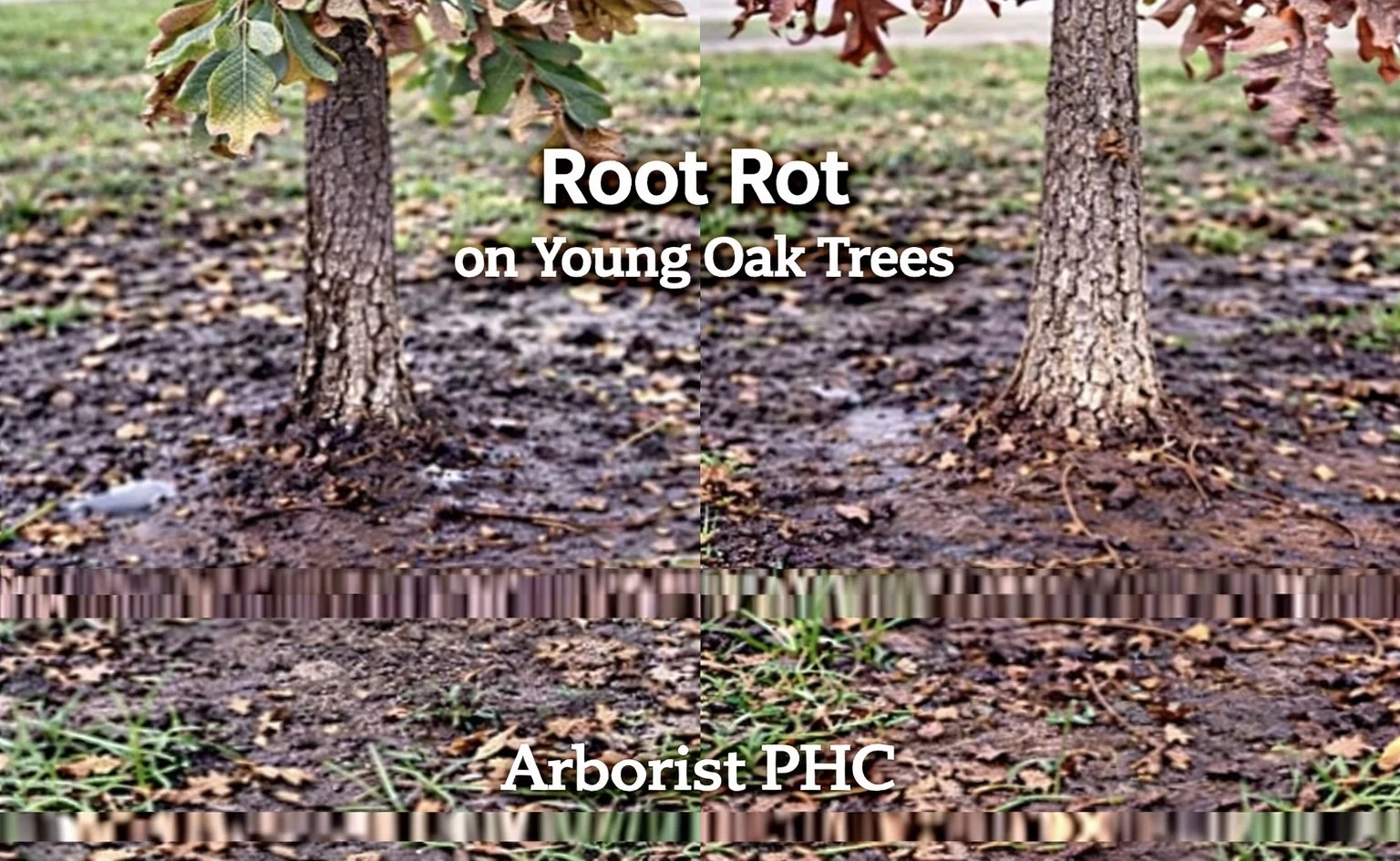
Root Rot on Young Oak Trees in Fort Worth, TX
Learn how root rot affects young Oak trees in Fort Worth TX. ISA Certified Arborist explains symptoms, causes, and Plant Health Care solutions.
Root Rot on Young Oak Trees in Fort Worth Texas
What Fort Worth Property Owners Are Seeing
Across Fort Worth, TX, many young Oak trees are showing symptoms of root rot, a soil-borne condition that affects the root system’s ability to absorb water and nutrients properly. Root rot is especially common in newly planted trees where drainage conditions, soil compaction, or overwatering create an environment favorable for fungal pathogens.
Young Oak trees experiencing root rot may show:
• thinning canopy density
• leaves turning yellow or brown prematurely
• smaller than normal leaf development
• delayed seasonal growth
• sparse canopy structure
• wilting despite adequate watering
• darkened or decaying roots beneath soil
• slowed overall tree establishment
Because roots are located below grade, symptoms often appear in the canopy first.
What is Root Rot?
Root rot is typically caused by fungal organisms that thrive in overly moist or poorly drained soil conditions. These fungi attack the root system, reducing the tree’s ability to transport water and nutrients throughout the vascular system.
Common root rot pathogens affecting Oaks include:
• Phytophthora species
• Armillaria species
• Pythium species
• Rhizoctonia species
When roots remain saturated for extended periods, oxygen levels decrease in the soil. This creates stress conditions that allow fungal organisms to colonize weakened root tissue.
Healthy roots require oxygen to function properly.
When oxygen exchange is limited, root decline may begin.
Cause → Effect → Risk → Solution
Cause
Root rot commonly develops due to:
• excessive watering frequency
• poor soil drainage
• compacted clay soils common in Fort Worth
• planting too deeply
• improper soil grading
• irrigation system oversaturation
• heavy rainfall accumulation
• lack of soil aeration
• mulch piled against trunk flare
Young trees establishing new root systems are particularly vulnerable.
Effect
Fungal pathogens reduce root function which can cause:
• limited nutrient uptake
• reduced water absorption efficiency
• slowed canopy development
• leaf discoloration
• weakened structural root support
• decline in overall tree vigor
• increased environmental stress sensitivity
As root health declines, canopy symptoms typically increase.
Risk
If root rot progresses, potential risks include:
• continued canopy thinning
• slowed growth development
• increased vulnerability to pest pressure
• reduced drought tolerance
• structural instability in severe cases
• increased susceptibility to secondary pathogens
• shortened tree lifespan
Early detection improves recovery potential.
Why Root Rot is Common in Fort Worth
Soil conditions in North Texas contribute to root stress:
• heavy clay soils limiting drainage
• soil compaction from construction activity
• inconsistent rainfall patterns
• irrigation systems applying excess moisture
• poor soil aeration
• improper planting depth
• excessive mulch accumulation
Young Oaks planted in compacted soil often struggle to establish strong root systems.
Balanced soil moisture improves root respiration.
Symptoms of Root Rot on Young Oak Trees
Typical indicators include:
• yellowing leaves during growing season
• reduced canopy density
• slow growth rate
• undersized foliage
• premature leaf drop
• canopy thinning at branch tips
• delayed seasonal development
• stress appearance despite watering
Symptoms often become more noticeable during heat stress periods.
Tree Biological Response (Root Stress Physiology)
When root systems are compromised, trees attempt to conserve resources by reducing canopy demand. This response may include:
• smaller leaf production
• slowed shoot elongation
• increased carbohydrate allocation to roots
• delayed bud development
• reduced transpiration rates
Improving root zone conditions supports recovery potential.
Plant Health Care Treatment Approach
Arborist PHC treatment programs focus on improving soil structure and supporting root function.
Deep Root Inoculation
Subsurface applications improve soil oxygen exchange and nutrient uptake efficiency.
Soil Conditioning Support
Improves soil structure and water movement balance.
Broad Spectrum Plant Health Support (BBT)
Treatment programs may include:
• micronutrient supplementation
• soil conditioning materials
• carbohydrate root stimulants
• organic plant health compounds
• stress mitigation solutions
• improved root respiration support
Balanced Plant Health Care promotes stronger root development and improved canopy performance.
What Homeowners Should Avoid
Improper cultural practices may increase risk of root rot:
• frequent shallow watering
• poorly draining planting sites
• planting trees too deeply
• mulch piled against trunk
• excessive irrigation frequency
• compacted soil conditions
• poor grading around tree base
Watering deeply at proper intervals supports root expansion.
Maintaining visible root flare improves oxygen exchange.
When to Contact an ISA Certified Arborist
Professional evaluation is recommended when:
• young Oak trees show slow establishment
• canopy appears thin or discolored
• leaves appear undersized
• soil remains saturated for extended periods
• tree does not respond to seasonal growth patterns
• symptoms persist despite watering adjustments
Early Plant Health Care support helps improve root development.
Conclusion
Root rot is a common soil-related condition affecting young Oak trees throughout Fort Worth and surrounding North Texas communities. Because root health directly influences canopy development, proper soil management plays a critical role in long-term tree vitality. Improving soil conditions allows young trees to establish stronger root systems and better tolerate environmental stress. Healthy roots support stronger canopy growth and improved landscape performance.