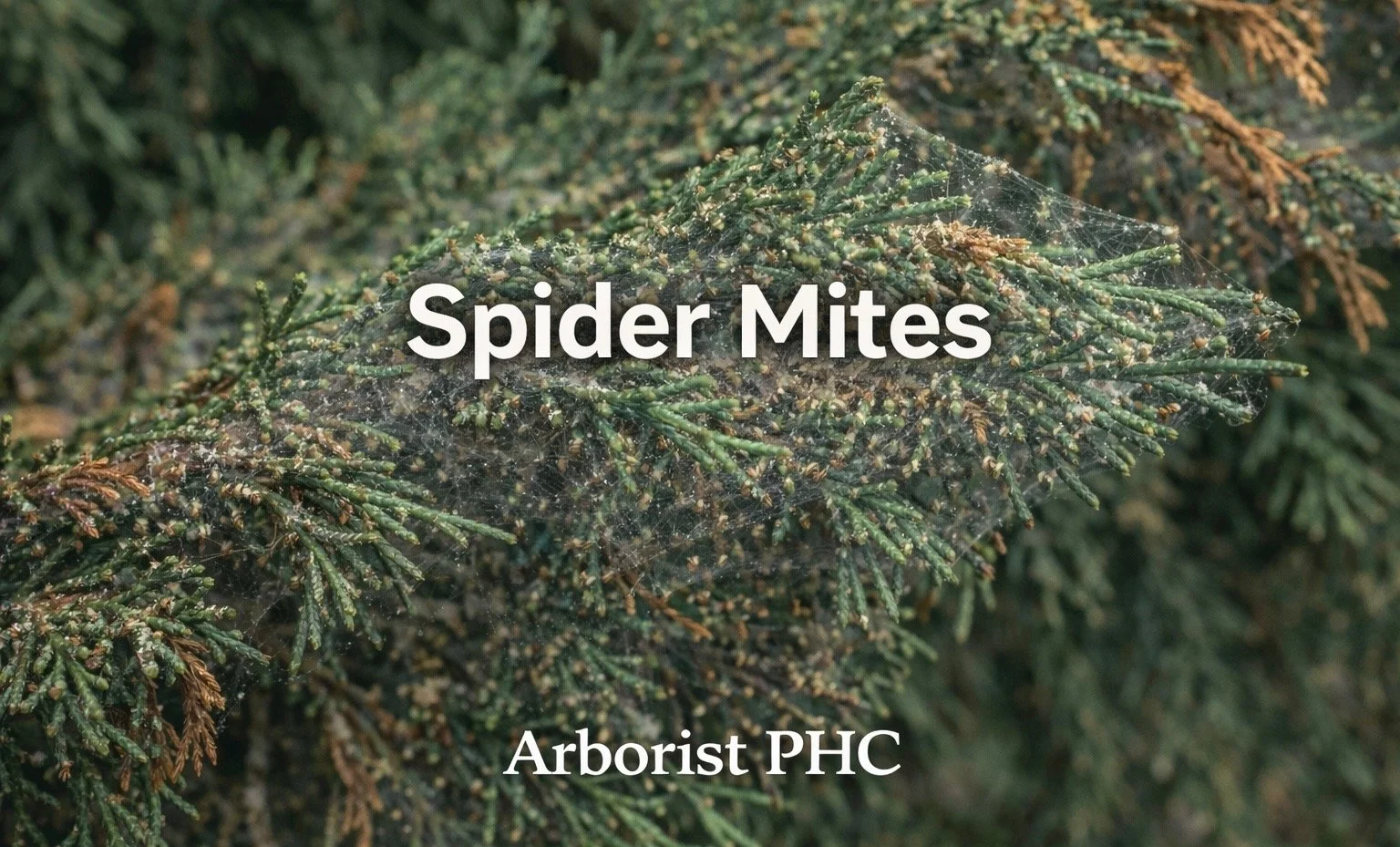
Spider Mites on Leyland Cypress Trees in Weatherford TX
Learn how spider mites damage Leyland Cypress trees in Weatherford TX. Certified Arborist explains symptoms, causes, and plant health care treatment options.
Spider Mites on Leyland Cypress Trees in Weatherford, Texas
What Weatherford Property Owners Are Seeing
Across Weatherford, TX and surrounding Parker County areas, Leyland Cypress trees are increasingly showing signs of decline associated with Spider Mite infestations. These microscopic pests commonly appear during periods of hot, dry weather and can quickly spread throughout ornamental privacy screens and windbreak rows.
Homeowners often notice:
• Interior browning of foliage
• Dusty or dull needle appearance
• Thinning privacy screens
• Webbing between branch tips
• Bronze or yellow discoloration
• Patchy dieback throughout the canopy
• Reduced density in hedgerow plantings
Spider mites can rapidly multiply and cause significant aesthetic decline if populations are not controlled early.
What are Spider Mites?
Spider mites are extremely small arachnids (not insects) that feed by piercing plant tissue and extracting chlorophyll-containing fluids from foliage. Their feeding activity disrupts normal photosynthesis, leading to discoloration and decline of foliage.
Common mite species affecting Leyland Cypress include:
• Oligonychus ununguis (Spruce Spider Mite)
• Tetranychus species (Warm-season spider mites)
These pests reproduce quickly in warm conditions and thrive during periods of environmental stress.
Because mites are microscopic, infestations are often identified only after visible damage has already occurred.
Cause → Effect → Risk → Solution
Cause
Hot temperatures, drought stress, and reduced humidity create favorable conditions for spider mite populations to increase rapidly.
Effect
Mites feed on plant cells, causing:
• stippling discoloration on foliage
• bronzing of needles
• loss of green pigmentation
• reduced photosynthesis
• premature needle drop
Risk
Untreated infestations may lead to:
• progressive canopy thinning
• permanent interior dieback
• weakened tree vitality
• increased susceptibility to secondary fungal pathogens
• loss of privacy screening density
• plant replacement costs
Spider mites often spread to adjacent Leyland Cypress trees, increasing the scale of damage.
Solution
Professional Plant Health Care treatments help suppress mite populations while supporting recovery of healthy foliage density.
Why Spider Mites are Common on Leyland Cypress in Weatherford, TX
North Texas climate conditions frequently create ideal environments for spider mites:
• prolonged summer heat
• drought stress conditions
• irrigation inconsistencies
• compacted soils limiting root efficiency
• reduced natural predator populations
• dense plant spacing reducing airflow
Leyland Cypress trees are especially vulnerable due to dense foliage structure, which provides a protective environment for mites.
Stress reduces the tree’s natural defense mechanisms, allowing populations to increase rapidly.
Symptoms of Spider Mite Infestation
Typical visual indicators include:
• bronzing or yellowing foliage
• dusty appearance on branch tips
• fine webbing between needles
• interior foliage decline
• patchy discoloration
• brittle needle texture
• gradual thinning of canopy
Damage often begins in interior foliage before becoming visible on outer canopy surfaces.
Severe infestations may cause significant aesthetic decline in privacy hedges.
Tree Biological Response
When mite feeding disrupts chlorophyll production, Leyland Cypress trees experience reduced energy production through photosynthesis.
Biological stress responses may include:
• reduced carbohydrate production
• slowed foliage regeneration
• increased susceptibility to fungal pathogens
• increased vulnerability to environmental stress
• diminished needle density over time
Extended infestations can weaken structural vitality of ornamental screens.
Healthy root function plays a major role in recovery potential.
Plant Health Care Treatment Approach
At Arborist PHC, treatment protocols focus on reducing pest populations while improving overall plant resilience.
Deep Root Inoculation
Subsurface soil treatments support root efficiency and improve nutrient uptake necessary for foliage regeneration.
Basal Drench Application
Systemic uptake through vascular tissue helps improve plant defense response and overall vigor.
Broad Spectrum Plant Health Support (BBT)
Treatment programs may include:
• miticide applications
• micronutrient supplementation
• organic root stimulants
• stress recovery materials
• systemic plant health solutions
• soil conditioning agents
Balanced plant health care improves canopy density and supports long-term privacy screening effectiveness.
What Homeowners Should Avoid
Improper care practices may increase mite pressure:
• excessive drought stress
• inconsistent watering schedules
• overhead irrigation during extreme heat
• ignoring early bronzing symptoms
• delaying treatment once webbing appears
• excessive nitrogen fertilization during stress periods
Maintaining proper watering patterns improves tree resilience.
Monitoring foliage regularly helps detect early infestations.
When to Contact a Certified Arborist
Professional evaluation is recommended when:
• Leyland Cypress begins thinning internally
• webbing appears on branch tips
• foliage turns bronze or dull green
• privacy screen density decreases
• multiple trees show symptoms
• seasonal mite infestations repeat annually
Early treatment improves recovery timelines and prevents widespread canopy decline.
Conclusion
Spider mites are a common pest affecting Leyland Cypress trees throughout Weatherford and surrounding North Texas communities. While damage may initially appear cosmetic, untreated infestations can lead to progressive thinning and long-term plant stress. Plant Health Care programs help restore foliage density, improve stress tolerance, and protect long-term landscape function. Maintaining healthy Leyland Cypress trees preserves privacy screening, property value, and aesthetic appeal.