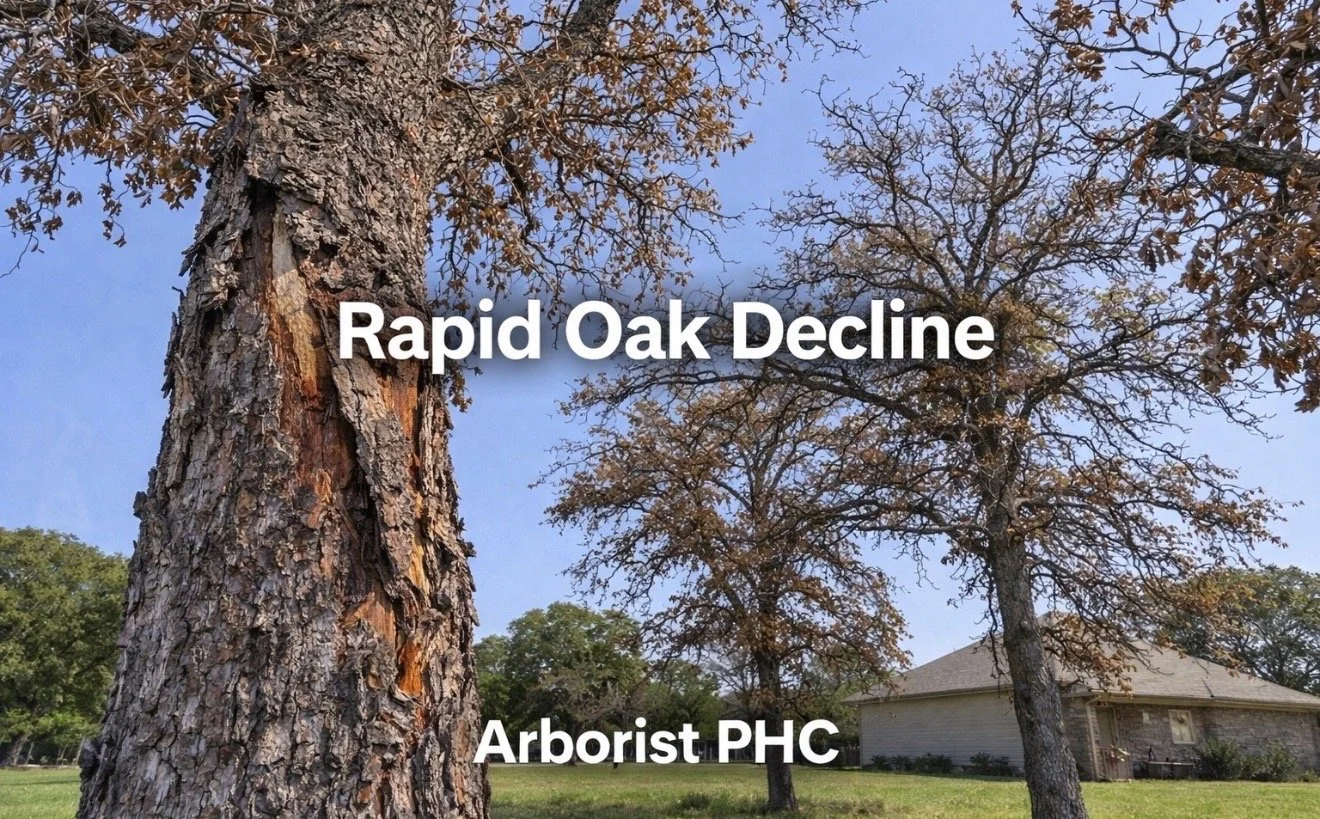
Rapid Oak Decline on Savannah Post Oaks in Aledo, Texas
Learn about Rapid Oak Decline affecting Savannah Post Oaks in Aledo TX. Plant Health Care solutions support tree recovery and long-term vitality.
Understanding Stress-Related Decline in North Texas Oak Species
What Homeowners in Aledo Are Seeing 🌳
Savannah Post Oaks throughout Aledo, TX and surrounding Parker County areas have been experiencing symptoms associated with Rapid Oak Decline, often linked to environmental stress, soil conditions, and secondary pest or fungal pressure.
Common symptoms observed include:
• Thinning canopy density
• Delayed or reduced leaf production
• Progressive limb dieback
• Bark cracking or sloughing
• Sparse foliage at branch tips
• Reduced annual growth
• Increased susceptibility to pests and fungi
Savannah Post Oaks are particularly sensitive to soil disturbance, compaction, drought stress, and sudden environmental changes, making them more vulnerable to decline when root health is compromised.
Why Savannah Post Oaks Are Sensitive in North Texas
Savannah Post Oaks (Quercus stellata hybrid) are native-adapted trees, but they are highly dependent on stable soil environments.
Common stress factors seen in Aledo include:
• Heavy clay soils restricting oxygen availability
• Over-irrigation or poor drainage
• Construction or grading damage to root systems
• Extended heat and drought cycles
• Soil compaction reducing root expansion
• Nutrient deficiencies limiting carbohydrate production
When root function becomes compromised, the tree struggles to generate sufficient energy reserves needed to support canopy health.
This can lead to progressive decline patterns commonly referred to as Rapid Oak Decline.
The Role of Environmental Stress
Environmental stress weakens the tree’s natural defense system and reduces its ability to resist:
• opportunistic fungi
• boring insects
• vascular dysfunction
• canopy thinning
• structural decline
Savannah Post Oaks rely heavily on healthy root systems for nutrient absorption and moisture regulation.
When stress exceeds the tree’s tolerance level, decline symptoms can accelerate over multiple growing seasons.
Plant Health Care Approach 🌱
Plant Health Care treatments are designed to support root health, improve nutrient availability, and reduce stress factors contributing to decline.
Treatment strategies may include:
Deep Root Inoculation
Subsurface injections deliver essential nutrients, carbohydrates, and soil-support materials directly into the root absorption zone. This encourages root development and improves nutrient uptake efficiency.
Basal Drench Application
Systemic materials applied to the root flare and lower trunk allow absorption into vascular tissue, supporting the tree’s natural defense response and improving overall vigor.
Soil Health Improvement
Addressing soil compaction and improving oxygen exchange in the root zone supports long-term tree vitality.
Monitoring & Seasonal Reassessment
Savannah Post Oaks benefit from periodic monitoring to evaluate canopy response and adjust treatment timing based on seasonal stress factors.
Risk Factors if Left Untreated
Without proper support, Rapid Oak Decline may result in:
• continued canopy thinning
• increased limb failure risk
• reduced structural integrity
• increased susceptibility to secondary pathogens
• shortened life expectancy
Early intervention can help slow progression and support improved canopy density over time.
What Property Owners Should Avoid
Practices that may increase decline risk include:
• excessive pruning during stress periods
• overwatering near the trunk
• compacting soil within the dripline
• herbicide applications near root zones
• grade changes affecting root oxygen levels
Maintaining proper soil conditions plays a major role in long-term Savannah Post Oak health.
Plant Health Care Services in Aledo, TX
Our Plant Health Care programs follow science-based arboriculture principles aligned with standards to support long-term tree vitality and structural stability.
📞 Call or text today for a free consultation
817.981.3596 | 682.220.8191