Science-Based Oak Wilt Treatment Options
Oak Wilt is a serious vascular disease affecting Live Oak and Red Oak trees in Fort Worth TX. Learn symptoms, causes, and treatment options from an ISA Certified Arborist providing Plant Health Care solutions.
1. Macro Infusion (Tree IV Treatment)
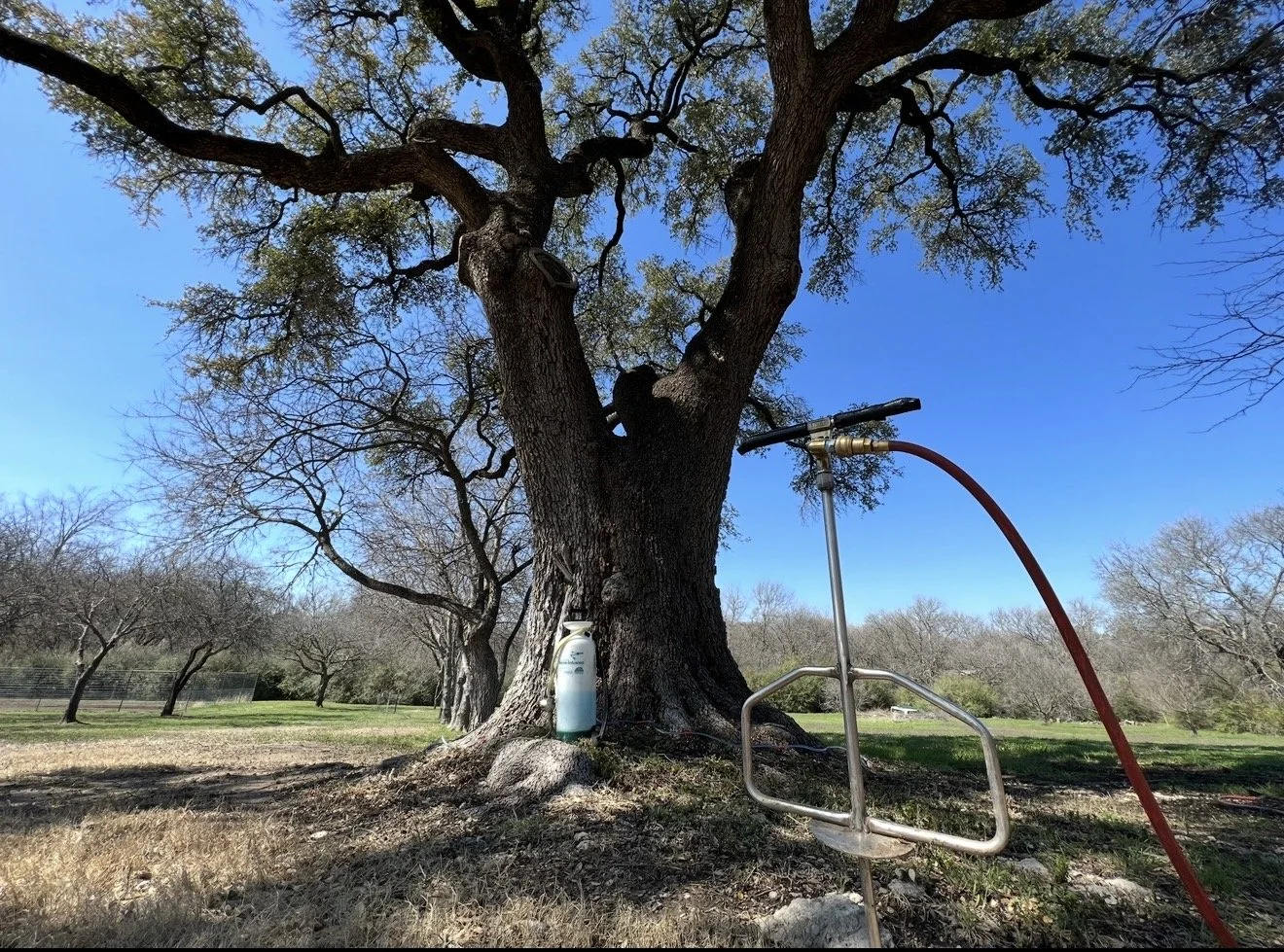
A systemic fungicide (commonly Propiconazole) is injected directly into the vascular system through specialized ports installed at the base of the tree.
Purpose
• Slows fungal progression
• Protects uninfected vascular tissue
• Improves canopy density over time
• Extends tree longevity
Infusion treatments are commonly recommended every 2–3 years depending on exposure risk.
Watch an Oak Wilt Macro Infusion being performed
This video demonstrates the Oak Wilt macro-infusion process, where a systemic fungicide is delivered directly into the tree’s vascular system through specialized injection ports installed at the root flare. This method allows the treatment to move internally through the xylem, helping slow the progression of Oak Wilt while protecting healthy vascular tissue. Macro infusion treatments are commonly recommended every 2–3 years for preventative care in high-risk areas such as Fort Worth and North Texas.
This procedure is performed following industry standards aligned with ISA and ANSI A300 guidelines.
2. Broad Brush Treatment (BBT)
Broad Brush Treatment is a comprehensive plant health care application designed to address fungal pathogens, pest pressures, and nutrient deficiencies simultaneously.
Includes
• Fungicide components
• Insecticide protection
• Macronutrient fertilization (N-P-K)
• Seaweed carbon and micronutrients
• Root zone support materials
• Surfactant technology for bark absorption
BBT supports overall tree vitality, allowing the tree to better respond to disease pressure.
3. Root Zone Management
Healthy soil conditions improve tree defense response.
Recommendations
• Deep root fertilization
• Proper irrigation at the dripline
• Avoid herbicide applications near root zones
• Reduce soil compaction
• Maintain exposed root flare
Root health directly impacts carbohydrate storage needed for defense response.
Watch Deep Root Feeding & Basal Drench Application
This video demonstrates the root zone management process, including deep root feeding and basal drench application. These treatments improve soil conditions, support microbial activity, and enhance nutrient uptake within the tree’s absorption zone. Deep root feeding places beneficial nutrients, biological stimulants, and soil conditioners directly into the root zone, while basal drench applications allow systemic materials to be absorbed through the bark at the root flare.
Together, these methods support overall tree health, improve stress tolerance, and enhance the tree’s natural defense response against fungal pathogens and pest pressure.
What NOT to Do If Oak Wilt is Suspected
Improper actions can accelerate disease spread.
Avoid:
• Pruning during high-risk months without proper precautions
• Overwatering stressed trees
• Applying wound sealants improperly
• Ignoring early symptoms
• Removing trees without evaluating root graft connections
• Damaging root zones with heavy equipment
Sealants are not generally recommended except when required immediately after storm damage during high-risk periods.
When to Call an ISA Certified Arborist in Fort Worth
Contact a professional if you notice:
• Multiple oaks declining in the same area
• Leaf discoloration during spring or summer
• Rapid canopy thinning
• Signs of vascular stress
• Nearby confirmed Oak Wilt cases
Early treatment significantly increases the probability of preserving mature trees.
Prevention Strategies for Fort Worth Property Owners
Preventative care is often the most cost-effective strategy.
Best Practices
• Schedule preventative treatments every 2–3 years in high-risk areas
• Avoid pruning February through June
• Immediately treat storm damage wounds
• Maintain proper irrigation schedules
• Implement plant health care programs
• Monitor trees seasonally for symptom changes
Healthy trees have stronger natural defense responses.
Conclusion
Oak Wilt remains one of the most serious threats to oak trees throughout Fort Worth and North Texas. However, early detection combined with science-based plant health care significantly improves long-term outcomes. Using ISA-aligned diagnostic methods and treatment protocols such as macro infusion and Broad Brush Treatment allows arborists to reduce disease progression, support vascular function, and improve canopy recovery.
If you suspect Oak Wilt or want preventative care, professional evaluation is strongly recommended to protect the longevity and structural integrity of your trees.
Why Oak Wilt is a Major Concern in Fort Worth, Texas
Oak Wilt is a serious vascular disease affecting Live Oak and Red Oak trees in Fort Worth TX. Learn symptoms, causes, and treatment options from an ISA Certified Arborist providing Plant Health Care solutions.
The North Texas region contains high populations of Live Oaks (Quercus virginiana) and Red Oaks (Quercus shumardii, Quercus texana), both highly susceptible to Oak Wilt.
Regional Risk Factors
• Warm spring temperatures increase fungal activity
• Root interconnected landscapes common in urban settings
• Pruning during high-risk months (February–June)
• Environmental stress from drought or compaction
• Soil conditions affecting microbial balance
According to Texas A&M Forest Service, Red Oaks can die within weeks, while Live Oaks may decline over several years if untreated.
ISA-Based Evaluation Process
Professional arborists evaluate Oak Wilt using structured diagnostic protocols aligned with ISA and ANSI A300 standards.
Inspection Includes
• Crown density evaluation
• Leaf symptom identification
• Root flare and trunk inspection
• Soil condition analysis
• Proximity to infected trees
• Risk assessment for structural failure
Laboratory confirmation may be recommended in certain cases.
Biology Behind Oak Wilt
Oak Wilt is a serious vascular disease affecting Live Oak and Red Oak trees in Fort Worth TX. Learn symptoms, causes, and treatment options from an ISA Certified Arborist providing Plant Health Care solutions.
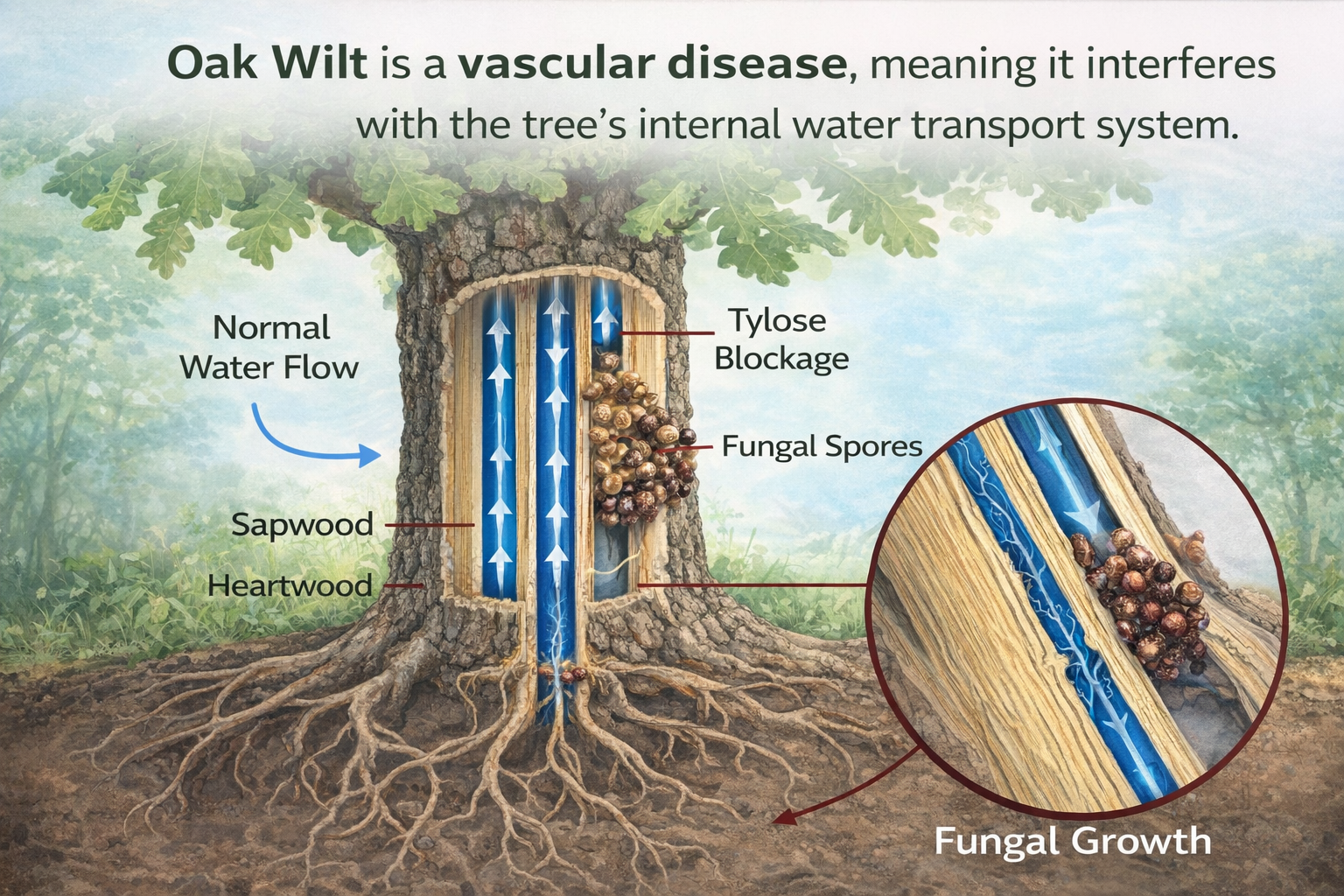
Oak Wilt is a vascular disease, meaning it interferes with the tree’s internal water transport system.
The fungus colonizes xylem vessels and triggers defensive responses inside the tree, including tyloses formation, which blocks water movement. While this is part of the tree’s natural defense system described in CODIT (Compartmentalization of Decay in Trees), the blockage can ultimately starve the canopy of moisture.
How Oak Wilt Spreads
1. Root Graft Transmission
• Common among Live Oaks growing close together
• Disease spreads underground from infected trees to healthy trees
2. Beetle Transmission
• Nitidulid beetles are attracted to fresh pruning wounds
• Fungal spores attach to beetles and infect new trees
3. Mechanical Damage
• Improper pruning timing
• Storm damage creating open wounds
Fort Worth’s dense residential plantings often create conditions favorable for root graft spread.
Oak Wilt Treatment
Oak Wilt is a serious vascular disease affecting Live Oak and Red Oak trees in Fort Worth TX. Learn symptoms, causes, and treatment options from an ISA Certified Arborist providing Plant Health Care solutions.
Oak Wilt in Fort Worth, TX: Identification, Risk, and Science-Based Treatment
Oak Wilt is one of the most serious vascular diseases affecting oak trees across Fort Worth and the greater North Texas region. Caused by the fungus Bretziella fagacearum, this disease disrupts the tree’s ability to transport water through the xylem, leading to canopy decline, rapid defoliation, and often tree death if left untreated.
In Fort Worth’s climate—where Live Oaks and Red Oaks are common landscape trees—Oak Wilt spreads both through root graft transmission and sap-feeding beetles attracted to fresh pruning wounds. Early detection and science-based treatment significantly improve the probability of preserving valuable trees.
What Fort Worth Property Owners Are Seeing
Homeowners and property managers often notice symptoms gradually before realizing Oak Wilt is present.
Common Early Symptoms
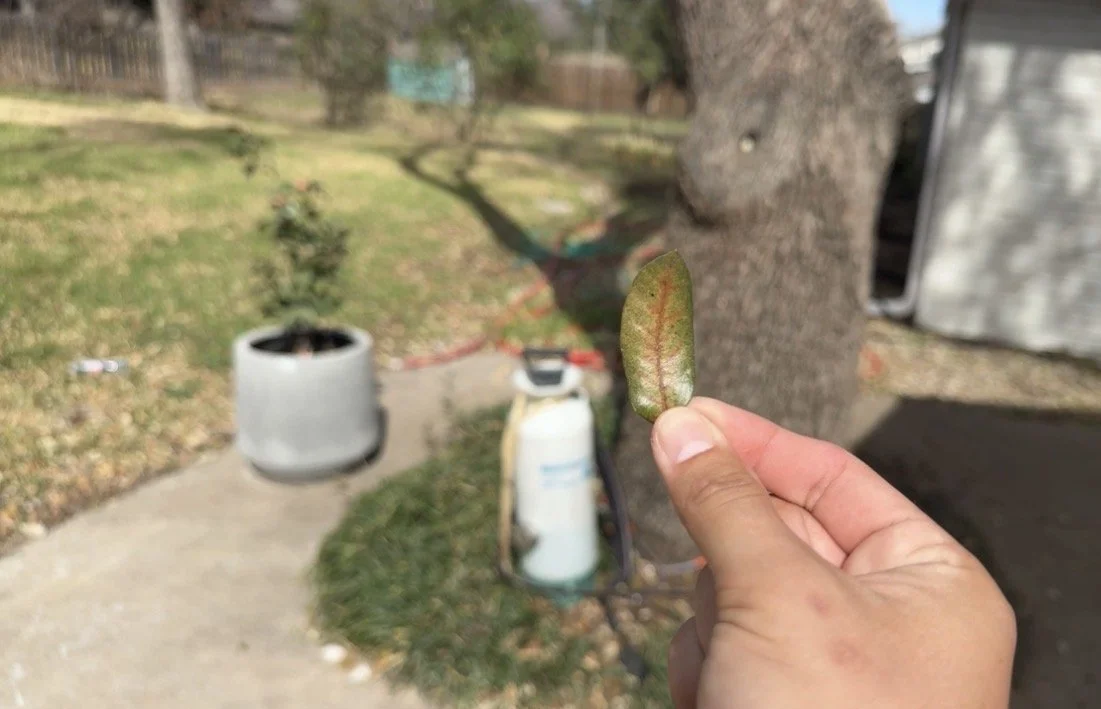
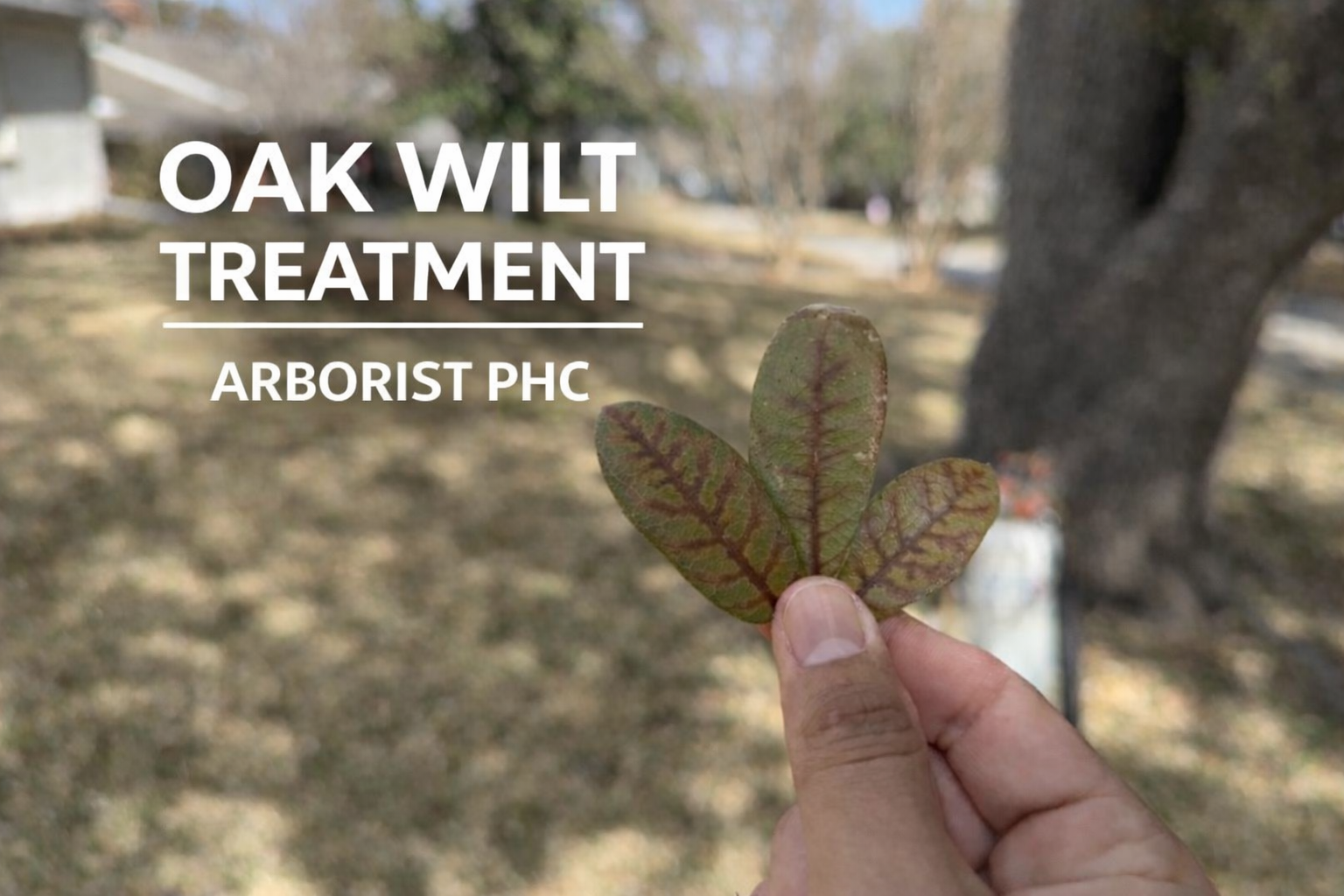
• Leaves turning brown at the tips progressing inward
• Premature leaf drop during spring or summer
• Thinning canopy or sparse foliage
• Vein discoloration or necrotic tissue
• Sudden decline in nearby oak trees
• Increased fungal susceptibility due to stress
Advanced Symptoms
• Rapid canopy dieback in Red Oaks
• Progressive decline in Live Oaks over multiple seasons
• Increased vulnerability to secondary pests and decay fungi
• Reduced carbohydrate reserves affecting recovery potential
Due to Fort Worth’s temperature fluctuations and drought stress cycles, Oak Wilt symptoms may progress faster in compromised trees.