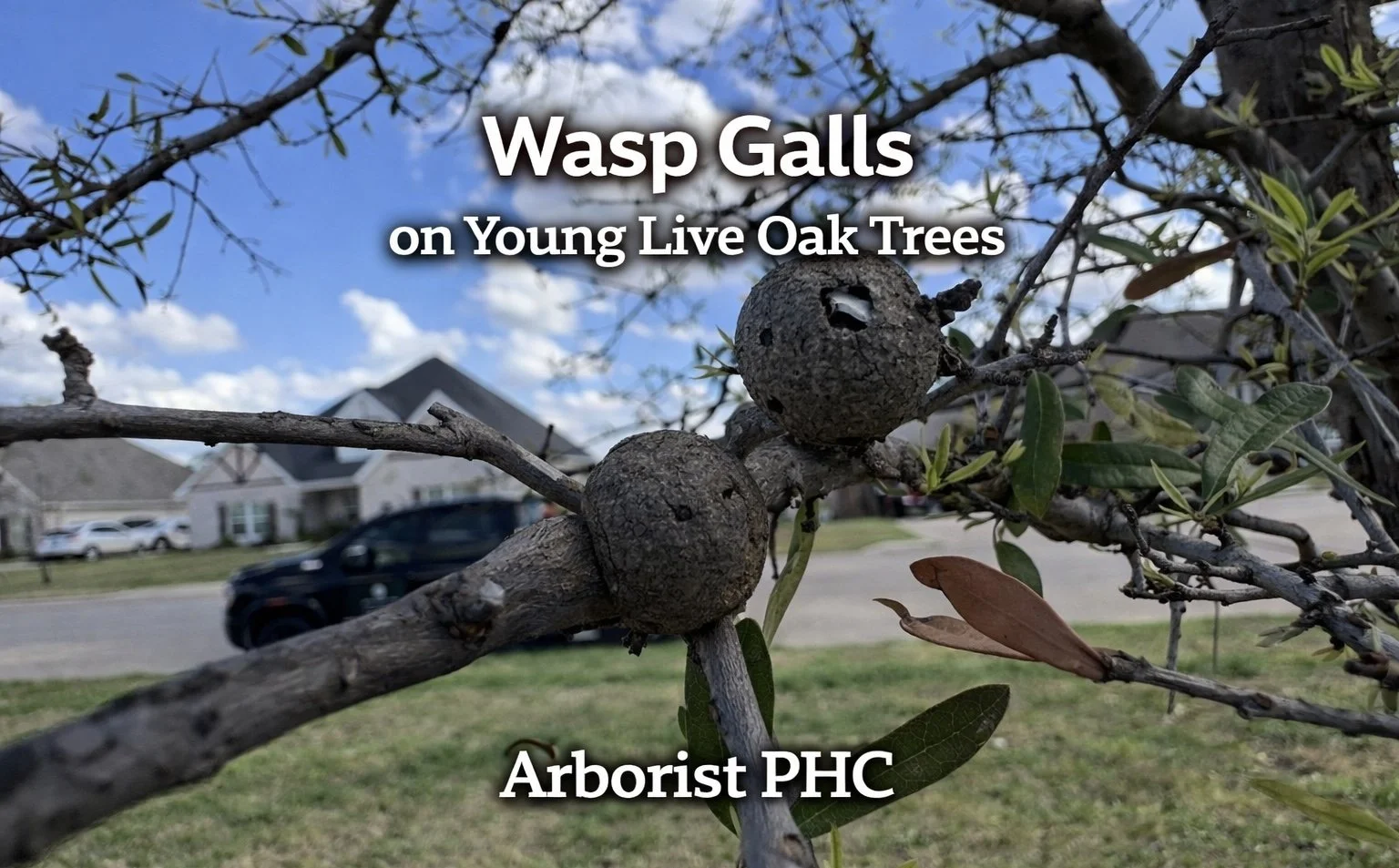
Wasp Galls on Young Live Oak Trees in Godley, TX
Learn how wasp galls affect young Live Oak trees in Godley TX. Certified Arborist explains symptoms, causes, and Plant Health Care solutions.
Wasp Galls on Young Live Oak Trees in Godley Texas
What Godley Property Owners Are Seeing
Across Godley, TX and surrounding Johnson County areas, young Live Oak trees are developing wasp galls, small abnormal growths that form on leaves, twigs, or branches as a result of gall-forming insects. These growths are commonly caused by tiny parasitic wasps that stimulate plant tissue to produce protective structures around their larvae.
Homeowners commonly notice:
• small round growths on leaves or twigs
• irregular bumps forming on leaf surfaces
• clustered spherical structures on branches
• leaf distortion or curling
• reduced aesthetic appearance of foliage
• concern about overall tree health
Although galls may look alarming, most wasp galls are primarily a cosmetic issue and rarely cause serious long-term damage to mature Live Oaks.
Young trees, however, may show more noticeable symptoms due to developing canopy structure.
What are Wasp Galls?
Wasp galls form when a small gall-forming wasp lays eggs inside plant tissue. Chemicals produced by the developing larvae trigger the tree to create a protective structure known as a gall.
The gall acts as:
• a food source for developing larvae
• a protective structure from predators
• a micro-environment for insect development
Once the insect matures, it exits the gall, leaving behind the hardened plant structure.
Common gall types found on Live Oaks include:
• bullet galls
• oak apple galls
• twig galls
• leaf galls
These structures vary in size and appearance depending on the insect species.
Cause → Effect → Risk → Solution
Cause
Gall formation occurs when parasitic wasps interact with developing plant tissue.
Factors influencing gall activity include:
• seasonal insect life cycles
• new spring growth
• environmental stress conditions
• young tree tissue vulnerability
• regional insect populations
• favorable climate conditions in North Texas
Live Oaks commonly host various gall-forming insects as part of the natural ecosystem.
Effect
Gall formation may result in:
• visible bumps on leaves or twigs
• minor leaf distortion
• localized tissue swelling
• reduced aesthetic appearance
• temporary stress response in young trees
Most galls do not significantly interfere with vascular function.
Trees typically continue normal growth despite gall presence.
Risk
In most cases, wasp galls present minimal risk.
However, heavy infestations may contribute to:
• reduced photosynthetic efficiency
• increased plant stress
• slowed canopy development in young trees
• minor twig dieback in severe cases
• increased vulnerability when combined with other stress factors
Maintaining overall tree health reduces impact of gall formation.
Why Wasp Galls are Common in Godley, Texas
North Texas environmental conditions support gall-forming insect populations:
• warm spring temperatures
• extended growing seasons
• regional insect biodiversity
• new foliage development cycles
• favorable habitat conditions
• urban landscape planting patterns
Gall activity often fluctuates seasonally and may not occur every year.
Healthy trees tolerate gall activity more effectively.
Symptoms of Wasp Galls on Young Live Oak Trees
Typical indicators include:
• small spherical growths on leaves
• round structures attached to twigs
• clusters of abnormal plant tissue
• leaf distortion near gall formation
• small bumps appearing on foliage
• seasonal appearance during growing season
Galls often become more visible as leaves mature.
Most galls do not spread throughout the entire tree.
Tree Biological Response
Trees respond to gall formation by isolating the affected tissue. The gall itself is formed from the tree’s own plant cells.
Typical responses include:
• localized tissue expansion
• compartmentalization of affected cells
• continued vascular transport around gall structure
• minimal long-term disruption of plant function
Healthy trees typically outgrow gall presence over time.
Environmental stress may increase gall visibility.
Plant Health Care Treatment Approach
Arborist PHC focuses on maintaining overall tree vitality to reduce stress that can increase susceptibility to insect activity.
Deep Root Inoculation
Improves nutrient uptake efficiency and supports healthy growth response.
Basal Drench Application
Supports plant vitality and environmental stress tolerance.
Broad Spectrum Plant Health Support (BBT)
Programs may include:
• micronutrient supplementation
• plant health stimulants
• root zone support materials
• stress mitigation compounds
• soil conditioning solutions
Improving overall plant health allows trees to tolerate minor insect activity more effectively.
What Property Owners Should Avoid
Certain conditions may increase stress on young Live Oaks:
• excessive pruning during active gall formation
• drought stress conditions
• soil compaction near root zone
• overwatering poorly drained soil
• applying herbicides near dripline
• removing large amounts of foliage at once
Maintaining proper watering practices supports plant resilience.
Healthy root systems improve tolerance to environmental stress.
When to Contact an Certified Arborist
Professional evaluation may be recommended when:
• gall activity appears excessive
• canopy density begins thinning
• young trees appear stressed
• leaf distortion becomes widespread
• multiple stress symptoms appear simultaneously
Monitoring overall plant health helps ensure long-term tree development.
Conclusion
Wasp galls are a common and generally manageable condition affecting young Live Oak trees throughout Godley and surrounding North Texas communities. While galls may affect appearance, they rarely cause significant long-term damage when trees are otherwise healthy. Proper Plant Health Care supports strong canopy development and improved tolerance to seasonal insect activity. Healthy trees maintain stronger resilience and long-term landscape value.