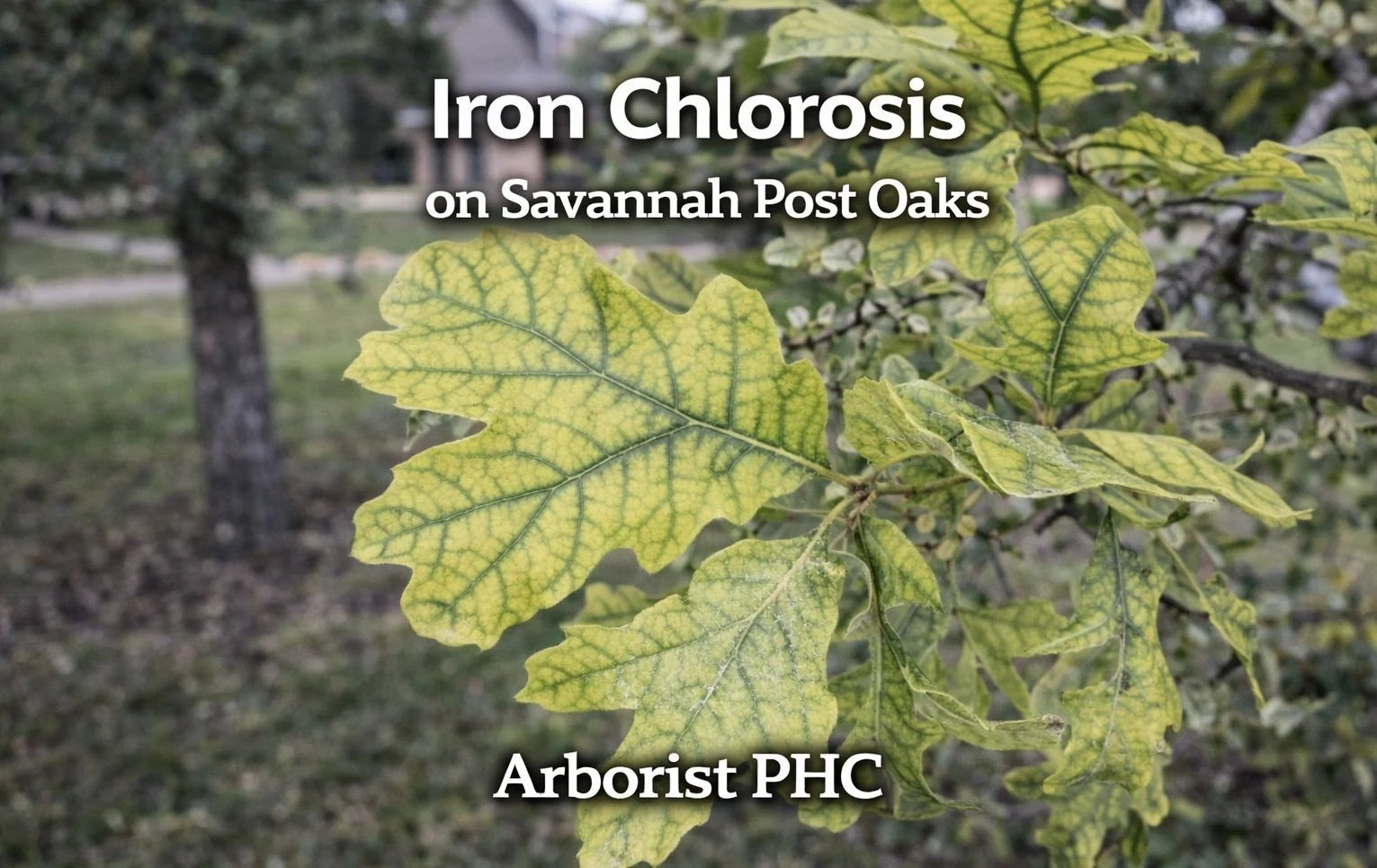
Iron Chlorosis on Savannah Post Oaks in Weatherford, TX
Learn how Iron Chlorosis affects Savannah Post Oak trees in Weatherford TX. Certified Arborist explains symptoms, causes, and treatment solutions.
Iron Chlorosis on Savannah Post Oaks in Weatherford Texas
What Weatherford Property Owners Are Seeing
Across Weatherford, TX, many Savannah Post Oak trees are showing symptoms of Iron Chlorosis, a nutrient deficiency condition that causes leaves to appear yellow while veins remain green. This condition is very common in North Texas due to naturally alkaline soils that limit iron availability to trees.
Property owners often notice:
• yellowing leaves with green vein patterns
• pale canopy appearance
• reduced leaf vibrancy
• slowed seasonal growth
• thinning canopy density
• stress symptoms during summer heat
• gradual decline in overall tree vigor
Savannah Post Oaks are particularly sensitive to soil chemistry imbalances, especially when planted in areas with high soil pH.
What is Iron Chlorosis?
Iron Chlorosis occurs when a tree cannot properly absorb iron from the soil, even when iron is present. Iron is essential for chlorophyll production, which allows trees to perform photosynthesis and produce energy.
Without adequate iron uptake:
• leaves lose healthy green coloration
• chlorophyll production decreases
• photosynthesis efficiency declines
• plant energy production is reduced
Iron Chlorosis is not caused by lack of iron in soil alone, but often due to soil conditions preventing proper absorption.
Cause → Effect → Risk → Solution
Cause
Iron Chlorosis typically develops when soil conditions prevent proper nutrient uptake.
Common contributing factors include:
• alkaline soil conditions (high pH)
• compacted clay soils
• poor soil drainage
• construction disturbance around root zones
• excess limestone content in soil
• restricted root development
• overwatering or poor irrigation practices
Weatherford soils often contain elevated calcium carbonate levels which increase alkalinity.
High soil pH reduces iron solubility and availability to tree roots.
Effect
Iron deficiency impacts plant physiology and appearance.
Common effects include:
• yellow leaves with green veins (interveinal chlorosis)
• reduced canopy density
• smaller leaf development
• reduced energy production
• slowed growth rate
• increased environmental stress sensitivity
Symptoms often appear first on newer leaves.
Risk
If untreated, Iron Chlorosis may contribute to:
• progressive canopy thinning
• branch dieback
• reduced drought tolerance
• increased susceptibility to pests and disease
• decline in overall tree vigor
• long-term structural stress
Young Savannah Post Oaks may struggle to establish properly under nutrient stress conditions.
Why Iron Chlorosis is Common in Weatherford Texas
North Texas soil conditions naturally create challenges for nutrient uptake.
Environmental factors include:
• alkaline clay soils
• limited organic matter content
• high calcium concentrations
• seasonal drought stress
• soil compaction from development
• restricted oxygen availability in root zones
Savannah Post Oaks prefer slightly acidic soil environments, making adaptation more difficult in alkaline conditions.
Symptoms of Iron Chlorosis on Savannah Post Oaks
Typical symptoms include:
• yellow leaf tissue with green veins
• pale canopy coloration
• reduced leaf size
• slowed canopy development
• thin foliage density
• visible stress during hot weather
Symptoms may become more noticeable during summer months when demand for nutrients increases.
Tree Biological Response
Trees experiencing nutrient deficiencies must reallocate stored resources to maintain basic physiological functions.
Typical stress responses include:
• reduced chlorophyll production
• decreased photosynthesis efficiency
• slower canopy expansion
• increased carbohydrate demand
• reduced root efficiency
Supporting root health improves nutrient uptake performance.
Plant Health Care Treatment Approach
Arborist PHC treatment programs aim to improve nutrient availability and root function.
Deep Root Inoculation
Improves soil nutrient distribution within the root zone.
Iron Supplementation
Chelated iron treatments help improve plant nutrient absorption efficiency.
Soil Conditioning
Improves soil structure and microbial activity.
Broad Spectrum Plant Health Support (BBT)
Programs may include:
• micronutrient supplementation
• organic soil amendments
• plant vitality stimulants
• stress mitigation compounds
• root zone optimization
Balanced soil conditions support improved nutrient uptake.
What Property Owners Should Avoid
Certain conditions may worsen Iron Chlorosis:
• overwatering poorly drained soils
• excessive soil compaction
• improper fertilization practices
• planting sensitive species in high pH soils
• limiting root zone oxygen availability
• excessive limestone-based materials near root flare
Healthy soil conditions improve nutrient absorption.
Proper watering practices support root function.
When to Contact an ISA Certified Arborist
Professional evaluation is recommended when:
• yellowing leaves persist seasonally
• canopy density decreases
• growth appears limited
• tree appears stressed during summer
• multiple trees show symptoms
• previous treatments have not improved appearance
Early intervention improves long-term success.
Conclusion
Iron Chlorosis is a common nutrient deficiency affecting Savannah Post Oaks throughout Weatherford and surrounding North Texas communities. Because soil conditions heavily influence nutrient availability, proper Plant Health Care plays an important role in maintaining tree vitality. Healthy root systems improve nutrient uptake and overall tree resilience.