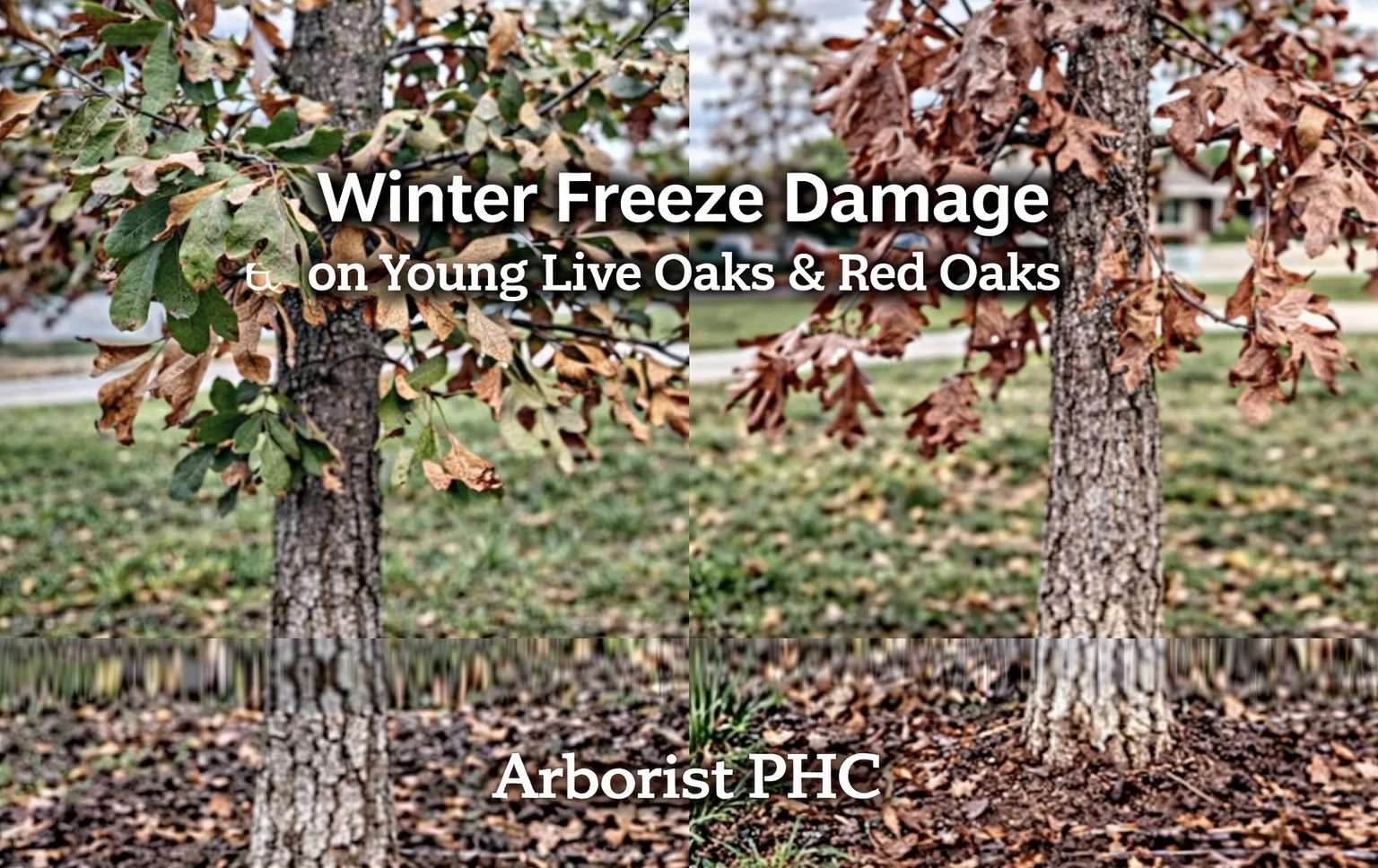
Winter Freeze Damage on Young Live Oak & Red Oak Trees in Burleson, TX
Learn how winter freeze damage affects young Live Oak and Red Oak trees in Burleson TX. Certified Arborist explains symptoms and treatment solutions.
Winter Freeze Damage on Young Live Oak and Red Oak Trees in Burleson Texas
What Burleson Homeowners Are Seeing
Following severe winter temperature fluctuations across Burleson, TX, many young Live Oak and Red Oak trees are exhibiting symptoms of winter freeze damage, particularly affecting new growth, vascular tissue, and bark integrity.
Young trees are especially vulnerable because they have:
• thinner bark
• less developed root systems
• limited stored carbohydrates
• increased sensitivity to temperature swings
• reduced tolerance to rapid freeze–thaw cycles
Common symptoms being observed include:
• browning leaves that remain attached after freeze events
• sparse canopy development in spring
• twig dieback
• bark splitting or cracking
• delayed bud break
• canopy thinning
• vertical cracking near trunk or branch unions
• reduced vigor entering growing season
Freeze injury may not always appear immediately and often becomes noticeable weeks after temperature extremes occur.
What is Winter Freeze Damage?
Winter freeze damage occurs when sudden temperature drops cause water inside plant cells to freeze. As ice crystals form, they expand and rupture cell walls within plant tissue.
This process affects:
• cambium layer responsible for growth
• xylem tissue transporting water
• phloem tissue transporting nutrients
• developing buds and shoots
• young bark tissue
Young Live Oaks and Red Oaks are particularly susceptible when warm winter periods are followed by sudden hard freezes.
Rapid temperature fluctuations increase stress on plant vascular systems.
Cause → Effect → Risk → Solution
Cause
Freeze damage typically develops due to:
• sudden cold fronts in North Texas
• rapid temperature drops after warm periods
• insufficient root establishment in young trees
• lack of soil moisture prior to freeze
• environmental stress reducing cold tolerance
• freeze–thaw expansion within plant cells
• exposure to wind chill conditions
• newly planted trees lacking acclimation time
Trees that have not fully hardened off for winter are more susceptible.
Effect
Cold injury disrupts normal vascular function causing:
• damaged cambium tissue
• dieback of young shoots
• reduced carbohydrate movement
• delayed leaf emergence
• thinning canopy density
• stress signaling throughout tree system
• increased vulnerability to secondary pests
Damage severity depends on duration and intensity of freezing temperatures.
Risk
If stress continues, trees may experience:
• prolonged canopy thinning
• branch tip dieback
• reduced seasonal growth
• increased susceptibility to fungal pathogens
• increased insect activity targeting weakened tissue
• slowed structural development
• decline in overall vitality
Repeated winter injury can impact long-term tree structure.
Why Young Oaks in Burleson are Susceptible
Burleson and surrounding North Texas communities frequently experience winter temperature fluctuations that stress developing trees.
Contributing environmental factors include:
• clay soils limiting root oxygen exchange
• rapid temperature swings
• drought conditions prior to freeze events
• newly planted trees adjusting to soil conditions
• transplant stress reducing energy reserves
• sudden Arctic cold fronts
• inconsistent winter moisture levels
Young Live Oaks are evergreen and may sustain leaf damage during hard freezes.
Young Red Oaks may experience bud loss affecting spring canopy development.
Symptoms of Freeze Damage on Young Oak Trees
Common indicators include:
• brown or bronze leaves after freeze event
• sparse canopy growth in spring
• twig dieback at branch tips
• cracking bark near trunk
• delayed bud break
• reduced leaf size
• uneven canopy density
• stress appearance during early growing season
Symptoms may appear gradually as trees exit dormancy.
Tree Biological Response (CODIT Defense Process)
Trees attempt to protect damaged tissue through compartmentalization processes described in CODIT (Compartmentalization of Decay in Trees).
Response mechanisms include:
• formation of protective barrier zones
• production of woundwood tissue
• redistribution of stored carbohydrates
• isolation of damaged cells
• gradual regeneration of vascular tissue
Healthy root systems improve recovery potential following freeze injury.
Reducing environmental stress supports improved canopy response.
Plant Health Care Treatment Approach
Arborist PHC focuses on improving root zone performance and supporting tree recovery following environmental stress events.
Deep Root Inoculation
Improves root absorption efficiency and nutrient availability.
Basal Drench Application
Supports improved plant vitality and stress tolerance.
Broad Spectrum Plant Health Support (BBT)
Programs may include:
• micronutrient supplementation
• carbohydrate root stimulants
• soil conditioning materials
• organic plant health compounds
• stress mitigation formulations
• root zone vitality support
Balanced Plant Health Care helps trees recover from environmental stress events.
What Property Owners Should Avoid
Improper care practices may increase stress following freeze injury:
• excessive pruning immediately after freeze event
• overwatering poorly drained soils
• applying herbicides near root zones
• compacting soil around young trees
• piling mulch against trunk
• ignoring early symptoms of decline
Allowing trees time to recover while improving root health is recommended.
Watering at the dripline supports root function.
When to Contact an Certified Arborist
Professional evaluation is recommended when:
• canopy density does not return during growing season
• branch tips continue declining
• bark cracking becomes visible
• leaves remain sparse
• young trees appear stressed
• growth remains limited entering spring
Early Plant Health Care support improves recovery potential.
Conclusion
Winter freeze damage is a common environmental stress affecting young Live Oak and Red Oak trees throughout Burleson and surrounding North Texas communities. Because young trees have limited stored energy reserves, they are more sensitive to rapid temperature fluctuations. Supporting root health and reducing environmental stress allows trees to recover more effectively during the growing season. Healthy trees are better equipped to withstand future environmental challenges.