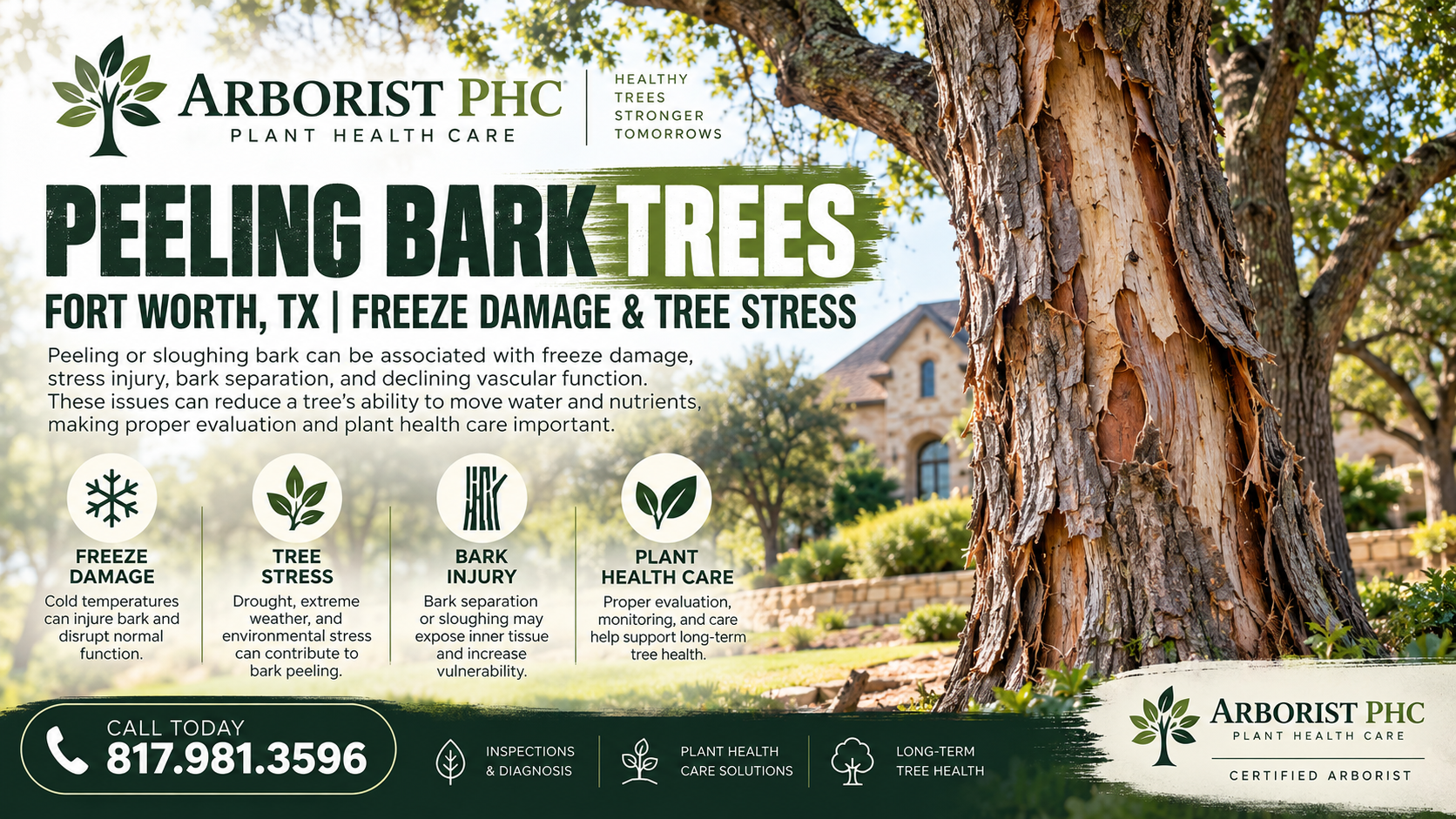
Peeling Bark on Trees in Fort Worth, TX | Freeze Damage & Tree Stress | Arborist PHC
Certified Arborist | Serving Fort Worth & North Texas
Peeling Bark on Trees in Fort Worth, TX
Why Is Bark Peeling or Falling Off My Tree?
Peeling or falling bark is a common concern for property owners across Fort Worth, TX, especially following extreme weather events.
In many cases, bark loss is not caused by insects or disease—but rather environmental stress, including:
Rapid temperature fluctuations
Drought stress
At Arborist PHC, we focus on identifying the underlying cause of damage and implementing science-based solutions to support tree recovery.
Freeze Damage & Apical Receptor Injury
One of the most common causes of bark peeling in North Texas is freeze-related stress, often referred to as apical receptor damage.
This occurs when:
Trees experience sudden, extreme temperature drops
Internal plant cells are damaged
Growth regulation and nutrient movement are disrupted
As a result:
👉 The bark may begin to crack, separate, and fall away
👉 Internal stress becomes visible over time
In many cases, damage is not immediately visible—it may take weeks or months to appear.
Signs of Freeze Damage in Trees
Common symptoms include:
Bark peeling or sloughing
Vertical cracking along the trunk
Darkened or exposed inner wood
Thinning or delayed canopy growth
Dead or declining limbs
These symptoms often worsen over time if the tree remains under stress.
Why This Happens in Fort Worth, TX
Trees in Fort Worth are particularly vulnerable due to:
Rapid temperature swings (warm days followed by freezing nights)
Extended drought followed by cold stress
Urban soil conditions (compaction and poor drainage)
Species sensitivity (Live Oaks, Post Oaks, ornamentals)
These conditions disrupt normal tree function and lead to visible bark damage.
Is Peeling Bark Always a Serious Problem?
Not always.
Some trees can:
Compartmentalize the damage
Continue functioning despite bark loss
However, significant bark damage may indicate:
Internal stress
Reduced vascular function
Increased risk of pest and disease invasion
👉 Proper evaluation is critical to determine severity.
Our Treatment Approach (Watch Our Process)
While bark itself does not grow back, treatment focuses on supporting the tree’s ability to recover and preventing further decline.
Deep Root Feeding (Soil Injection)
Improves nutrient uptake and root function
Supports recovery from environmental stress
Basal Drench & Systemic Applications
Helps protect against secondary pest and disease pressure
Supports vascular system performance
Broad-Spectrum Plant Health Care (BBT)
Addresses multiple stress factors at once
Includes nutrients, micronutrients, and systemic support
Preventing Further Damage
To reduce future risk:
Avoid unnecessary pruning during extreme weather
Maintain consistent watering practices
Improve soil health and root conditions
Implement preventative plant health care programs
Healthy trees are significantly more resilient to environmental stress.
Our Diagnosis-First Approach
Not all bark loss is caused by freeze damage.
We evaluate:
Tree species and age
Location and pattern of bark loss
Environmental conditions
Presence of pests or disease
This ensures we identify the true cause, not just the visible symptoms.
Service Areas Near Fort Worth
We proudly serve:
Request a Tree Health Assessment in Fort Worth, TX (Click Here To Submit A Form)
If you’re noticing bark peeling or unusual changes in your trees, early evaluation is important.
📞 Call or Text to Schedule
📸 Send photos for a preliminary review
We’re here to help you understand what’s happening and what can be done—based on science, not guesswork.
Frequently Asked Questions
-
No—the bark will not regenerate, but the tree may adapt and continue to survive depending on severity.
-
Not always. Many cases are related to environmental stress, especially freeze damage.
-
Recovery depends on overall health, species, and extent of damage.
-
Not necessarily. Many trees remain stable with proper care and monitoring.