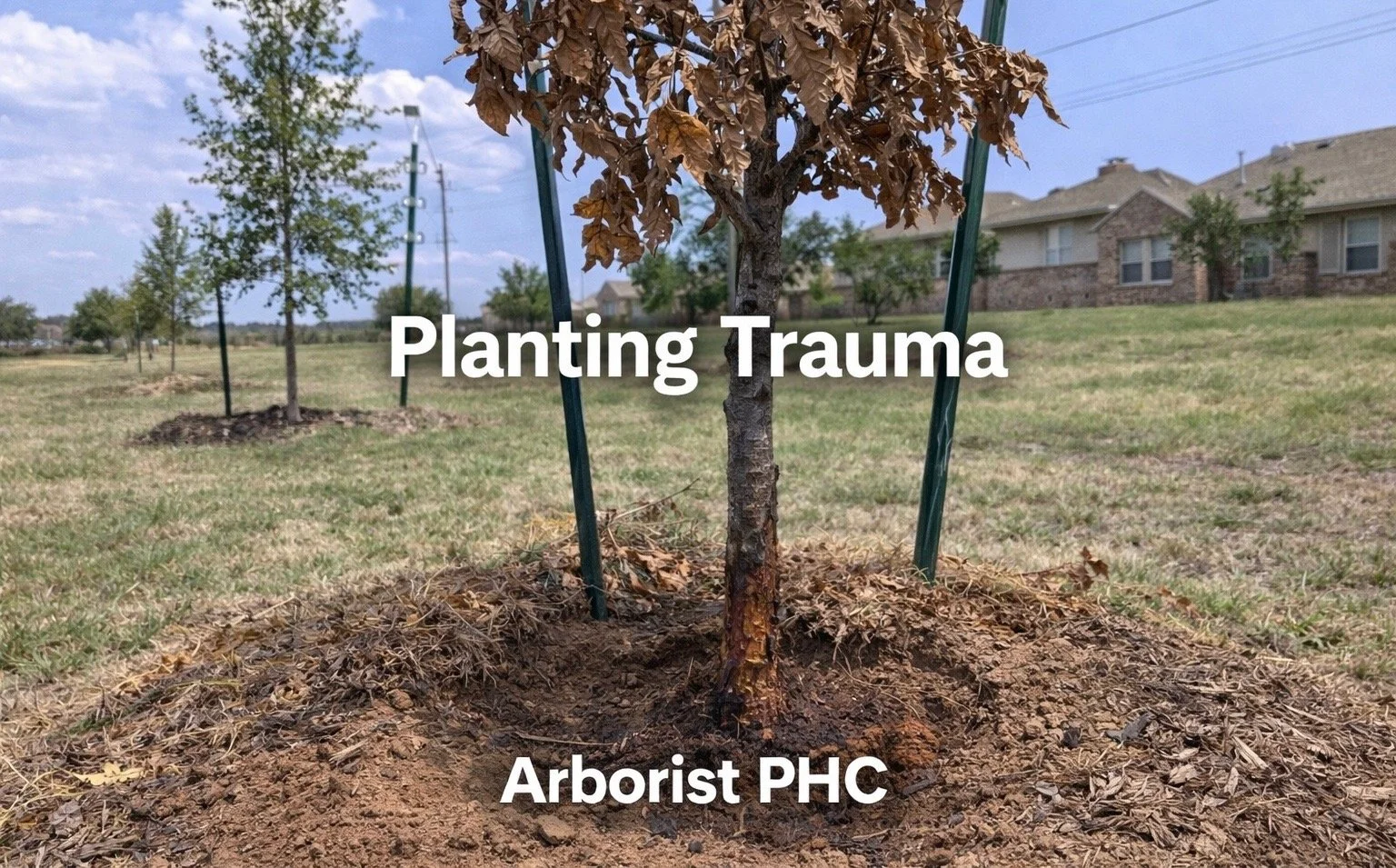
Planting Trauma on Newly Planted Trees in Fort Worth, Texas
Learn how planting trauma affects newly planted trees in Fort Worth TX. Plant Health Care solutions support root establishment and tree health.
Understanding Transplant Stress & How Proper Plant Health Care Supports Establishment
What Homeowners in Fort Worth Are Seeing 🌳
Newly planted trees throughout Fort Worth, TX commonly experience a condition known as Planting Trauma, also referred to as transplant shock. This occurs when a tree’s root system is disturbed during planting, limiting its ability to absorb water, oxygen, and nutrients effectively.
Common symptoms include:
• Wilting or drooping leaves
• Leaf scorch or browning edges
• Delayed leaf production
• Sparse canopy density
• Slow growth after planting
• Premature leaf drop
• Stress cracks near root flare
• Lack of vigor compared to established trees
Planting trauma is especially common in North Texas due to heavy clay soils, heat stress, and improper planting depth.
Why Newly Planted Trees Experience Stress
During transplanting, a tree loses a significant portion of its absorbing root system. Fine feeder roots responsible for nutrient uptake are often disturbed or removed during the digging process.
When the root system is reduced, the canopy may still demand the same level of moisture and nutrients, creating an imbalance between water uptake and transpiration.
Additional contributing factors in Fort Worth include:
• planting too deep below root flare
• compacted clay soils limiting oxygen exchange
• excessive mulch placed against trunk (“mulch volcano”)
• irregular watering schedules
• extreme summer temperatures
• poor soil drainage
• mechanical root disturbance during installation
Without proper root establishment, trees may struggle to generate sufficient carbohydrate reserves needed to support new growth.
Root Establishment Period
Most newly planted trees require 1–3 growing seasons to establish a stable root system.
During this establishment phase, trees are more vulnerable to:
• drought stress
• fungal pathogens
• pest pressure
• canopy thinning
• slowed structural development
Proper cultural practices significantly influence how well a tree adapts to its new environment.
Plant Health Care Approach 🌱
Plant Health Care treatments can help reduce transplant stress and improve root system development.
Deep Root Inoculation
Subsurface injections deliver beneficial nutrients, carbohydrates, and soil-support materials directly into the root zone to improve nutrient availability and stimulate root growth.
Basal Drench Application
Systemic materials applied to the root flare area allow absorption through vascular tissue, supporting the tree’s natural defense response and helping reduce environmental stress impact.
Root Zone Management
Ensuring proper root flare exposure and improving soil aeration helps support oxygen availability necessary for root function.
Monitoring & Seasonal Reassessment
Newly planted trees benefit from periodic evaluation during the establishment period to ensure proper growth progression.
Risk Factors if Left Unaddressed
If planting trauma is not corrected, trees may experience:
• prolonged transplant shock
• canopy dieback
• poor structural development
• increased susceptibility to insects or fungi
• reduced life expectancy
• decline during summer heat stress
Early intervention can significantly improve establishment success.
Proper Planting Depth Matters
One of the most common issues observed in Fort Worth landscapes is trees planted too deep.
The root flare (where trunk transitions into roots) should remain visible above soil grade to allow proper oxygen exchange.
Covering the root flare with excess soil or mulch can restrict gas exchange and lead to long-term stress conditions.
What Property Owners Should Avoid
Practices that may increase transplant stress include:
• overwatering or underwatering
• excessive mulch buildup against trunk
• compacting soil near root zone
• fertilizing too aggressively immediately after planting
• pruning excessively during establishment phase
• planting below natural grade
Balanced soil conditions are essential for root recovery.
Plant Health Care Support in Fort Worth, TX
Our Plant Health Care programs follow science-based arboriculture principles aligned to support proper root establishment and long-term tree vitality.
📞 Call or text today for a free consultation
817.981.3596 | 682.220.8191