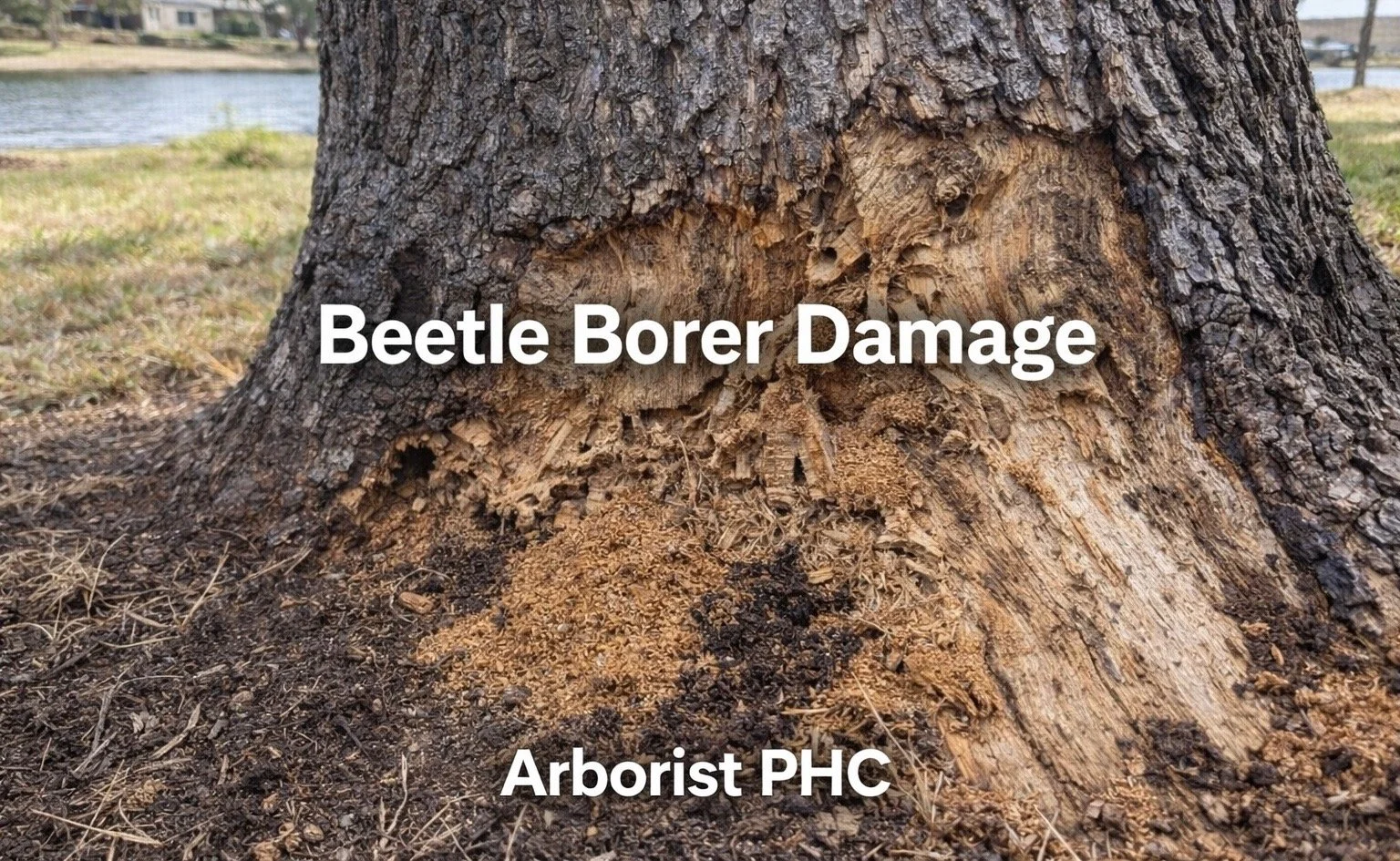
Beetle Borer Damage (Pest Pressure) on Basal Area of Trees in Granbury, Texas
Learn how beetle borer damage affects the basal trunk area of trees in Granbury TX. Plant Health Care supports tree recovery and defense.
Understanding Secondary Insect Pressure & Stress-Related Tree Decline
What Homeowners in Granbury Are Seeing 🌳
Property owners throughout Granbury, TX commonly observe signs of Beetle Borer Damage occurring along the basal area (lower trunk) of trees. These insects are considered secondary pests, meaning they typically attack trees already experiencing environmental stress.
In the image above, visible wood deterioration and sawdust-like material (frass) indicate active insect tunneling beneath the bark. As borers feed on the cambium layer, they disrupt the tree’s vascular system responsible for transporting water and nutrients.
Common signs of borer activity include:
• small entry or exit holes in bark
• sawdust-like material near base of tree (frass)
• bark cracking or loosening
• localized dieback above damaged area
• thinning canopy density
• reduced vigor over time
• wood tissue deterioration near root flare
Basal attacks are particularly concerning because this area contains critical vascular tissue responsible for supporting the entire canopy.
Why Beetle Borers Target Stressed Trees
Beetle borers typically infest trees that are already weakened due to:
• drought stress
• soil compaction
• fungal pathogens
• transplant shock
• root disturbance
• mechanical injury
• nutrient deficiencies
• extreme heat conditions common in North Texas
Stressed trees emit chemical signals (ethanol and other volatiles) that attract opportunistic insects seeking weakened hosts.
Once inside, larvae feed beneath the bark, creating galleries that interfere with nutrient transport and structural integrity.
Impact on Vascular Function
The cambium layer is responsible for producing new vascular tissue (xylem and phloem). When borers tunnel through this layer, the tree’s ability to transport moisture and nutrients becomes compromised.
Over time, this can lead to:
• canopy thinning
• branch dieback
• reduced leaf production
• increased susceptibility to fungal pathogens
• structural weakening at trunk base
If pest pressure becomes extensive, decline can accelerate significantly.
Plant Health Care Approach 🌱
Plant Health Care treatments focus on improving tree vigor and reducing environmental stress factors that contribute to pest susceptibility.
Deep Root Inoculation
Subsurface injections deliver essential nutrients and soil conditioners directly into the root zone, improving nutrient uptake and supporting overall vitality.
Basal Drench Application
Systemic materials applied to the trunk flare area allow absorption through bark tissue, helping target insect activity and support defense mechanisms.
Stress Mitigation
Improving soil conditions and watering practices helps restore carbohydrate production needed for defense responses.
Monitoring & Reassessment
Trees affected by borer pressure benefit from periodic evaluation to assess canopy recovery and ongoing pest activity.
Risk Factors if Left Untreated
Without intervention, beetle borer damage can contribute to:
• progressive canopy decline
• structural instability
• increased fungal colonization
• reduced life expectancy
• trunk weakness at basal area
Early Plant Health Care support helps improve resilience and reduce severity of decline.
What Property Owners Should Avoid
Practices that may increase pest pressure include:
• overwatering near trunk
• soil compaction around root flare
• excessive mulch buildup against bark
• mechanical trunk injury from equipment
• improper pruning during stress periods
Maintaining proper root zone conditions helps support natural defense responses.
Plant Health Care Services in Granbury, TX
Our Plant Health Care programs follow science-based arboriculture practices aligned with standards to support long-term tree vitality and structural stability.
📞 Call or text today for a free consultation
817.981.3596 | 682.220.8191