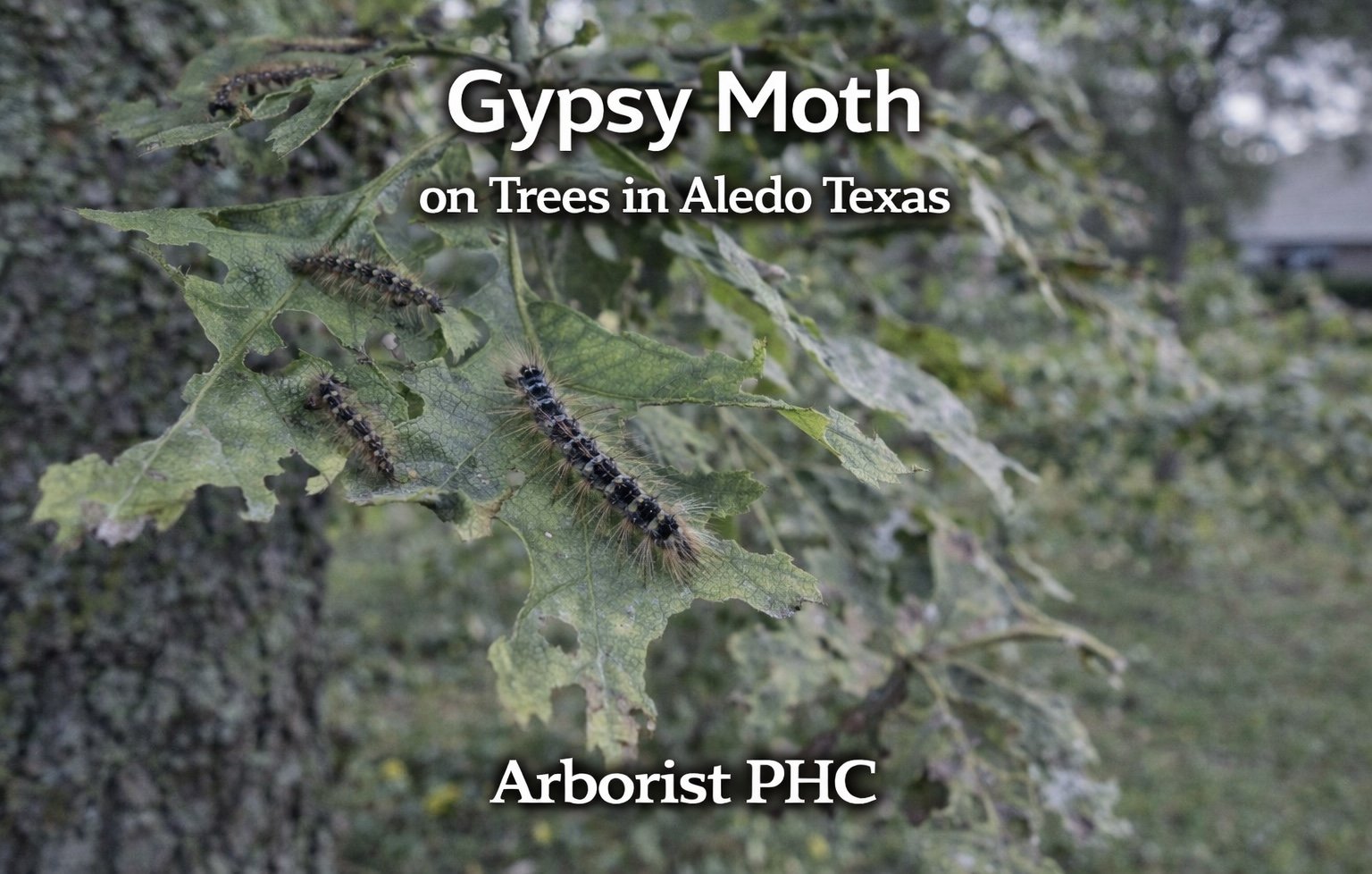
Gypsy Moth Caterpillar Damage on Trees in Aledo TX
Learn about Gypsy Moth caterpillar damage on trees in Aledo TX. Certified Arborist explains symptoms, risks, and treatment options.
Gypsy Moth Activity on Trees in Aledo Texas
What Aledo Property Owners Are Seeing
In Aledo, TX and surrounding Parker County areas, property owners may occasionally observe caterpillar feeding damage resembling Gypsy Moth activity, which is known for causing widespread defoliation on hardwood trees. These caterpillars consume leaf tissue, reducing the tree’s ability to produce energy through photosynthesis.
Typical observations may include:
• irregular chewing patterns on leaves
• partial or heavy defoliation of canopy
• visible caterpillars on foliage
• thinning canopy density
• increased stress symptoms during warm months
• reduced aesthetic appearance of trees
• accumulation of insect droppings beneath canopy
Repeated feeding activity may stress trees, especially when combined with drought or environmental pressures common in North Texas.
What is the Gypsy Moth?
The Gypsy Moth (Lymantria dispar) is an invasive defoliating insect known for feeding on a wide range of tree species. Caterpillars consume leaf tissue, often leaving trees partially or completely defoliated when populations are high.
Preferred host species may include:
• Oak species
• Elm
• Maple
• Willow
• Birch
• Poplar
• various ornamental shade trees
Caterpillars are recognizable by:
• hairy bodies
• rows of colored spots along back
• active feeding during spring and early summer
• clustering on tree trunks and branches
Heavy infestations can significantly impact tree energy reserves.
Cause → Effect → Risk → Solution
Cause
Gypsy Moth infestations develop when adult moths lay egg masses on tree bark, outdoor structures, or surrounding surfaces. When larvae hatch, they begin feeding on leaf tissue.
Contributing factors include:
• favorable spring temperatures
• lack of natural predators
• suitable host tree species
• regional insect population movement
• environmental stress conditions weakening tree defenses
Wind may carry young larvae to nearby trees.
Effect
Defoliation reduces the tree’s ability to produce energy.
Common effects include:
• loss of leaf surface area
• reduced photosynthesis capacity
• canopy thinning
• increased plant stress
• slowed seasonal growth
• reduced carbohydrate storage
Trees may produce a secondary flush of leaves, requiring additional energy reserves.
Repeated defoliation may weaken tree vigor.
Risk
If severe or repeated, defoliation may contribute to:
• increased susceptibility to secondary pests
• vulnerability to fungal pathogens
• branch dieback
• reduced drought tolerance
• decline in overall canopy density
• long-term stress conditions
Healthy trees may recover from occasional defoliation, but repeated damage increases risk.
Why Defoliating Caterpillars Appear in Aledo Texas
Environmental conditions in North Texas support seasonal caterpillar populations.
Contributing environmental conditions include:
• warm spring temperatures
• availability of host trees
• reduced predator populations in urban settings
• favorable breeding conditions
• mild seasonal transitions
Population levels vary year to year depending on environmental conditions.
Symptoms of Caterpillar Defoliation
Typical signs include:
• chewed leaf margins
• skeletonized leaves
• thinning canopy coverage
• visible caterpillars on foliage
• accumulation of leaf debris beneath tree
• irregular leaf damage patterns
Damage often begins in upper canopy areas before progressing downward.
Plant Health Care Treatment Approach
Arborist PHC focuses on managing insect feeding pressure while supporting tree vitality.
Targeted Insect Control
Applications help reduce caterpillar populations during active feeding periods.
Deep Root Inoculation
Supports nutrient uptake efficiency and root function.
Broad Spectrum Plant Health Support (BBT)
Programs may include:
• micronutrient supplementation
• plant vitality stimulants
• root zone support
• stress mitigation compounds
• soil conditioning materials
Maintaining tree vigor improves resilience to defoliation stress.
What Property Owners Should Avoid
Improper responses may increase plant stress:
• delaying treatment during heavy feeding periods
• excessive pruning removing healthy foliage
• drought stress conditions
• compacted soil near root zone
• improper fertilization timing
• ignoring repeated seasonal infestations
Healthy trees tolerate minor insect pressure more effectively.
Routine monitoring helps reduce severe outbreaks.
When to Contact an Certified Arborist
Professional evaluation is recommended when:
• canopy thinning becomes noticeable
• repeated defoliation occurs
• caterpillar populations appear widespread
• tree vigor appears reduced
• multiple trees show symptoms
• seasonal outbreaks continue annually
Early treatment improves control success.
Conclusion
Defoliating caterpillars resembling Gypsy Moth activity may occasionally affect trees in Aledo and surrounding North Texas areas. Protecting tree vitality through Plant Health Care helps maintain canopy density and long-term structural health. Healthy trees are better equipped to recover from seasonal insect pressure.