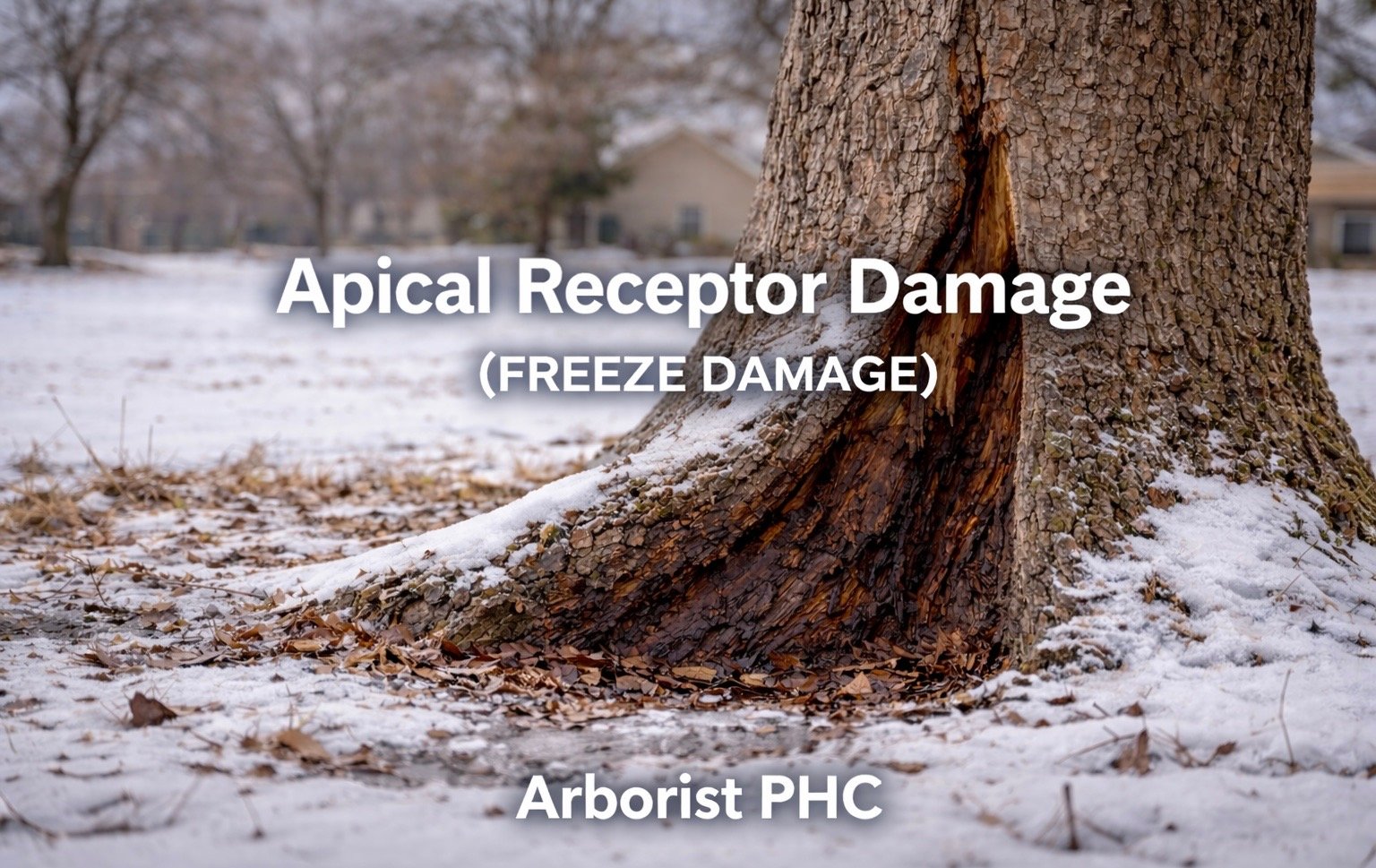
Apical Receptor Damage (Freeze Damage) on Trees in Southlake TX
Learn how freeze damage affects tree growth in Southlake TX. Certified arborist explains apical receptor damage, symptoms, and treatment options for tree recovery.
Apical Receptor Damage (Freeze Damage) on Trees in Southlake, Texas
What Southlake Homeowners Are Seeing
Following winter cold snaps across North Texas, many property owners in Southlake, TX notice unusual tree symptoms appearing in late winter or early spring. These symptoms often include:
• Sparse canopy development
• Dead twig tips
• Delayed budding
• Uneven leaf emergence
• Tip dieback throughout the canopy
• Increased vulnerability to secondary pests and fungal pathogens
In many cases, this condition is related to Apical Receptor Damage, commonly referred to as Freeze Damage.
This issue is especially common in species such as:
• Live Oak (Quercus virginiana)
• Red Oak (Quercus shumardii)
• Crape Myrtle (Lagerstroemia indica)
• Magnolia
• Chinese Pistache
• Elm
• Ornamental Pear
• Photinia
• Wax Myrtle
• Japanese Yew
What is Apical Receptor Damage?
Apical receptors are located at the terminal buds (tips) of branches and stems. These buds regulate directional growth hormones (auxins) responsible for:
• Vertical growth
• Canopy shape development
• Balanced limb structure
• New seasonal foliage production
When freezing temperatures damage these sensitive tissues, the tree may lose its ability to properly direct new growth.
Cause → Effect → Risk → Solution
Cause:
Rapid temperature drops cause intracellular ice formation, damaging delicate meristematic tissues located at the branch tips.
Effect:
Hormonal signals responsible for directing growth are disrupted, resulting in irregular branching patterns, delayed budding, and canopy thinning.
Risk:
Damaged tissue creates entry points for fungal pathogens, wood decay organisms, and boring insects. Over time, this can contribute to structural decline and increased susceptibility to disease.
Solution:
Professional plant health care treatments help stimulate recovery, improve vascular flow, and support healthy regeneration of new growth.
Why Freeze Damage is Common in Southlake, Texas
Southlake and the greater DFW Metroplex frequently experience:
• Rapid temperature fluctuations
• Late season cold fronts
• Warm winter days followed by sudden freezes
• Ice storms or radiational freezes
• Drought stress followed by freeze events
Trees that begin early bud development during warm winter periods are particularly vulnerable when temperatures drop below 32°F.
Late frost events can severely impact newly forming growth receptors, leading to delayed canopy recovery in spring.
Visible Symptoms of Apical Receptor Damage
Typical indicators include:
• Dead or brittle branch tips
• Bud failure during spring leaf-out
• Uneven canopy density
• Excessive sucker growth along branches or trunk
• Delayed leaf emergence compared to nearby trees
• Minor bark splitting or flaking near twig tips
• Reduced overall vigor
In severe cases, damage may mimic symptoms of drought stress or vascular disease.
Biological Explanation
Trees rely on a system of growth hormones to regulate directional development. The apical bud produces auxins which suppress lateral bud growth and maintain dominance of the terminal shoot.
When freeze injury destroys these receptors:
• Hormonal balance is disrupted
• Trees activate dormant buds beneath damaged tissue
• Energy reserves are diverted toward recovery
• Structural growth patterns may change
This response is consistent with CODIT (Compartmentalization of Decay in Trees) principles described by Dr. Alex Shigo, where trees attempt to isolate damaged tissue while generating new growth. However, recovery requires sufficient stored carbohydrates and favorable environmental conditions.
Plant Health Care Treatment Approach
At Arborist PHC, we utilize a science-based tree health practices.
Typical recovery support includes:
Deep Root Inoculation
Subsurface soil applications targeting the root absorption zone help improve nutrient uptake and stimulate root receptor activity.
Basal Drench Application
Application to the root flare and lower trunk allows systemic uptake through vascular tissues, helping address:
• Stress recovery
• Pest prevention
• Fungal pressure reduction
• Nutrient deficiencies
Broad Spectrum Plant Health Support (BBT)
Balanced Botanical Treatment programs may include:
• systemic fungicides
• insect management solutions
• micronutrient supplementation
• soil conditioning materials
• carbohydrate support compounds
These treatments help improve tree vigor and support recovery following environmental stress events.
What Homeowners Should NOT Do
Common mistakes following freeze damage include:
• Heavy pruning immediately after a freeze event
• Applying wound sealants or tree paint
• Over fertilizing stressed trees
• Removing too much live tissue prematurely
• Ignoring early symptoms of decline
Improper pruning can increase stress load and reduce the tree’s ability to compartmentalize damage.
When to Call a Certified Arborist
Professional evaluation is recommended when:
• More than 20–30% of canopy shows delayed budding
• Branch tips appear brittle or blackened
• Tree shows reduced leaf size or density
• Secondary pests begin appearing
• Tree has history of stress or previous decline
Early intervention often improves long-term recovery outcomes.
Conclusion
Apical receptor damage is a common issue following North Texas freeze events, but with proper evaluation and plant health care support, many trees can recover successfully. Understanding the biological mechanisms behind freeze injury allows property owners to make informed decisions that protect tree longevity, structure, and aesthetic value. Healthy trees contribute to increased property value, shade efficiency, and environmental stability throughout Southlake communities.