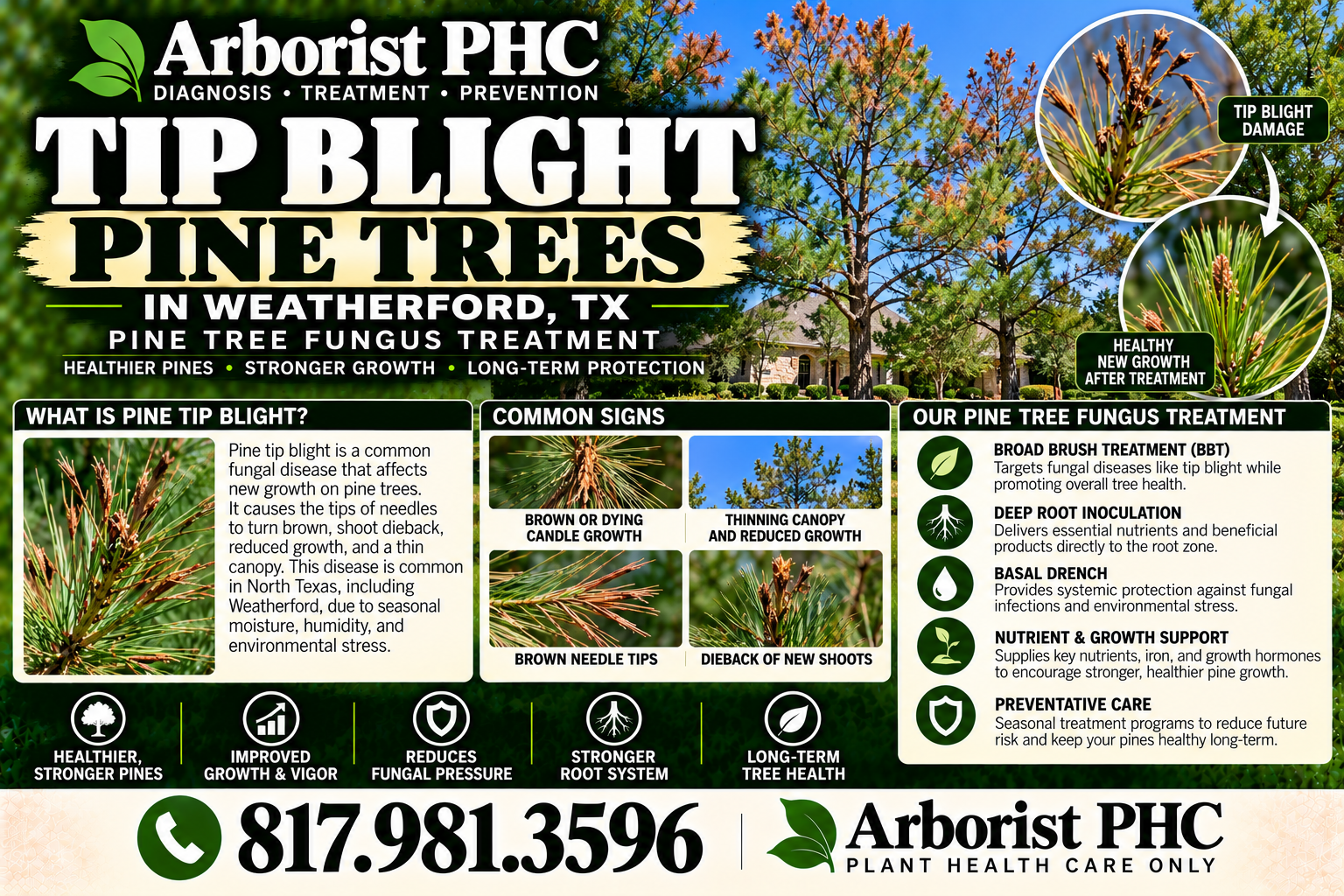
Tip Blight Fungi on Pine Trees in Weatherford, TX | Pine Tree Disease Treatment | Arborist PHC
Tip Blight Fungi on Pine Trees in Weatherford, TX
Why Pine Trees Develop Tip Blight in North Texas
Tip Blight is a common fungal issue affecting pine trees throughout Weatherford and surrounding North Texas communities.
At Arborist PHC, we specialize in diagnosing fungal-related decline and implementing plant health care treatments designed to reduce stress, suppress disease pressure, and support long-term tree health.
What Is Tip Blight?
Tip Blight is a fungal disease that affects:
New pine growth
Needles and shoot tips
Overall canopy density and vigor
The fungus attacks young tissue, causing branch tips to:
👉 Brown prematurely
👉 Die back
👉 Thin over time
If left unmanaged, the disease may continue progressing throughout the canopy.
Signs of Tip Blight on Pine Trees
Common symptoms include:
Browning needle tips
Dead or thinning branch ends
Sparse upper canopy growth
Premature needle drop
Stunted or distorted new growth
Symptoms often begin on outer branch tips and gradually spread inward.
Why Tip Blight Happens in Weatherford, TX
Several environmental conditions contribute to fungal pressure on pine trees in North Texas, including:
High humidity and moisture fluctuations
Heat stress and drought cycles
Poor air circulation
Nutrient deficiencies
Environmental stress weakening the tree
Stressed pine trees become significantly more vulnerable to fungal development.
The Connection Between Stress & Fungal Disease
Tip Blight is often considered a secondary stress-related issue, meaning the fungus typically affects trees that are already weakened.
Common stress factors include:
Soil compaction
Root stress
Drought conditions
Previous freeze damage
Improper watering practices
Healthy trees are naturally more resistant to fungal pathogens.
Our Treatment Approach (Watch Our Process)
Managing Tip Blight requires more than simply spraying the canopy.
Our plant health care approach focuses on:
👉 Reducing stress
👉 Supporting root health
👉 Suppressing fungal pressur
Deep Root Feeding (Soil Injection)
Improves nutrient uptake and root function
Enhances tree vigor and stress tolerance
Systemic Fungicide Applications
Targets fungal pressure internally
Helps protect developing tissue and new growth
Basal Drench & Root Zone Support
Supports vascular function and overall tree health
Helps reduce secondary stress factors
Broad-Spectrum Plant Health Care (BBT)
Addresses multiple environmental stressors simultaneously
Includes nutrients, micronutrients, and systemic support
Why Early Detection Matters
Fungal diseases become significantly more difficult to manage once large portions of the canopy are affected.
Early intervention can help:
Slow progression
Improve canopy density
Reduce additional stress
Support long-term recovery
Preventative Pine Tree Care
Preventative care is one of the most effective ways to reduce fungal pressure on pine trees.
Recommended practices include:
Proper watering management
Seasonal plant health care treatments
Soil health improvement
Monitoring for early symptoms
Reducing environmental stress
Our Diagnosis-First Approach
Not all browning pine needles are caused by Tip Blight.
We evaluate:
Needle patterns and distribution
Environmental conditions
Soil and root health
Presence of pests or additional disease pressure
This ensures the correct diagnosis before treatment recommendations are made.
Service Areas Near Weatherford
We proudly serve:
Surrounding Parker County communities
Request a Pine Tree Health Assessment (Click Here To Submit A Form)
If your pine trees are showing browning tips, thinning growth, or signs of fungal decline, early evaluation is critical.
📞 Call or Text to Schedule
📸 Send photos for a preliminary review
We’re here to help you identify the cause and implement science-based solutions for long-term pine tree health.
Frequently Asked Questions
-
In many cases, yes—especially when addressed early and combined with stress reduction treatments.
-
Fungal spores can spread under favorable environmental conditions.
-
Selective pruning may help improve airflow and reduce fungal pressure when performed properly.
-
Improvement typically occurs gradually over multiple growing seasons.
-
No—Arborist PHC focuses strictly on plant health care, diagnosis, and treatment programs.