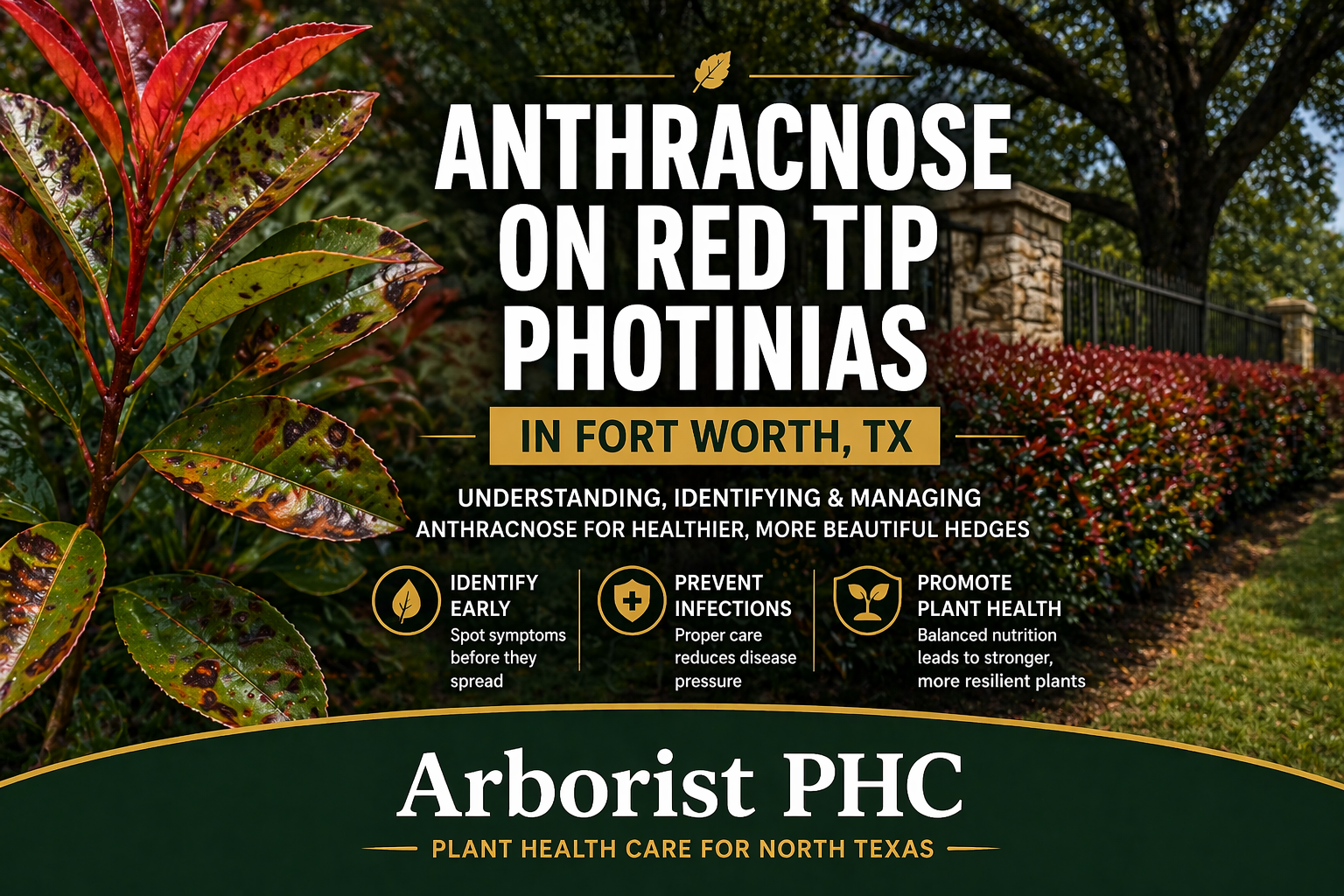
Anthracnose Red Tip Photinias Fort Worth TX | Hedge Disease Treatment
Anthracnose causes leaf spots and defoliation on Red Tip Photinias in Fort Worth TX. Learn how to identify, treat, and prevent this common fungal disease.
Anthracnose on Red Tip Photinias in Fort Worth TX – Identification, Causes & Treatment
Red Tip Photinias are a popular ornamental hedge throughout Fort Worth, Texas, valued for their vibrant red new growth and dense screening ability. However, they are highly susceptible to anthracnose, a fungal disease that can significantly impact appearance and long-term plant health if left unmanaged.
Understanding how anthracnose develops—and how to properly treat and prevent it—is essential for maintaining healthy, visually appealing hedges.
What is Anthracnose?
Anthracnose is a fungal disease that affects leaves, stems, and new growth. It thrives in conditions commonly found in North Texas, particularly during periods of:
• high humidity
• extended rainfall
• poor air circulation
• dense plant spacing
The fungus spreads through water splash, wind, and contaminated plant material, making it highly transmissible in hedge rows.
Signs of Anthracnose on Red Tip Photinias
Early detection is key to preventing widespread damage. Common symptoms include:
• dark brown to black leaf spots
• irregular blotching on leaf surfaces
• leaf curling or distortion
• premature leaf drop
• thinning canopy density
• reduced red new growth
Severe cases can lead to significant defoliation, leaving hedges sparse and weakened.
Why Red Tip Photinias Are Highly Susceptible
Red Tip Photinias are particularly vulnerable due to:
• dense growth habits limiting airflow
• frequent new growth cycles (preferred infection points)
• common use in hedge rows (disease spreads easily)
• environmental stress from North Texas climate
In Fort Worth landscapes, these factors create ideal conditions for anthracnose development.
Environmental Conditions in Fort Worth TX That Promote Anthracnose
Anthracnose thrives under specific environmental conditions common in North Texas:
• warm, humid weather patterns
• frequent irrigation or rainfall
• shaded planting areas
• poor air circulation within hedges
• overwatering practices
When combined with plant stress, disease pressure increases significantly.
Impact on Plant Health
While anthracnose is often considered a cosmetic issue early on, repeated infections can lead to:
• reduced photosynthesis
• weakened plant vigor
• increased susceptibility to other pests and diseases
• long-term decline in hedge density
• loss of aesthetic value
Without proper management, photinias can become unsustainable over time.
Treatment & Management Strategies
Effective management requires a combination of disease control and plant health improvement.
Fungicide Applications
Targeted treatments help suppress fungal activity and protect new growth from infection.
Plant Health Care (BBT Programs)
Broad-spectrum treatments help address:
• fungal pathogens
• environmental stress
• micronutrient deficiencies
Deep Root Fertilization
Improves overall plant vigor and strengthens natural defense responses.
Pruning & Airflow Management
Selective pruning helps:
• improve air circulation
• reduce moisture retention
• minimize disease spread
Irrigation Adjustments
Proper watering practices help prevent excess moisture on foliage, reducing fungal development.
Prevention of Anthracnose in Photinias
Preventative care is the most effective strategy:
• maintain proper spacing between plants
• avoid overhead watering
• perform routine pruning
• implement seasonal treatment programs
• monitor for early signs of disease
Healthy plants are far more resistant to recurring infections.
Anthracnose Management in Fort Worth TX
Arborist PHC provides professional Plant Health Care programs for ornamental shrubs and hedges, including Red Tip Photinias.
Our approach focuses on:
• early detection and diagnosis
• targeted treatment applications
• improving plant health and vigor
• reducing long-term disease pressure
• maintaining hedge density and appearance