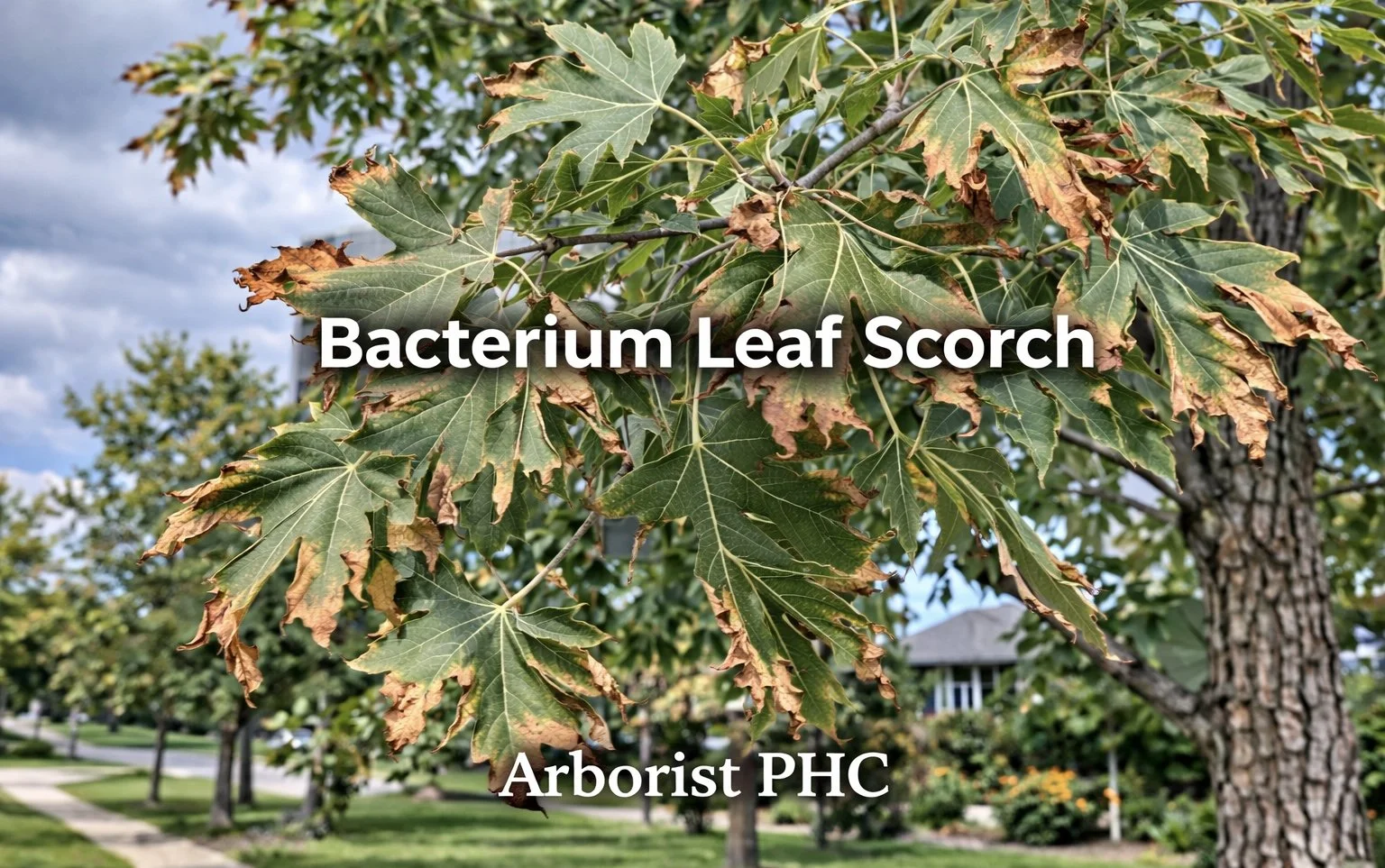
Bacterial Leaf Scorch on Silver Leaf Maple Trees in Burleson, Texas
Learn how Bacterial Leaf Scorch affects Silver Leaf Maple trees in Burleson TX. Certified Arborist explains symptoms, causes, and treatment options.
Bacterial Leaf Scorch on Silver Leaf Maple Trees in Burleson, Texas
What Burleson Property Owners Are Seeing
Throughout Burleson, TX and surrounding Johnson County areas, many Silver Leaf Maple trees are beginning to show symptoms associated with Bacterial Leaf Scorch, a chronic vascular disease that affects the tree’s ability to properly transport water and nutrients.
Homeowners often notice:
• Browning along leaf edges (leaf margins)
• Leaves appearing “burnt” or scorched
• Yellow band between green tissue and brown edges
• Premature leaf drop during summer
• Thinning canopy density
• Progressive decline year after year
• Sparse foliage development
• Branch dieback in advanced stages
Symptoms typically become more noticeable during hotter months when the tree is under environmental stress.
What is Bacterial Leaf Scorch?
Bacterial Leaf Scorch is caused by the bacterium Xylella fastidiosa, which lives inside the tree’s xylem tissue (water transport system).
The bacterium restricts the movement of water from roots to leaves, causing foliage to dry out and appear scorched even when soil moisture is present.
Because the bacteria live inside vascular tissue, symptoms often gradually worsen over multiple growing seasons.
Silver Leaf Maples are commonly affected due to their fast growth rate and sensitivity to environmental stress.
Cause → Effect → Risk → Solution
Cause
The bacterium spreads through:
• insect vectors (primarily leafhoppers)
• feeding activity of xylem-feeding insects
• grafted root connections between nearby trees
• environmental stress weakening plant defenses
Once inside the vascular system, the bacteria multiply and restrict water movement.
Effect
Restricted water transport causes:
• marginal leaf burn
• leaf discoloration patterns
• premature leaf drop
• canopy thinning
• reduced photosynthesis efficiency
• stress accumulation within the tree
Leaf symptoms typically worsen during heat and drought periods.
Risk
If left unmanaged, Bacterial Leaf Scorch may lead to:
• progressive canopy decline
• reduced shade coverage
• structural weakening over time
• increased susceptibility to secondary pests
• reduced landscape value
• gradual branch dieback
This condition is considered chronic and typically requires ongoing Plant Health Care management.
Solution
Plant Health Care programs aim to improve vascular function, reduce stress conditions, and support overall tree vitality.
Why Bacterial Leaf Scorch is Common in Burleson, Texas
North Texas environmental conditions often contribute to disease development:
• prolonged summer heat
• drought stress cycles
• clay soil compaction
• inconsistent watering patterns
• insect vector activity
• rapid growth demands of Silver Maple
• urban environmental stress factors
Trees experiencing root stress are more vulnerable to vascular diseases.
Maintaining proper soil conditions improves tree resilience.
Symptoms of Bacterial Leaf Scorch on Silver Leaf Maple
Typical indicators include:
• browning edges of leaves
• yellow band separating healthy tissue from dead tissue
• leaf curl or distortion
• early fall coloration during summer
• reduced leaf size
• sparse canopy appearance
• progressive decline annually
Symptoms often begin on individual limbs before spreading throughout the canopy.
Hot weather often intensifies visible symptoms.
Tree Biological Response
When vascular function is restricted, trees experience reduced water movement and decreased nutrient transport efficiency.
Biological stress responses may include:
• reduced carbohydrate production
• limited canopy regeneration
• increased demand on stored energy reserves
• slowed annual growth rate
• increased vulnerability to environmental stress
Supporting root health improves the tree’s ability to tolerate disease presence.
Plant Health Care Treatment Approach
At Arborist PHC, treatment focuses on improving tree vitality and reducing environmental stress contributing to decline.
Deep Root Inoculation
Subsurface soil applications improve root efficiency and nutrient absorption capacity.
Basal Drench Application
Systemic uptake supports vascular function and improves plant stress tolerance.
Broad Spectrum Plant Health Support (BBT)
Treatment programs may include:
• micronutrient supplementation
• soil conditioners
• carbohydrate root stimulants
• stress mitigation compounds
• plant vitality support materials
• systemic plant health solutions
Balanced Plant Health Care helps extend tree longevity and improve canopy density.
What Homeowners Should Avoid
Improper cultural practices may accelerate decline:
• inconsistent watering patterns
• excessive soil compaction
• root disturbance
• mechanical trunk injury
• excessive fertilization without soil balance
• ignoring early leaf symptoms
Proper watering at the dripline supports vascular function.
Reducing environmental stress improves plant resilience.
When to Contact a Certified Arborist
Professional evaluation is recommended when:
• leaves develop scorched margins
• canopy density begins thinning
• symptoms worsen each summer
• individual limbs decline prematurely
• shade coverage noticeably decreases
• symptoms persist year after year
Early Plant Health Care management can help slow disease progression.
Conclusion
Bacterial Leaf Scorch is a common vascular disease affecting Silver Leaf Maple trees throughout Burleson and surrounding North Texas communities. While the condition is chronic, proper Plant Health Care can improve tree vitality, extend longevity, and help maintain canopy density. Supporting root health, reducing environmental stress, and improving nutrient availability helps trees better tolerate vascular disruption. Maintaining tree health protects landscape value, shade coverage, and long-term structural stability.