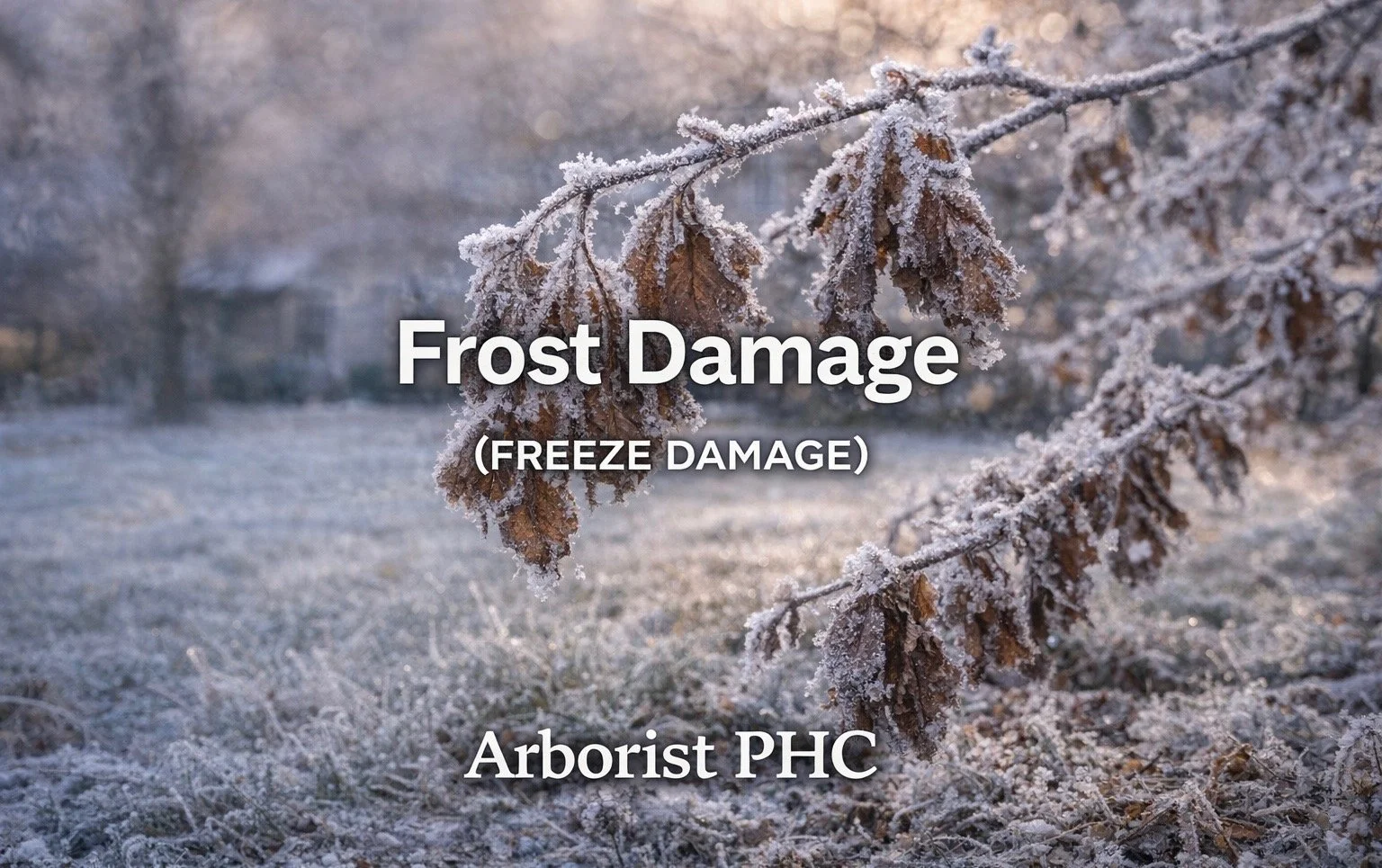
Frost Damage on Trees in Keller, TX
Learn how frost damage affects trees in Keller TX. Certified Arborist explains symptoms, causes, and plant health care treatments to restore tree vitality.
Frost Damage on Trees in Keller, Texas
What Keller Homeowners Are Seeing
Throughout Keller, TX, sudden overnight freezes and radiational frost events commonly cause visible injury to ornamental and shade trees. As trees begin exiting dormancy, tender plant tissues become vulnerable to rapid temperature fluctuations, often resulting in noticeable canopy decline shortly after a cold event.
Homeowners frequently observe:
• Browning or blackened leaves
• Wilted or drooping foliage
• Tip dieback on branches
• Sparse canopy development
• Delayed budding
• Premature leaf drop
• Reduced vigor throughout the crown
Frost injury can affect both mature trees and newly planted ornamentals, particularly following warm winter periods that trigger early growth activity.
What is Frost Damage?
Frost damage occurs when freezing temperatures cause intracellular ice formation within plant tissue. Ice crystals rupture cell membranes, preventing normal water movement and disrupting the tree’s vascular function.
Young tissues most susceptible include:
• emerging buds
• newly forming leaves
• soft stems
• flowering tissues
• new seasonal growth flush
When cellular damage occurs, affected tissue may desiccate, darken, and eventually decline.
Cause → Effect → Risk → Solution
Cause
Rapid temperature drops below 32°F cause freezing of plant cells, especially in tender new growth not yet acclimated to cold conditions.
Effect
Damaged tissues lose the ability to transport moisture effectively, resulting in:
• leaf discoloration
• tissue collapse
• slowed photosynthesis
• delayed seasonal development
Risk
Repeated frost injury may contribute to:
• reduced canopy density
• increased susceptibility to fungal pathogens
• higher pest pressure
• carbohydrate depletion
• structural stress over time
Solution
Professional Plant Health Care treatments help improve vascular function, support root activity, and promote healthy regeneration following environmental stress.
Why Frost Damage is Common in Keller, Texas
Keller and the greater North Texas region commonly experience fluctuating winter weather patterns that contribute to frost injury, including:
• warm daytime winter temperatures
• sudden overnight cold fronts
• late seasonal frost events
• rapid temperature swings
• early bud break triggered by warm spells
Trees that begin active growth too early often sustain injury when unexpected cold conditions return.
Species frequently impacted include:
• Live Oak
• Red Oak
• Crape Myrtle
• Magnolia
• Chinese Pistache
• Elm
• Photinia
• Wax Myrtle
• Ligustrum
• Japanese Maple
Ornamental species are often more sensitive due to thinner bark and softer tissue composition.
Symptoms of Frost Damage
Visible indicators often develop within several days following a freeze event:
• darkened or translucent leaves
• curled or shriveled foliage
• brittle leaf structure
• delayed leaf expansion
• branch tip dieback
• uneven canopy density
• minor twig decline
Damage severity varies depending on duration of cold exposure, soil moisture conditions, and overall tree vitality prior to the event.
Tree Biological Response (ISA-Based Perspective)
Trees respond to frost injury by reallocating stored carbohydrates toward production of new buds and foliage.
Recovery responses may include:
• activation of dormant buds beneath damaged tissue
• secondary leaf flush
• compartmentalization of injured tissue (CODIT process)
• increased root demand for nutrients and water
Trees with strong root systems and adequate carbohydrate reserves typically recover more efficiently.
Environmental stress prior to the freeze event may slow recovery timelines.
Plant Health Care Treatment Approach
At Arborist PHC, recovery strategies focus on improving root function, vascular efficiency, and overall tree vitality.
Deep Root Inoculation
Subsurface soil applications target the root absorption zone, improving nutrient availability and promoting balanced growth response.
Basal Drench Application
Applications at the root flare and lower trunk allow for systemic uptake through vascular tissue, supporting recovery from environmental stress.
Broad Spectrum Plant Health Support (BBT)
Treatment programs may include:
• micronutrient supplementation
• systemic fungicide support
• pest prevention materials
• soil conditioners
• carbon-based root stimulants
• organic growth enhancers
These components help restore carbohydrate production capacity and improve canopy regeneration.
What Homeowners Should Avoid After Frost Damage
Improper care practices can increase stress load on already weakened trees.
Avoid:
• heavy pruning immediately after frost events
• excessive fertilization during stress recovery
• applying wound sealants
• removing live tissue prematurely
• overwatering saturated soils
Trees often push new growth below damaged tissue once temperatures stabilize.
When to Contact a Certified Arborist
Professional evaluation is recommended when:
• canopy development remains uneven
• more than 25% of foliage shows damage
• repeated seasonal frost injury occurs
• tree shows signs of declining vigor
• secondary pests or fungi begin appearing
• ornamental trees lose aesthetic density
Early Plant Health Care intervention improves long-term tree stability and resilience.
Conclusion
Frost damage is a common environmental stress factor across Keller and the DFW metroplex. While initial symptoms may appear severe, many trees recover successfully when supported with proper plant health care practices. Strengthening root function, supporting vascular efficiency, and maintaining balanced nutrient availability helps trees recover more efficiently and remain resilient against future stress events. Healthy trees contribute to property value, environmental cooling, and long-term landscape sustainability throughout Keller communities.