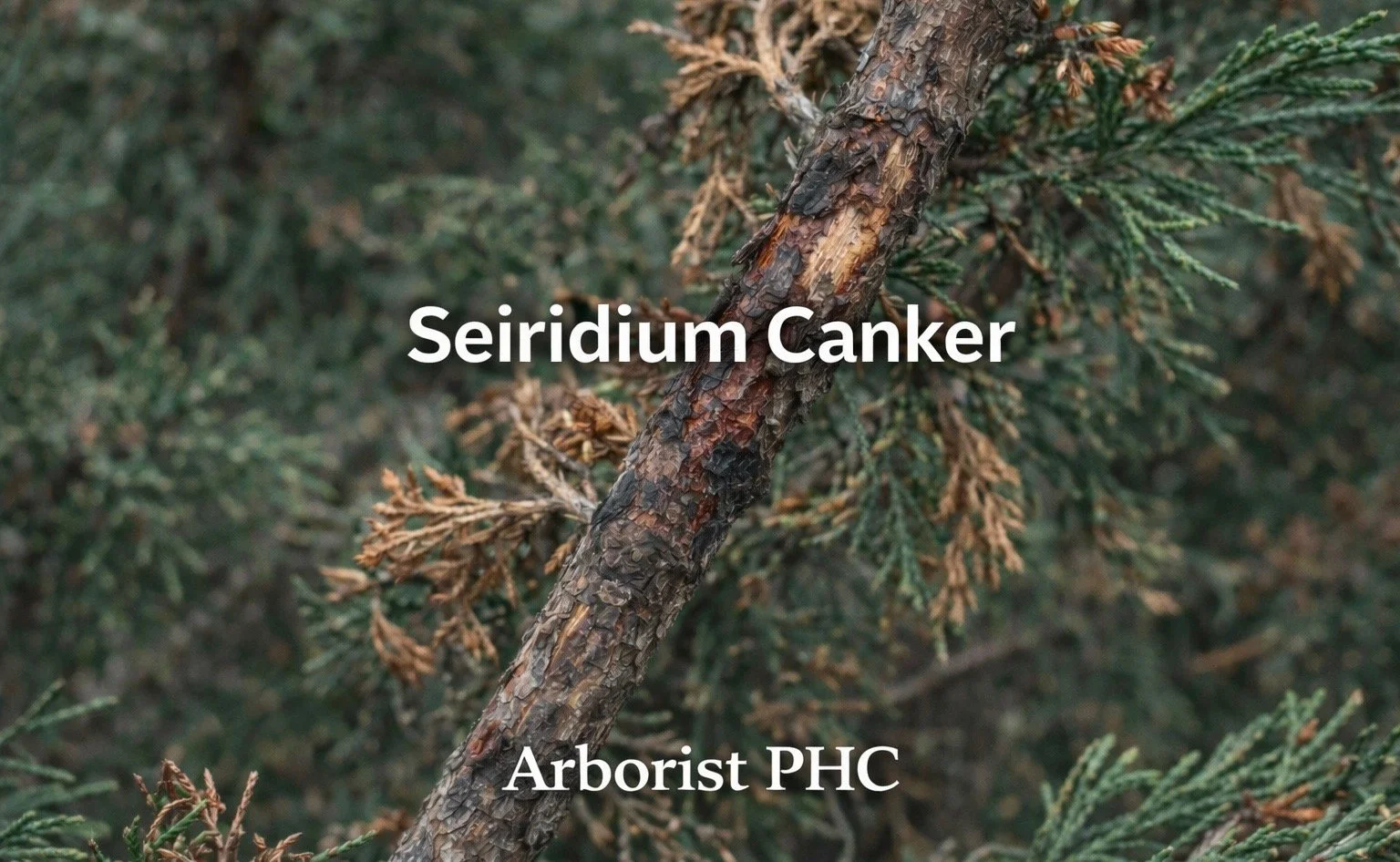
Seiridium Canker on Leyland Cypress Trees in Mansfield, TX
Learn how Seiridium Canker affects Leyland Cypress trees in Mansfield TX. Certified Arborist explains symptoms, causes, and treatment options.
Seiridium Canker on Leyland Cypress Trees in Mansfield, Texas
What Mansfield Property Owners Are Seeing
Throughout Mansfield, TX and surrounding areas of North Texas, Leyland Cypress trees are increasingly showing symptoms associated with Seiridium Canker, a destructive fungal disease that commonly affects privacy screens and windbreak plantings.
Homeowners often first notice:
• Individual branches turning reddish-brown
• Sections of the tree suddenly dying back
• Patchy browning throughout the canopy
• Thinning privacy hedges
• Sunken or cracked bark areas on limbs
• Excessive resin (sap) flowing from branch cankers
• Progressive decline moving inward toward the trunk
Because Leyland Cypress trees are frequently planted close together, the disease can spread and affect multiple trees within the same row.
What is Seiridium Canker?
Seiridium Canker is a fungal disease caused by Seiridium unicorne, Seiridium cardinale, and related species. The fungus infects bark tissue and disrupts the tree’s vascular system, preventing proper transport of water and nutrients.
Once infection occurs, the fungus creates localized dead tissue known as cankers, which interfere with normal fluid movement within the tree.
As vascular flow becomes restricted, affected limbs begin to decline and eventually die.
Leyland Cypress trees are particularly susceptible due to their dense growth habit and sensitivity to environmental stress.
Cause → Effect → Risk → Solution
Cause
Fungal spores commonly enter through:
• pruning wounds
• drought stress cracks
• storm damage injuries
• insect feeding wounds
• environmental stress openings
High heat combined with drought stress significantly increases susceptibility.
Effect
The fungus colonizes vascular tissue, causing:
• disruption of water movement
• localized branch dieback
• resin bleeding from infected areas
• progressive canopy thinning
• decline in overall tree vigor
Risk
If untreated, Seiridium Canker may lead to:
• permanent branch loss
• structural decline of privacy hedges
• spread of disease to neighboring trees
• irreversible canopy thinning
• full tree mortality in severe cases
Disease progression often accelerates during summer stress periods.
Solution
Plant Health Care programs focus on improving tree vigor, suppressing fungal activity, and reducing environmental stress that allows disease progression.
Why Seiridium Canker is Common in Mansfield, Texas
Environmental conditions throughout Mansfield and the DFW Metroplex contribute to fungal development:
• prolonged summer heat
• drought stress
• compacted clay soils
• inconsistent irrigation patterns
• dense planting spacing reducing airflow
• storm damage wounds
• seasonal stress fluctuations
Leyland Cypress trees often experience stress due to rapid growth demands combined with challenging soil conditions common in North Texas.
Stress reduces the tree’s natural ability to defend against fungal pathogens.
Symptoms of Seiridium Canker on Leyland Cypress
Common indicators include:
• scattered branch dieback
• reddish or bronze foliage discoloration
• individual limbs declining while others remain green
• sunken lesions on bark
• darkened or cracked bark tissue
• resin flow from infected areas
• thinning canopy density
• gradual spread of decline through hedge rows
Symptoms often appear randomly throughout the tree rather than uniformly.
This patchy appearance is a key identifying characteristic.
Tree Biological Response
Trees attempt to defend against fungal pathogens through compartmentalization processes described in CODIT (Compartmentalization of Decay in Trees).
Defense responses may include:
• production of defensive resins
• isolation of infected vascular tissue
• increased carbohydrate demand for recovery
• localized slowing of nutrient transport
• formation of barrier zones to slow fungal spread
Trees experiencing drought stress often have reduced ability to successfully compartmentalize infection.
Supporting overall tree health improves defensive response capability.
Plant Health Care Treatment Approach
At Arborist PHC, treatment strategies focus on strengthening tree vitality and helping slow fungal progression.
Deep Root Inoculation
Subsurface soil applications improve root function and increase nutrient availability necessary for stress recovery.
Basal Drench Application
Systemic materials are absorbed through vascular tissue, supporting improved defense response against fungal pathogens.
Broad Spectrum Plant Health Support (BBT)
Treatment programs may include:
• systemic fungicide support
• micronutrient supplementation
• soil conditioners
• carbohydrate root stimulants
• organic plant health compounds
• stress recovery formulations
Balanced Plant Health Care improves tree resilience and supports long-term hedge performance.
What Homeowners Should Avoid
Improper care practices can increase disease susceptibility:
• excessive drought stress
• mechanical injury to bark
• improper pruning timing
• leaving damaged limbs untreated
• overcrowded planting spacing
• overwatering poorly drained soils
Sanitizing pruning equipment between trees helps reduce disease spread.
Proper irrigation management supports tree recovery.
When to Contact a Certified Arborist
Professional evaluation is recommended when:
• random branches begin browning
• resin bleeding appears on limbs
• canopy density begins thinning
• multiple Leyland Cypress show symptoms
• sections of privacy hedge decline unevenly
• bark cracking or sunken lesions appear
Early Plant Health Care intervention improves likelihood of slowing disease progression.
Conclusion
Seiridium Canker is one of the most common fungal diseases affecting Leyland Cypress trees throughout Mansfield and surrounding North Texas communities. While symptoms often begin subtly, progressive decline can significantly impact privacy screens and landscape aesthetics. Maintaining strong root health, balanced nutrition, and reduced stress conditions improves the tree’s ability to tolerate fungal pressure. Professional Plant Health Care helps preserve hedge density, improve longevity, and protect landscape value.