Rapid Oak Decline in Weatherford, TX | Savannah Post Oak Tree Decline | Arborist PHC
ISA Certified Arborist® | ANSI A300 Compliant | Serving Weatherford & North Texas
Rapid Oak Decline in Weatherford, TX
Understanding Savannah Post Oak Decline in North Texas
Rapid Oak Decline is a common condition affecting Savannah Post Oaks in Weatherford and across Parker County, often resulting from a combination of environmental stress, soil conditions, pests, and disease pressure.
At Arborist PHC, we specialize in identifying the underlying causes of decline and implementing targeted plant health care treatments to support tree recovery and longevity.
Our approach follows ISA arboriculture principles and ANSI A300 standards, focusing on cause, risk, and proper treatment—not guesswork.
What is Rapid Oak Decline?
Rapid Oak Decline is not a single disease—it is a decline complex, meaning multiple stress factors are affecting the tree at the same time.
These may include:
Drought stress
Soil compaction
Nutrient deficiencies
Secondary fungal infections (including Hypoxylon Canker)
When combined, these factors overwhelm the tree’s ability to sustain itself.
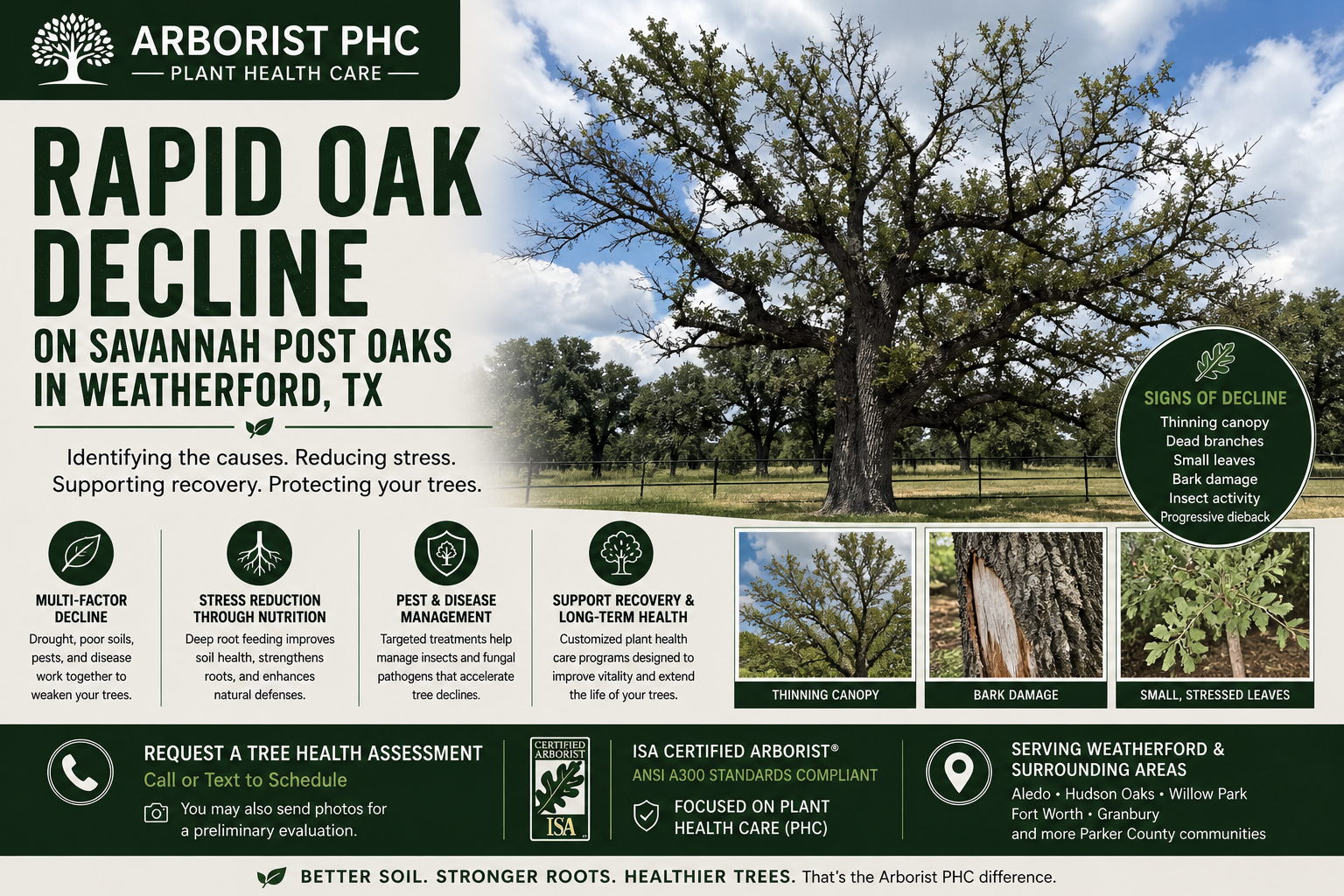
Signs of Rapid Oak Decline in Savannah Post Oaks
Common symptoms include:
Thinning canopy and sparse leaf growth
Dead or declining upper branches
Small or undersized leaves
Bark cracking or sloughing
Increased insect activity (borers, beetles)
Progressive dieback over multiple seasons
Decline may appear gradual at first, then accelerate quickly under stress.
Why This is Common in Weatherford, TX
Post Oaks in Weatherford face several challenges:
Heavy clay soils restricting root oxygen and drainage
Extreme drought and heat cycles
Sudden weather swings (freeze to heat stress)
Construction and soil disturbance
These conditions weaken trees, making them more susceptible to decline and secondary infections.
Our Treatment Approach (Watch our process)
There is no “single fix” for Rapid Oak Decline.
Our approach focuses on reducing stress and supporting the tree’s ability to recover.
Deep Root Feeding (Soil Injection)
Improves soil conditions and nutrient availability
Enhances root function and water uptake
Reduces overall environmental stress
Basal Drench & Systemic Applications
Targets insect pressure (borers, pests)
Helps manage fungal and bacterial stress factors
Broad-Spectrum Plant Health Care (BBT)
Combines nutrients, micronutrients, and systemic materials
Addresses multiple stress factors at once
Supports overall tree vitality
Relationship to Hypoxylon Canker
Rapid Oak Decline often leads to Hypoxylon Canker, especially in Savannah Post Oaks.
As stress increases:
👉 The tree becomes more vulnerable
👉 Hypoxylon can establish and accelerate decline
Early treatment can help reduce the likelihood of this progression.
Our Diagnosis-First Approach
Not all Post Oak decline is the same.
We evaluate:
Soil conditions
Tree species and age
Pest activity
Environmental stress factors
Presence of fungal pathogens
This ensures the treatment plan is accurate and targeted, not generalized.
When Trees May Not Recover
In advanced stages, Rapid Oak Decline can lead to:
Severe canopy loss
Structural weakness
Increased risk of failure
While we focus on treatment and preservation, we will advise when a tree has reached a point where recovery is unlikely.
Service Areas Near Weatherford
We proudly serve:
Hudson Oaks
Willow Park
Surrounding Parker County communities
Request a Tree Health Assessment in Weatherford, TX (Click here to submit a form)
If your Savannah Post Oaks are showing signs of decline, early action is critical.
📞 Call or Text to Schedule
📸 Send photos for a preliminary evaluation
We’re here to help you make informed decisions and protect your trees—based on science, not guesswork.
Frequently Asked Questions
-
It is typically caused by a combination of stress factors such as drought, poor soil conditions, pests, and disease.
-
In early stages, treatment can improve health and slow decline. Advanced cases may not recover.
-
No—Oak Wilt is a specific vascular disease. Rapid Oak Decline is a multi-factor stress condition.
-
Yes—fertilization supports root health and improves the tree’s ability to withstand stress.
-
No—Arborist PHC focuses strictly on plant health care, diagnosis, and treatment programs.