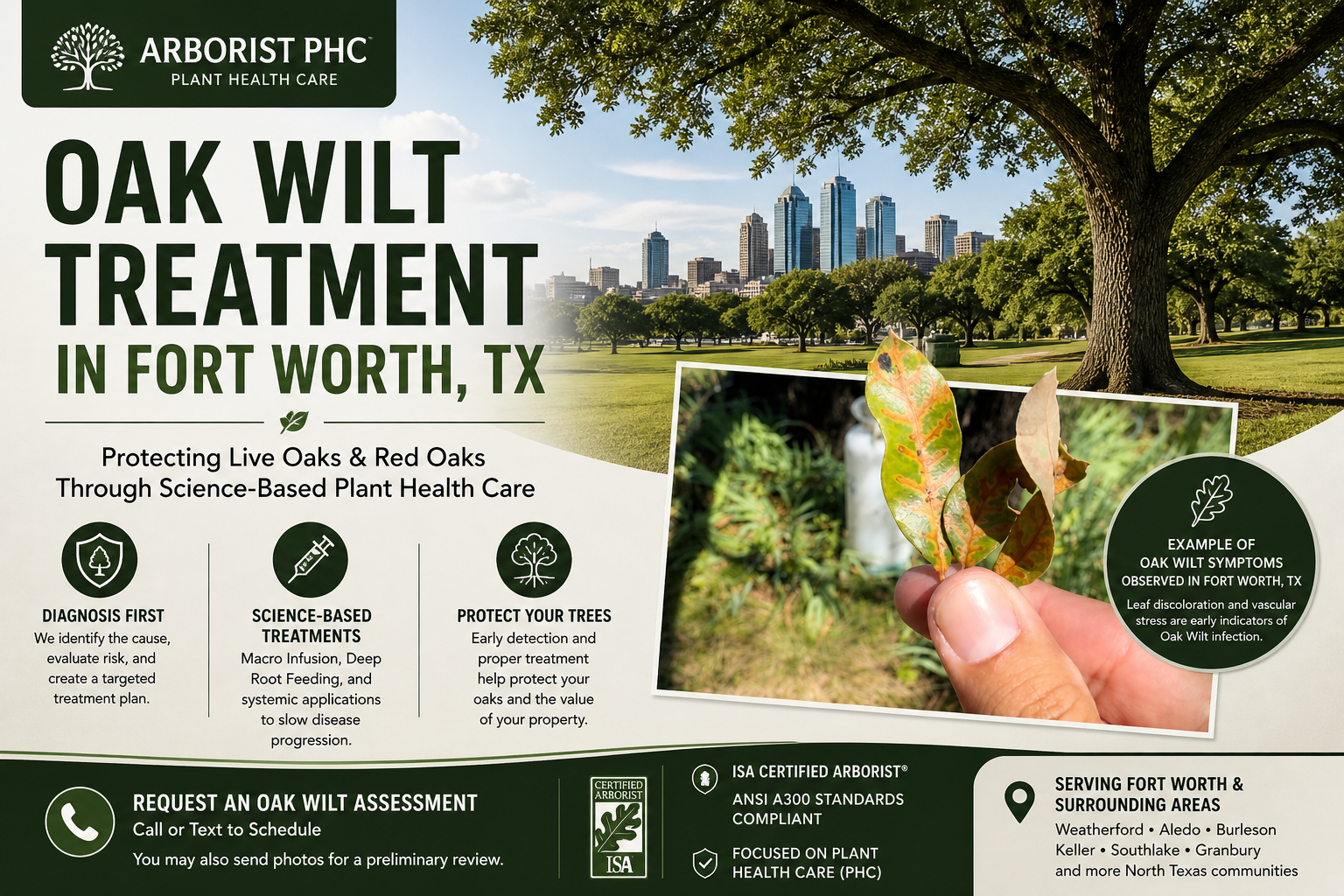
Oak Wilt Treatment in Fort Worth, TX
ISA Certified Arborist® | ANSI A300 Compliant | Serving Fort Worth & North Texas
Protecting Live Oaks & Red Oaks from Oak Wilt
Oak Wilt is one of the most destructive tree diseases affecting Live Oaks and Red Oaks across Fort Worth and North Texas.
At Arborist PHC, we specialize in diagnosing, preventing, and managing Oak Wilt using science-based plant health care methods aligned with ISA and ANSI A300 standards.
Our goal is to slow progression, protect surrounding trees, and support long-term tree health.
What is Oak Wilt?
Oak Wilt is a vascular disease that spreads through:
Root grafts between nearby oak trees
Beetle transmission through fresh wounds
Once inside the tree, it disrupts the movement of water, leading to rapid decline—especially in Red Oaks.
Signs of Oak Wilt in Fort Worth
Early detection is critical. Common symptoms include:
Leaf discoloration (brown edges or veinal necrosis)
Rapid leaf drop
Thinning canopy
Branch dieback
Sudden decline (especially in Red Oaks)
Live Oaks may decline more slowly but often show progressive canopy loss over time.
Why Oak Wilt is a Major Risk in North Texas
The Fort Worth area creates ideal conditions for Oak Wilt spread:
Dense oak populations
Interconnected root systems
High beetle activity during warmer months
Stress from drought and extreme heat
Without intervention, Oak Wilt can spread tree-to-tree across entire properties.
Our Oak Wilt Treatment Approach (Watch our process)
Every situation is different. We focus on prevention, suppression, and protection.
Macro Infusion (Trunk Injection – “Tree IV”)
Delivers systemic fungicide directly into the vascular system
Used for high-value trees or active cases
Helps slow disease progression
Deep Root Feeding (Soil Injection)
Strengthens root systems and improves overall vigor
Supports tree defense against disease and stress
Basal Drench & Bark Applications
Targets secondary pests and fungal pressure
Provides additional systemic protection
Our programs are often designed as a multi-step treatment approach, addressing both the disease and environmental stress factors.
Oak Wilt Prevention in Fort Worth, TX
Preventative care is the most effective strategy.
We often recommend:
Monitoring nearby infected trees
Avoiding pruning during high-risk periods
Applying preventative treatments to healthy Live Oaks
Protecting trees early is significantly more effective than reacting late.
Our Diagnosis-First Approach
At Arborist PHC, we do not assume every oak issue is Oak Wilt.
We evaluate:
Tree species (Live Oak vs Red Oak)
Symptom patterns
Environmental conditions
Presence of other stress factors
This ensures the correct treatment plan is applied, not a one-size-fits-all approach.
Treatment Programs & Follow-Up Care
Oak Wilt management often requires ongoing monitoring and support.
Programs may include:
Initial treatment
Follow-up applications
Seasonal reassessment
These are typically structured under a one-time program cost, depending on the scope of work.
Note: Oak Wilt is a serious disease. Treatments are designed to manage and reduce risk, not guarantee recovery in advanced cases.
Service Areas Near Fort Worth
We proudly serve:
Request an Oak Wilt Assessment (Click here to submit a form)
If you suspect Oak Wilt, early action is critical.
📞 Call or Text to Schedule
📸 Send photos for a preliminary review
We’re here to help you protect your trees and make informed decisions based on science—not guesswork.
Frequently Asked Questions
-
Oak Wilt can spread rapidly, especially through root systems. Red Oaks can decline within weeks, while Live Oaks may decline over months to years.
-
There is no guaranteed cure. However, treatments can slow progression and protect surrounding trees when applied early.
-
In some cases—especially with Red Oaks—removal may be recommended to reduce spread. This is evaluated on a case-by-case basis.
-
Preventative treatments, avoiding pruning during high-risk periods, and monitoring nearby trees are key strategies.
-
No—Arborist PHC focuses strictly on diagnosis, treatment, and plant health care services.