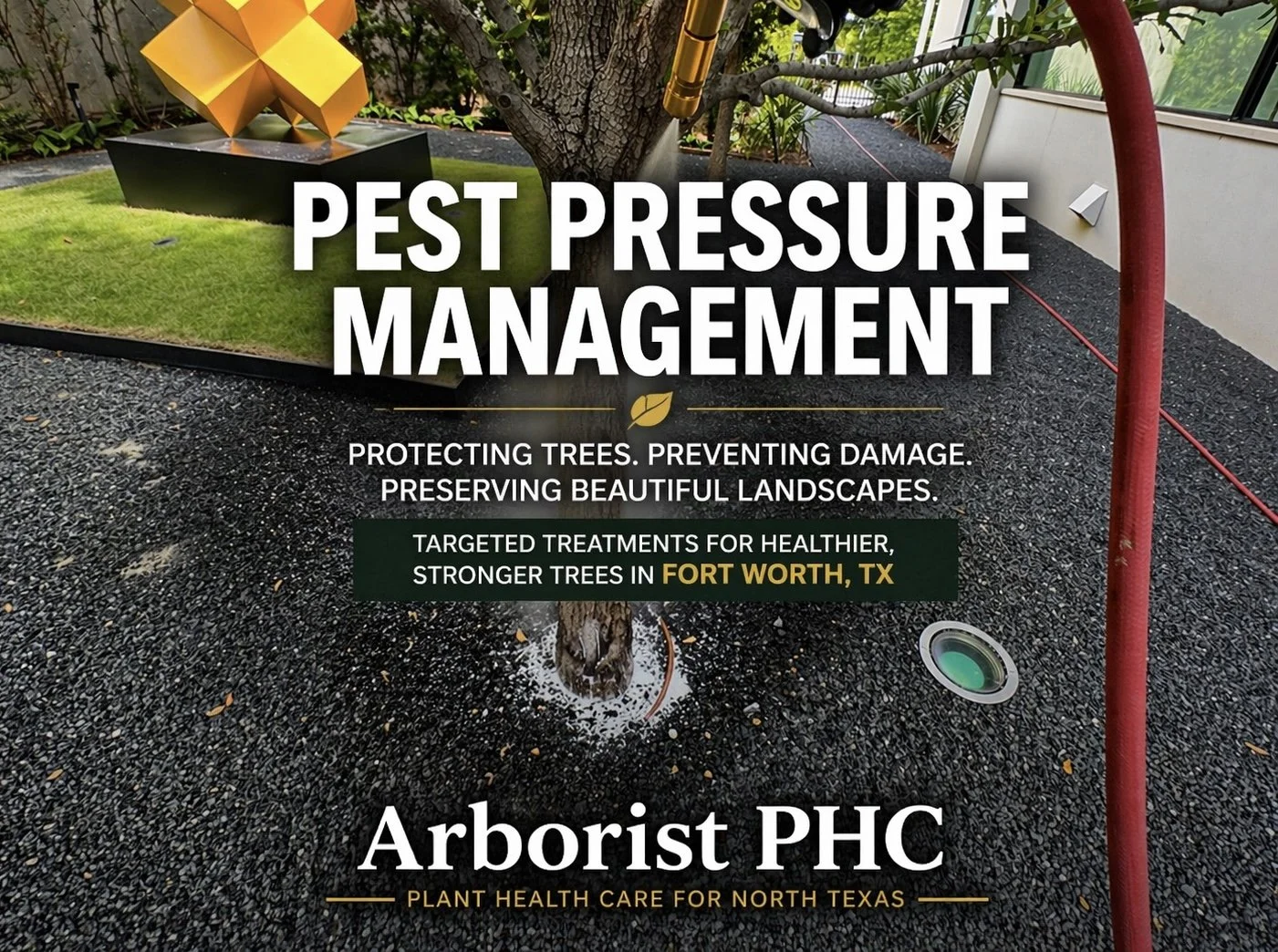
Pest Pressure Management in Fort Worth TX – Insects & Environmental Stress
Professional pest pressure management in Fort Worth TX. Treatment programs reduce insect damage and improve tree health using ISA-based plant health care practices.
Pest Pressure Management in Fort Worth TX – Protecting Trees from Insects & Environmental Stress
Trees throughout Fort Worth, Texas are commonly exposed to various forms of pest pressure due to environmental stress, seasonal weather patterns, and urban landscape conditions. Insect populations tend to increase when trees become weakened by heat stress, drought conditions, compacted soils, or nutrient deficiencies.
Pest Pressure Management focuses on identifying early signs of insect activity and implementing treatment strategies that support tree health while reducing long-term damage.
At Arborist PHC, treatment protocols follow science-based practices consistent with:
• ISA (International Society of Arboriculture)
• ANSI A300 Tree Care Standards
• TCIA Best Management Practices
Proper pest management begins with understanding the relationship between environmental stress and insect activity.
What is Pest Pressure?
Pest pressure refers to the level of insect activity impacting tree health. When trees are stressed, they produce weaker natural defense compounds, making them more attractive to insects seeking suitable feeding or reproduction sites.
Common contributing stress factors include:
• prolonged heat exposure
• drought stress conditions
• soil compaction
• nutrient deficiencies
• root disturbance
• improper irrigation depth
• winter freeze injury
• fungal disease presence
Stress-related vulnerability allows pest populations to establish more easily within bark, foliage, or vascular tissue.
Common Tree Pests in Fort Worth Texas
Trees in Fort Worth are frequently impacted by several insect species:
• Aphids producing honeydew and sooty mold buildup
• Spider mites causing leaf stippling and discoloration
• Bagworms feeding on evergreen foliage
• Webworms creating canopy webbing on pecans
• Borers targeting stressed hardwood trees
• Scale insects attaching to bark and leaf tissue
• Leaf miners affecting foliage appearance
• Caterpillars feeding on leaf surfaces
These pests can reduce photosynthesis capacity and weaken structural development if left untreated.
Signs of Pest Pressure on Trees
Common symptoms of insect activity include:
• leaf discoloration or spotting
• premature leaf drop
• thinning canopy density
• visible webbing in canopy structure
• sticky residue on leaves or surfaces below canopy
• small bore holes in bark
• dieback at branch tips
• increased woodpecker activity
Early detection improves treatment effectiveness.
Pest Pressure Management Treatment Approach
Integrated Plant Health Care strategies are used to reduce pest populations while supporting tree vitality.
Treatment methods may include:
Systemic Root Zone Applications
Materials applied within the soil allow uptake through the root system and distribution through vascular tissue.
Basal Bark Applications
Targeted treatments applied to bark surfaces improve absorption and help protect vulnerable areas of the tree.
Foliar Treatments (when necessary)
Direct canopy applications may be used depending on pest type and severity.
Nutrient Support
Fertilization programs help improve tree vigor, strengthening natural defense responses against insect pressure.
Healthy trees are more capable of tolerating minor pest populations without long-term damage.
Relationship Between Environmental Stress and Pest Activity
Environmental stress is often the primary factor contributing to increased pest populations. Trees weakened by poor soil conditions or drought are less capable of producing defensive compounds that deter insects. Improving soil conditions, root health, and nutrient availability helps reduce the likelihood of severe infestations. A comprehensive Plant Health Care program focuses on strengthening the tree’s overall resilience.
Benefits of Professional Pest Pressure Management
Proper pest management provides several long-term benefits:
• improved canopy density
• reduced insect population levels
• improved tree vigor
• reduced stress symptoms
• improved aesthetic appearance
• improved structural stability
• reduced long-term decline risk
Preventative care helps maintain tree longevity and landscape value.
Trees Commonly Impacted by Pest Pressure in Fort Worth
Several tree species commonly affected include:
• Live Oaks
• Red Oaks
• Post Oaks
• Savannah Post Oaks
• Pecans
• Crepe Myrtles
• Elms
• Magnolias
• Leyland Cypress
Routine monitoring helps detect early signs of insect activity.
Pest Pressure Management in Fort Worth TX
Arborist PHC provides professional Pest Pressure Management programs designed specifically for North Texas tree species and environmental conditions.
Proper treatment strategies support:
• healthier root systems
• improved canopy density
• reduced insect damage
• improved stress tolerance
• extended tree lifespan
Early treatment improves long-term outcomes.